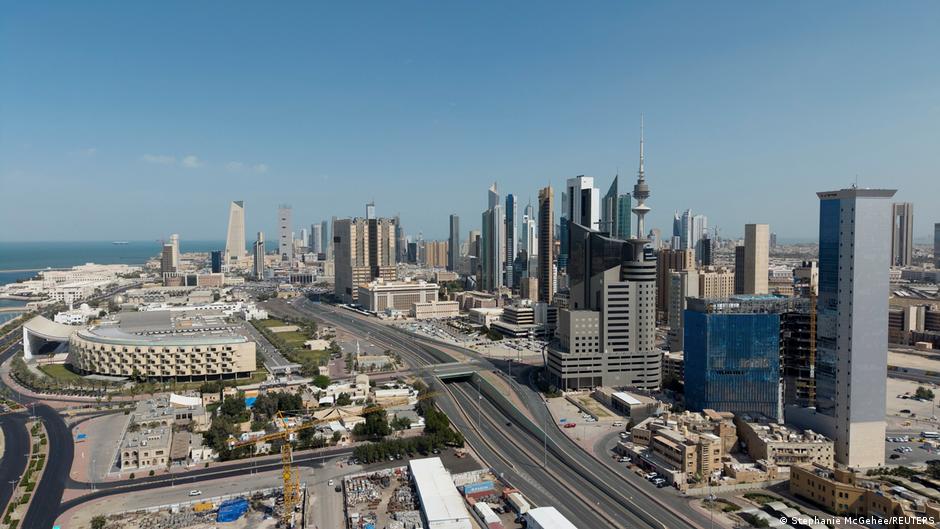
The Islamic Revolutionary Guards launched a missile and drone strike on a Kuwaiti air base early Monday, wounding several Americans and damaging two U.S. MQ-9 Reaper drones worth about $30 million each, as Iran and the U.S. remain deadlocked in ceasefire talks. The attack—condemned by Kuwait’s foreign ministry as a “flagrant violation of international law”—follows a weekend of conflicting signals from Washington, where President Donald Trump hinted at a deal before private talks collapsed without resolution. Meanwhile, Iran’s top negotiator accused the U.S. of violating the truce through its naval blockade and Israel’s escalating war in Lebanon, where civilians fled Beirut’s southern suburbs ahead of fresh Israeli strikes.
Kuwait Under Attack: Iran’s Strikes and the U.S. Response
Kuwait’s foreign ministry condemned the Iranian missile and drone attack as a “dangerous escalation” that threatens regional stability. The strikes targeted an airbase hosting U.S. military installations, where several Americans—including contractors and active-duty personnel—were injured. According to a person with direct knowledge of the attack, one MQ-9 Reaper drone was destroyed and another seriously damaged, with debris causing minor injuries. The drones, valued at $30 million each, are part of the U.S. arsenal used in strikes against Iranian targets.
In a statement released Monday, Kuwait’s Foreign Minister, Sheikh Sabah Khaled Al-Hamad Al-Sabah, described the attack as “a direct and blatant aggression against the sovereignty of Kuwait.” He added, *“This escalation is unacceptable and will not go unanswered. We are coordinating closely with our allies, including the United States, to address this violation of international law.”* The ministry’s statement also emphasized that Kuwait had repeatedly warned Iran against such actions, citing previous diplomatic channels that went unheeded.
A U.S. Central Command (CENTCOM) spokesperson confirmed the attack in a statement, noting that *“U.S. personnel were not killed, but several were injured, and we are assessing the full impact of the damage to our assets.”* The spokesperson declined to provide further details on casualties or the extent of the drone damage, citing ongoing investigations. However, a senior U.S. defense official, speaking on condition of anonymity, stated that *“the attack was well-coordinated, using a mix of ballistic missiles and suicide drones, and it caught us off guard.”* The official added that the U.S. was reviewing its intelligence-sharing protocols with Kuwait to prevent future incidents.
The Revolutionary Guards claimed the attack was retaliation for U.S. operations originating from Kuwait. The ministry’s statement called the strikes a “direct assault on the security and stability of the State of Kuwait” and emphasized its “categorical rejection” of such aggression. Kuwait’s Emir, Sheikh Mishal Al-Ahmad Al-Jaber Al-Sabah, convened an emergency meeting with top security officials, including the commander of the Kuwaiti National Guard, Lieutenant General Sheikh Abdullah Al-Mutairi, to discuss the response. Al-Mutairi stated in a press briefing that *“Kuwait’s armed forces are on high alert, and we are prepared to defend our sovereignty at all costs.”* He did not rule out retaliatory measures but stressed that Kuwait would first seek diplomatic solutions.
Iran’s Foreign Ministry spokesperson Esmaeil Baqaei earlier this week highlighted the “severe suspicion and mistrust” plaguing negotiations, noting that the U.S. had “constantly changed its views and put forward new or contradictory demands.” Baqaei’s remarks align with Iran’s broader stance that a ceasefire in Lebanon—where Israel’s offensive against Hezbollah continues—is a prerequisite for any broader deal. The ministry also reiterated that no negotiations on Iran’s nuclear program are underway, framing the current focus as ending the war rather than addressing long-standing disputes.
In a separate development, the Kuwaiti Parliament convened an emergency session Monday afternoon, where lawmakers unanimously condemned the attack. Member of Parliament Sheikh Dr. Salem Al-Jaber Al-Sabah stated, *“This is not just an attack on Kuwait; it is an attack on the entire Gulf region and our collective security. We demand that the international community take immediate action to hold Iran accountable.”* The session also saw calls for increased military cooperation with Saudi Arabia and the UAE, with some lawmakers suggesting that a unified Gulf response could deter further Iranian aggression.
Trump’s Mixed Signals and the Collapse of Ceasefire Talks
President Trump’s weekend statements added to the confusion. On Friday, he suggested a “final determination” on a preliminary ceasefire agreement was near, only for private talks in the White House Situation Room to end without announcement. A White House official, speaking anonymously, confirmed that Trump would only approve a deal meeting his “red lines”—including Iran abandoning its nuclear program, surrendering enriched uranium, and reopening the Strait of Hormuz without tolls.
Yet hours after officials claimed negotiators had reached a memorandum of understanding to extend the ceasefire by 60 days, Treasury Secretary Scott Bessent declined to acknowledge any tentative deal. Vice President JD Vance told reporters the sides were still “going back and forth on language points,” a sign of the persistent divisions. The back-and-forth has left markets volatile, with stocks initially rallying on ceasefire hopes before retreating as doubts resurfaced.
Iran’s top negotiator, Mohammad Bagher Ghalibaf, amplified the tensions on social media, accusing the U.S. of “clear evidence of noncompliance” with the ceasefire. He pointed to the U.S. naval blockade of Iranian ports—imposed on April 16 after failed talks—and Israel’s offensive in Lebanon, which he called “war crimes.” Ghalibaf’s post concluded with a warning: *“Every choice has a price, and the bill comes due.”*
“The naval blockade and escalation of war crimes in Lebanon” were “clear evidence of US noncompliance with the ceasefire.”
—Mohammad Bagher Ghalibaf, Iran’s top negotiator, via DW
Ghalibaf’s remarks were echoed by Iran’s Supreme Leader Ayatollah Ali Khamenei, who in a speech Sunday criticized the U.S. for what he described as *“deceptive diplomacy.”* Khamenei stated, *“The Americans have no intention of reaching a genuine agreement. Their demands are impossible and designed to weaken Iran’s position.”* His comments were seen as a hardening of Iran’s stance ahead of further negotiations.
In Washington, the confusion extended to Congress, where lawmakers demanded clarity from the administration. Senator Bob Menendez, Chairman of the Foreign Relations Committee, issued a statement saying, *“The president’s erratic statements on Iran are dangerous and undermine our national security. We need a clear strategy, not mixed signals that embolden our adversaries.”* Meanwhile, Representative Adam Schiff, Chairman of the House Intelligence Committee, called for a classified briefing on the status of the talks, citing concerns about intelligence gaps.
A senior State Department official, speaking off the record, acknowledged the challenges, stating, *“We’re dealing with an adversary that doesn’t play by the same rules. Their negotiators are instructed to drag out talks while their military branches take aggressive actions on the ground.”* The official added that the U.S. was exploring backchannel communications with Iran to test its willingness to de-escalate.
Lebanon’s Civilian Crisis: Israel’s Offensive and Iran’s Leverage
While Kuwait and Washington grapple with the fallout from Iran’s strikes, Lebanon’s southern suburbs—Hezbollah’s stronghold—are facing a humanitarian crisis. Israel’s recent seizure of Beaufort Castle, a strategic outpost overlooking south Lebanon, has intensified fears of further escalation. Civilians in Dahiyeh, Beirut’s southern district, reported panic as families fled with little more than bags of belongings, fearing imminent airstrikes.
For more on this story, see US Strikes Iranian Radar Sites Following Drone Attack on Kuwaiti Air Base.
A 24-year-old resident named Hadi told AFP that stability during the truce was short-lived: *“That feeling did not last long… Our fears intensified this morning after I received messages about orders to bomb the southern suburbs. We immediately left the area.”* The Israeli strikes in April killed hundreds, and the renewed offensive has pushed Lebanon closer to the brink of all-out war.
In a press conference Monday, Lebanon’s Prime Minister Najib Mikati warned of a *“humanitarian catastrophe”* if the fighting escalates. Mikati, who has been mediating between Hezbollah and Israel, stated, *“We are at a critical juncture. The international community must intervene before this situation spirals out of control.”* He added that Lebanon’s infrastructure, already strained by economic collapse, could not withstand another wave of displacement.
Hezbollah’s Secretary-General, Hassan Nasrallah, addressed the nation Sunday night, calling Israel’s actions *“a declaration of war.”* Nasrallah stated, *“Israel’s seizure of Beaufort Castle is a direct attack on Lebanon’s sovereignty. We will respond with all our capabilities.”* His remarks were seen as a warning of further retaliation, potentially drawing Iran deeper into the conflict.
Iran’s insistence on a Lebanon ceasefire as a precondition for broader negotiations reflects its strategic leverage. Hezbollah’s resistance in southern Lebanon has tied Israel’s hands, making any U.S.-Iran deal contingent on de-escalation there. Iran’s Foreign Ministry has repeatedly stated that *“a ceasefire in Lebanon is an essential condition for any deal aimed at ending the war,”* framing the conflict as interconnected rather than separate.
In a rare public statement, Israel’s Defense Minister Yoav Gallant defended the military’s actions, stating, *“We are not seeking war, but we will not allow Hezbollah to dictate terms. Every attack on our forces will be met with a disproportionate response.”* Gallant’s comments were met with criticism from human rights groups, including Amnesty International, which accused Israel of *“indiscriminate attacks on civilian areas.”* The group’s Middle East researcher, Lynn Maalouf, stated, *“The suffering of Lebanese civilians is being used as a bargaining chip in this proxy war.”*
The Nuclear Standoff: Why Iran’s Red Lines Remain Unmoved
Despite Trump’s demands that Iran abandon its nuclear program, Tehran has shown no willingness to negotiate on the issue—at least not yet. Baqaei clarified that *“no negotiations have taken place on the details of the nuclear file,”* adding that *“our priority is ending the war.”* This stance suggests Iran is using its nuclear program as a bargaining chip, refusing to discuss it until broader security concerns—particularly the U.S. blockade and Israel’s actions—are addressed.
The U.S. has long accused Iran of pursuing nuclear weapons, though Tehran insists its program is for peaceful energy purposes. Trump’s insistence on dismantling Iran’s nuclear capabilities—including enriched uranium supplies—remains a major sticking point. Without progress on this front, any ceasefire extension is likely to be temporary, with both sides holding firm to their demands.
In a recent interview with the Iranian state news agency IRNA, Atomic Energy Organization of Iran (AEOI) spokesperson Behrouz Kamalvandi reiterated that *“Iran’s nuclear program is entirely peaceful and subject to international inspections.”* Kamalvandi added, *“The West’s demands are based on fear and not on reality. We have the right to enrich uranium under international law.”* His comments came as the International Atomic Energy Agency (IAEA) reported that Iran had continued to exceed uranium enrichment limits set by the 2015 nuclear deal, though it had not yet announced new breaches.
In Washington, the Biden administration—while not directly involved in the current talks—has been closely monitoring the situation. A senior White House official stated, *“We remain deeply concerned about Iran’s nuclear activities. Any agreement that does not address this issue will be short-lived.”* The official added that the U.S. was prepared to impose additional sanctions if Iran failed to engage in serious negotiations.
Meanwhile, Saudi Arabia has taken a harder line, with Crown Prince Mohammed bin Salman stating in a meeting with U.S. officials that *“Iran’s nuclear ambitions cannot be ignored any longer.”* Bin Salman’s remarks were seen as an attempt to pressure the U.S. into a more aggressive stance, particularly as Saudi Arabia faces growing threats from Iranian-backed militias in Yemen and Iraq.
What Comes Next: Three Scenarios for the Next 30 Days
The next month will be critical.
- Escalation: If Iran’s strikes on U.S. allies continue and Washington responds with further military action—such as additional sanctions or direct strikes—regional tensions could spiral. Kuwait’s condemnation of the attack signals a potential flashpoint, with Riyadh and other Gulf states monitoring the situation closely. In a statement Monday, Saudi Arabia’s Foreign Minister Prince Faisal bin Farhan Al Saud warned that *“any attack on Gulf states will be met with a firm and unified response.”* The statement was seen as a signal that Saudi Arabia could coordinate with Kuwait and the UAE to deter further Iranian aggression.
- Negotiated Extension: A fragile ceasefire extension—perhaps with minor concessions on both sides—could buy time for indirect talks. However, trust remains low, and any deal would likely exclude the nuclear issue until later stages. A source familiar with the negotiations stated that *“both sides are looking for a face-saving way out, but the gaps remain too wide.”* The source added that the U.S. was considering offering limited sanctions relief in exchange for Iran halting its missile and drone attacks on regional allies.
- Collapse and Renewed Conflict: If negotiations fail entirely, the risk of a broader war increases. Israel’s offensive in Lebanon, combined with Iran’s retaliatory strikes, could draw in other regional players, including Saudi Arabia and Hezbollah. In a recent op-ed for The Washington Post, former CIA Director John Brennan warned that *“the risk of a regional conflagration is higher than at any point since 2019.”* Brennan called for a more coordinated international response to prevent escalation.
The immediate priority for both sides appears to be avoiding all-out war, but the path forward is obscured by mistrust. Iran’s Foreign Ministry has framed the current negotiations as *“prolonged”* due to U.S. inconsistencies, while Trump’s unpredictable rhetoric—from optimism to silence—has left even his own administration scrambling for clarity. The next move likely belongs to Tehran, which holds the cards on whether to escalate or seek a face-saving deal.

One thing is certain: the Strait of Hormuz remains a ticking time bomb. Iran’s closure of the waterway—partially in response to the U.S. blockade—has disrupted global oil flows, and any attempt to reopen it will require major concessions. With markets already on edge, even a temporary resolution could trigger volatility. The question is whether either side is willing to blink first.
In a report released Monday, the International Energy Agency (IEA) warned that *“disruptions in the Strait of Hormuz could push oil prices to $120 per barrel within weeks.”* The IEA’s executive director, Fatih Birol, stated, *“The world is not prepared for another oil shock. Governments must act swiftly to mitigate the risks.”* The report highlighted that global oil inventories were already at historic lows, leaving little room for further disruptions.
The Human Cost: Civilians Caught in the Crossfire
Beyond the geopolitical maneuvering, the human toll is mounting. In Lebanon, families are fleeing their homes amid Israeli airstrikes, while in Kuwait, civilians near the targeted airbase faced sudden danger. The Revolutionary Guards’ claim that the strike was retaliation for U.S. operations underscores the blurred lines between military and civilian targets in this conflict.
The U.S. has not yet responded publicly to the Kuwait attack, but the damage to its drones—valued at $30 million—suggests a significant setback for its operations. The injuries to Americans, though minor, highlight the personal cost of this proxy war. With no end in sight, the risk of further civilian casualties grows, particularly if Israel escalates its campaign in Lebanon or Iran responds with additional strikes.
“The continuation and repetition of these aggressions undermine efforts aimed at de-escalating tensions and threaten security and stability in the region.”
—Kuwait’s Foreign Ministry, via The Guardian
In Lebanon, the United Nations High Commissioner for Refugees (UNHCR) reported that over 100,000 civilians had been displaced since the latest escalation. A UNHCR spokesperson stated, *“We are seeing a repeat of the 2006 crisis, where entire communities are forced to flee their homes with nothing but the clothes on their backs.”* The spokesperson added that the agency was struggling to provide adequate shelter and food assistance, as funding had dried up due to the global economic downturn.
In Kuwait, the attack has reignited debates about the country’s military preparedness. A former Kuwaiti defense official, speaking anonymously, stated, *“Our air defenses were not designed to counter this kind of hybrid threat. We need to invest in more advanced missile defense systems.”* The official added that Kuwait was in discussions with the U.S. and France to acquire additional Patriot missile batteries and drones to bolster its defenses.
Meanwhile, in Washington, the Pentagon is reviewing its deployment of troops in the region. A defense official stated, *“We are assessing whether additional forces are needed to protect our assets and personnel in Kuwait and other Gulf states.”* The official did not specify the number of troops under consideration but acknowledged that the U.S. was exploring options to deter further Iranian aggression.
The coming weeks will test whether diplomacy can outpace military escalation. For now, the ceasefire hangs by a thread—held together by mutual exhaustion rather than trust. The question is whether that thread can be repaired before it snaps.
The UN has yet to issue a statement on the matter, fueling speculation about the international community’s response to the escalating tensions between Iran and the U.S. However, a UN diplomat speaking on condition of anonymity stated, *“The Security Council is divided, with some members calling for a strong condemnation of Iran and others urging restraint. It will take time to reach a consensus.”* The diplomat added that the UN was exploring the possibility of an emergency session to address the crisis.
