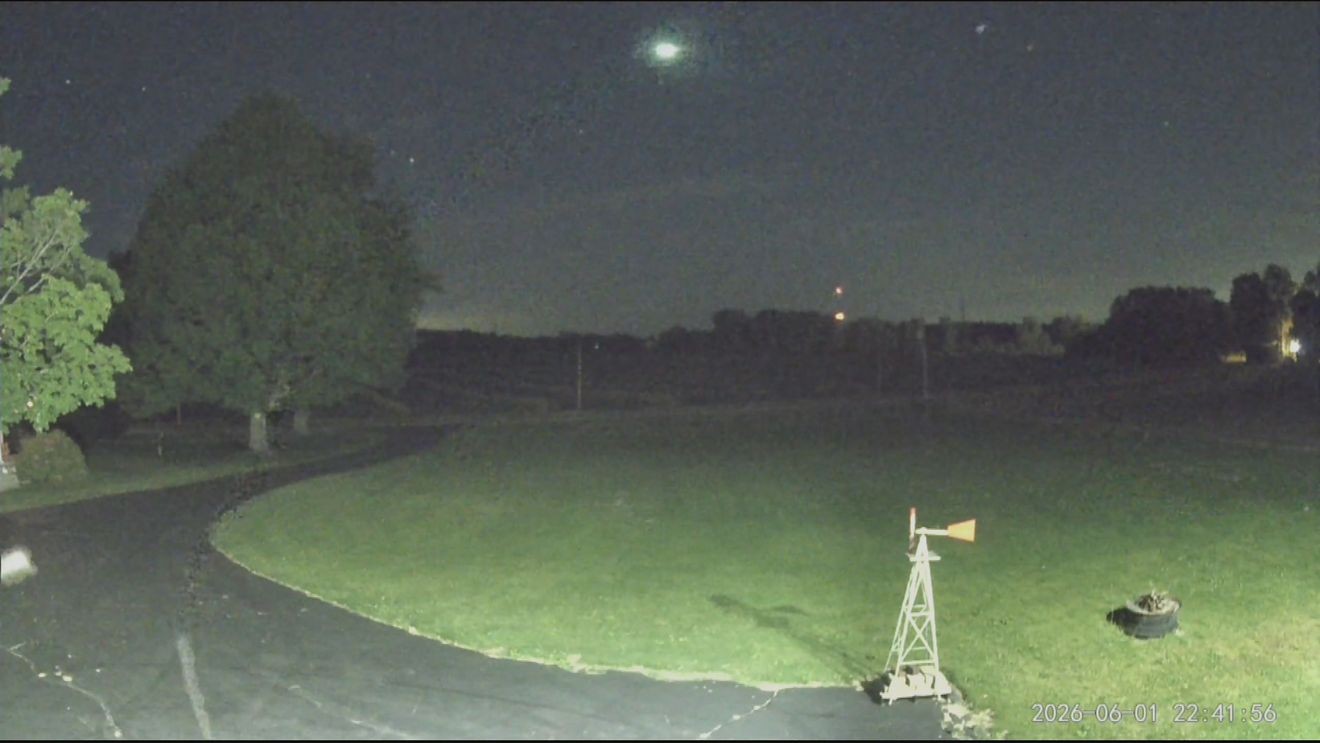
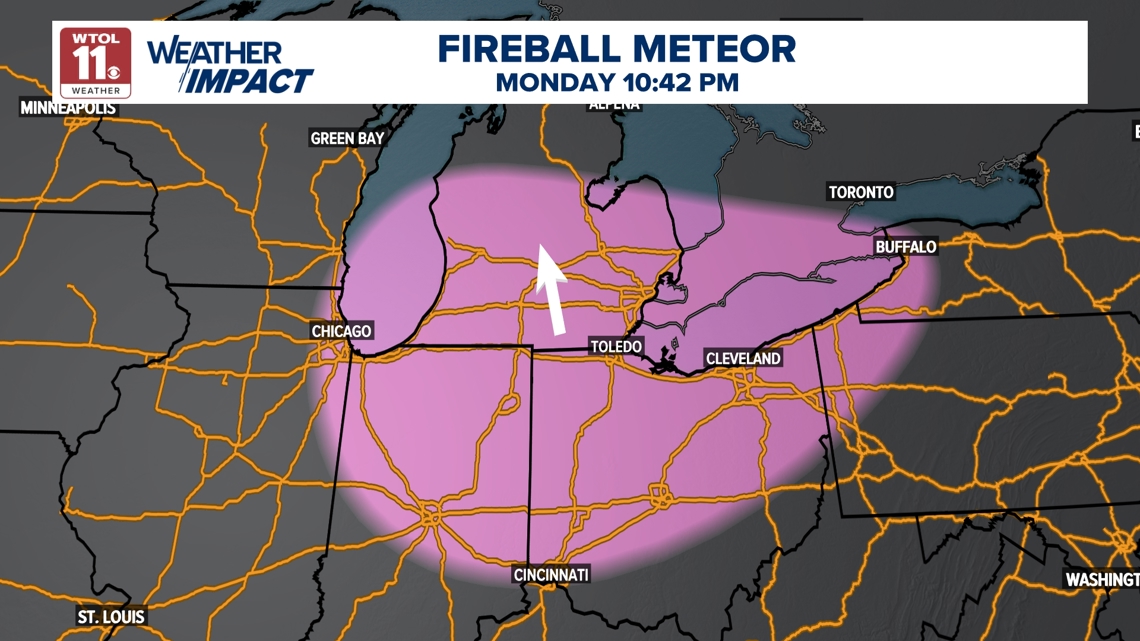
A brilliant fireball meteor streaked across northern Ohio and southern Michigan on Monday night, breaking into fragments and lighting up the sky for hundreds of witnesses in eight U.S. states and Ontario. The event, captured by skywatchers at 10:42 p.m. Eastern Time, marked the third major fireball sighting in Michigan this year, with the American Meteor Society receiving 197 reports from across the Great Lakes region.
Why This Meteor Was Unusual
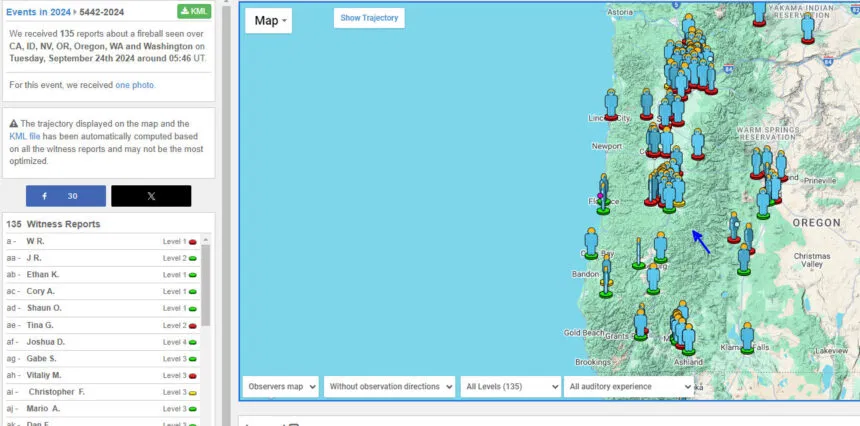
Reports Filed American Meteor Society
The meteor’s brightness and fragmentation set it apart from typical sightings. According to CBS News, witnesses described a vivid blue-green hue, with debris visibly breaking apart as it burned up in the atmosphere. The American Meteor Society noted that while thousands of fireballs occur daily, most go unnoticed over oceans or uninhabited areas. This one, however, blazed over densely populated regions, including Toledo and Detroit, making it a rare spectacle for urban skywatchers.
The event wasn’t isolated. Just weeks earlier, Michigan had already logged two separate fireball incidents—one on March 17 over Medina County and another on March 23 visible across six states, including southern Michigan and northwest Ohio. The frequency suggests an uptick in meteor activity, though experts emphasize that such events are statistically common. “Several thousand meteors of fireball magnitude occur in the Earth’s atmosphere each day,” the American Meteor Society stated. “The vast majority of these, however, occur over the oceans and uninhabited regions, and a good many are masked by daylight.”
The Science Behind the Spectacle
cluster (priority): CBS News
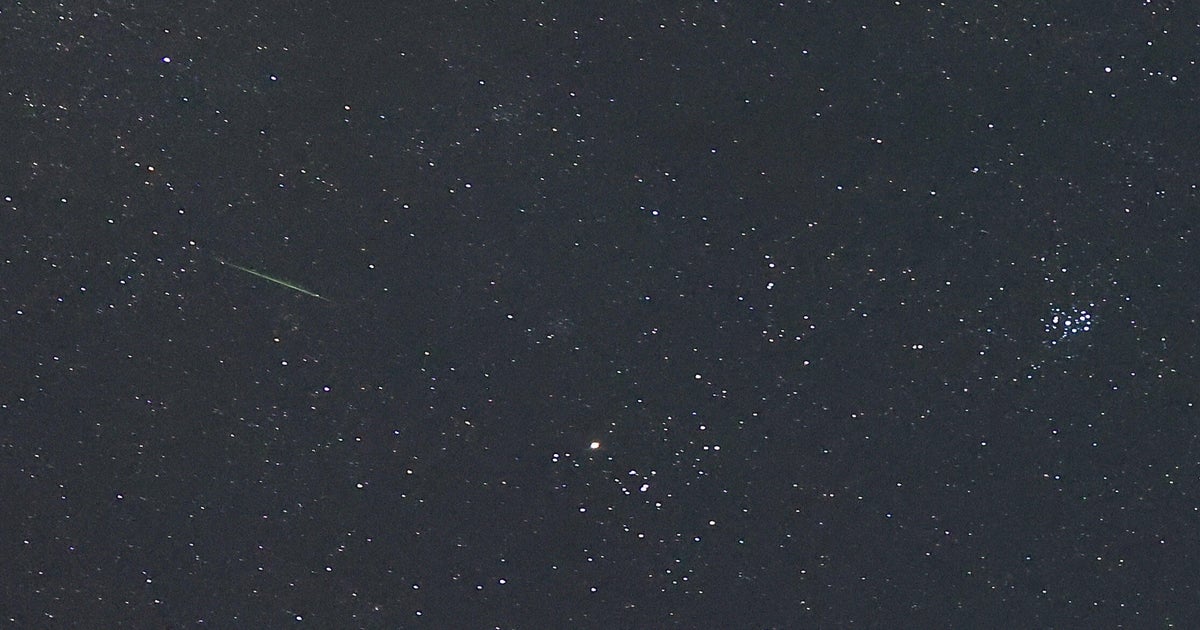
Fireballs like Monday’s are typically fragments of comets or asteroids entering Earth’s atmosphere at speeds exceeding 25,000 miles per hour. The friction with air molecules heats the object to thousands of degrees, creating the visible streak. In this case, the meteor’s fragmentation—described by witnesses as lasting up to seven seconds—indicates it may have been a larger object breaking apart mid-flight. Unlike smaller meteors, which burn up entirely, larger fragments can sometimes survive to reach the ground as meteorites.
No sonic boom was reported, which wtol.com noted as unusual for such bright events. Typically, objects large enough to produce visible fragmentation also generate shockwaves audible on the ground. The absence of a boom suggests the meteor may have disintegrated at a higher altitude than expected, or its trajectory was shallower, reducing the energy transferred to the atmosphere.
Where It Was Seen—and What That Means
Meteor fireball over Michigan
The meteor’s path took it from northern Ohio into southern Michigan, with sightings reported from as far north as Ontario and as far south as Kentucky. Cities like Toledo, Detroit, and Brighton all logged eyewitness accounts, some of which were shared via video. One Michigan resident’s reaction captured the moment’s awe: “That was super cool. I’ve never seen anything like that,” a report to the American Meteor Society read.
Northern Ohio: Toledo, Cleveland, and surrounding areas reported the brightest flashes.
Southern Michigan: Cities like Sodus, Brighton, and Detroit documented the meteor’s descent.
Beyond the Great Lakes: Reports trickled in from Illinois, Indiana, and Ontario, suggesting a wide visibility radius.
The geographic spread underscores how rare it is for such events to be visible over multiple states simultaneously. Most fireballs are localized, but this one’s trajectory aligned with populated corridors, maximizing the number of witnesses. For comparison, the March 23 meteor over Wisconsin and Michigan was also widely seen, but Monday’s event stood out for its vivid coloration and longer duration.
What Happens Next: Tracking Debris and Future Sightings
cluster (priority): wtol.com
While no meteorites have been confirmed on the ground, the American Meteor Society and local astronomy groups are urging residents to check their yards for unusual rocks—particularly if they’re blackened, magnetic, or have a fused crust. Such finds could provide valuable data on the meteor’s composition and origin. However, experts caution that the odds of finding a fragment are slim unless the object was unusually large.
Looking ahead, meteor activity tends to peak during specific annual showers, such as the Perseids in August or the Leonids in November. But sporadic fireballs like this one can occur year-round. The recent cluster of sightings in Michigan—including Monday’s event—may simply reflect increased public awareness and reporting, thanks to social media and dedicated organizations like the American Meteor Society.
For skywatchers, the takeaway is clear: the night sky remains unpredictable. While Monday’s meteor was a stunning anomaly, it’s a reminder that Earth is constantly bombarded by cosmic debris—most of it harmless, but some of it spectacular. As one Toledo resident put it, “It was like nature’s own fireworks show.” And if you missed it, there’s always next time.
Leo Andersson covers innovation, AI, and cybersecurity. A former engineer turned journalist from Stockholm, Leo has contributed to major tech outlets across Europe. His analytical style and deep understanding of technology trends define Globally Pulse’s forward-looking reporting.