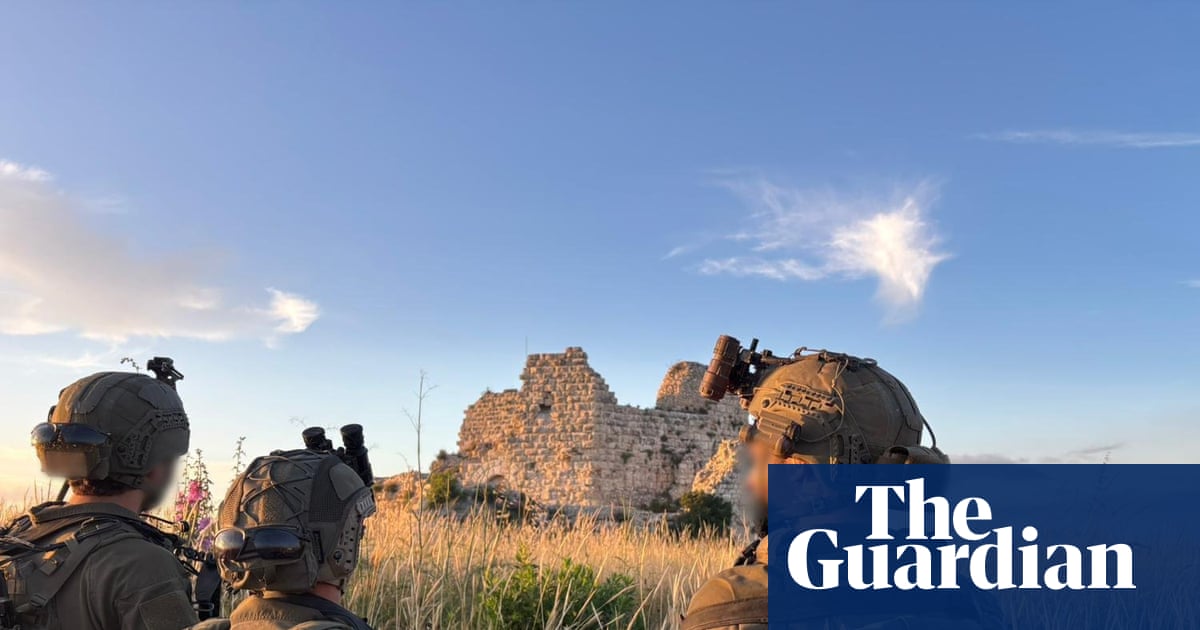
Israel’s capture of Beaufort Castle in Lebanon on Sunday has triggered a geopolitical flashpoint—with European leaders condemning the escalation, oil prices surging, and a fragile ceasefire hanging by a thread. As Benjamin Netanyahu vowed to “deepen and expand” Israel’s hold in southern Lebanon, France called for an emergency UN Security Council meeting, while oil markets reacted sharply to the risk of wider conflict.
Beaufort Castle: Netanyahu’s Symbolic Strike and Strategic Miscalculation
Benjamin Netanyahu’s declaration that Israel has seized the medieval Beaufort Castle—long a Crusader stronghold and a flashpoint in the 2000 withdrawal—was framed as a “dramatic shift” in the campaign against Hezbollah. But analysts question whether the capture is more than a propaganda coup. The castle, perched on a hill overlooking Lebanon and northern Israel, was first seized by Israeli forces in 1982 during their two-decade occupation of southern Lebanon. Its return to Israeli control carries deep symbolic weight: Netanyahu called it a “symbol of a heroic battle for our fighters,” echoing the rhetoric of Israel’s 1982 invasion.
The military significance, however, is less clear. Orna Mizrahi, a former deputy director in Israel’s national security council, told The Guardian that while Israel is “damaging” Hezbollah through operations, the focus must now shift to diplomacy. “We are damaging them in the operations, but in parallel we need to pursue a political and diplomatic solution,” Mizrahi said. The castle’s strategic value is limited—its primary role today appears to be psychological, reinforcing Netanyahu’s narrative of progress in a war that has displaced over a million Lebanese and killed more than 3,300, including dozens of children.
Yet the timing of the announcement—coming just days after U.S.-brokered talks in Washington—suggests a deliberate message. Netanyahu’s order to “expand the maneuver in Lebanon,” issued alongside Defense Minister Yisrael Katz, directly contradicts the fragile ceasefire declared in April. The move has already undermined hopes for a diplomatic breakthrough, with France’s President Emmanuel Macron explicitly condemning the escalation. “Nothing justifies the major escalation under way in south Lebanon,” Macron said, while Lebanon’s Prime Minister Nawaf Salam accused Israel of “implementing a policy of total destruction of cities and towns.”
“Together with Defense Minister Yisrael Katz, I instructed the IDF to expand the maneuver in Lebanon.”
— Benjamin Netanyahu, via CNBC
The Israeli military’s operation to capture Beaufort Castle began on May 30, according to a statement from the Israel Defense Forces (IDF) Spokesperson’s Unit. The IDF reported that its forces “neutralized multiple Hezbollah positions” in the surrounding area, including command centers and ammunition depots. Lebanese officials, however, disputed the IDF’s claims, with Hezbollah’s military wing stating in a statement that “Israeli forces failed to secure the castle and were repelled from key positions.” The Lebanese Armed Forces (LAF) confirmed that clashes had occurred but refused to provide further details, citing “ongoing operations.”
Hezbollah Secretary-General Hassan Nasrallah addressed the situation in a rare public statement on Monday, June 2, warning that Israel’s actions would “escalate the conflict beyond Lebanon’s borders.” Nasrallah, speaking from an undisclosed location, stated: “Israel’s attempt to occupy Beaufort Castle is a violation of Lebanese sovereignty and a direct threat to regional stability. We will respond with all necessary force to defend our land.” The statement came hours after Iran’s Supreme National Security Council issued a directive urging Hezbollah to “maintain restraint but prepare for all scenarios,” according to a source close to the council.

Israel’s capture of Beaufort Castle has also reignited tensions within the Israeli government. Opposition parties, including the Blue and White faction led by Benny Gantz, have criticized Netanyahu’s decision, arguing that it risks widening the conflict. Gantz stated in a press conference on Monday: “The prime minister’s actions are reckless and could lead to a regional war. We must prioritize a diplomatic solution before it’s too late.” Meanwhile, hardline factions within Netanyahu’s coalition, including the Religious Zionism party, have supported the military operation, with party leader Bezalel Smotrich calling it “a necessary step to restore Israel’s deterrence.”
Diplomatic efforts to de-escalate the situation have been complicated by the U.S. position. While the Biden administration has expressed “concern” over the escalation, it has stopped short of condemning Israel outright. A senior State Department official, speaking on condition of anonymity, told Reuters that the U.S. is “monitoring the situation closely and urging all parties to exercise restraint.” The official added that the administration remains committed to the ceasefire but has not ruled out further military support for Israel. Meanwhile, Russia’s Foreign Ministry issued a statement condemning Israel’s actions, calling them “a blatant violation of international law,” while China’s Foreign Ministry urged “all parties to avoid further escalation.”
The timing of Israel’s operation has also raised questions about its coordination with the U.S. According to a report in The Washington Post, Israeli officials briefed their American counterparts on the Beaufort Castle operation ahead of time, but the U.S. did not object. A U.S. official, speaking on background, confirmed that Israel had informed the U.S. of its plans but stressed that the decision to proceed was ultimately Israel’s. The report suggests that the U.S. may have prioritized other diplomatic efforts, including talks with Iran and Saudi Arabia, over immediate intervention in Lebanon.
On the ground, the situation in southern Lebanon remains volatile. The Lebanese Red Cross reported that at least 50 civilians have been killed and 150 injured in the past 48 hours alone, with many fleeing their homes amid Israeli airstrikes. The UN’s Office for the Coordination of Humanitarian Affairs (OCHA) warned that the humanitarian crisis is “deteriorating rapidly,” with over 1.2 million people displaced and critical infrastructure, including hospitals and water treatment plants, under threat. The World Health Organization (WHO) has issued an emergency appeal for $100 million to address the health needs of affected populations.
Hezbollah’s ability to sustain its military operations remains a key question. The group has relied heavily on Iranian-backed supply lines, including drones and missiles, but reports suggest that Israel’s airstrikes have disrupted some of these routes. A senior U.S. defense official told The New York Times that Israel has targeted “key logistics hubs” in Syria and Iraq, which have been used to resupply Hezbollah. However, the official acknowledged that Hezbollah still maintains “significant capabilities” and could escalate its attacks if provoked further.
Meanwhile, Lebanon’s political leadership is deeply divided over how to respond. Prime Minister Nawaf Salam has called for an emergency session of the Lebanese Cabinet to address the crisis, but Hezbollah’s allies in the government have blocked any statement condemning Israel’s actions outright. The Lebanese Armed Forces (LAF) have remained largely neutral, though they have been deployed to assist with civilian evacuations. A spokesman for the LAF told Al-Jazeera that the military is “focused on protecting Lebanese civilians and maintaining stability,” but refused to comment on its stance toward Hezbollah’s operations.
Europe’s Condemnation and the UN’s Looming Showdown
Europe’s response has been swift and unified. France’s Foreign Minister Jean-Noël Barrot has requested an emergency UN Security Council meeting for Monday, June 3, to address the escalation. The UK and Germany have joined France in condemning Israel’s actions, with British Foreign Secretary Yvette Cooper calling for the ceasefire to be respected. The move reflects growing European frustration with Israel’s military campaign, which has shown no signs of abating despite international pleas for restraint.

The UN Security Council’s ability to act, however, remains uncertain. The U.S.—Israel’s closest ally—has historically shielded Israel from binding resolutions, and Russia and China’s positions on the conflict are unpredictable. Lebanon’s Ambassador to the UN, Nawaf Salam, has already framed the crisis in stark terms: “This is not just a military operation; it is a policy of destruction.” The question now is whether the Council can muster enough consensus to demand a ceasefire—or if Israel’s actions will further isolate it diplomatically.
Historically, such escalations have had limited impact on Israel’s military objectives. In 2006, during Israel’s 34-day war with Hezbollah, the UN Security Council passed Resolution 1701, calling for a ceasefire and the withdrawal of Israeli and Hezbollah forces. Yet the resolution did little to alter the ground reality, and Hezbollah emerged stronger. The risk today is that Israel’s deepening incursion could trigger a similar stalemate—with Hezbollah retaining its capacity to strike northern Israel while Israel’s campaign grinds on without a clear exit strategy.
France’s push for a UN Security Council resolution has gained traction among European allies, but divisions remain. Italy’s Foreign Minister Antonio Tajani stated on Monday that his country supports France’s initiative but warned that “any resolution must be balanced and not target only one party.” Meanwhile, Spain’s Foreign Minister José Manuel Albares called for an immediate ceasefire, stating that “the suffering of the Lebanese people must end.” The European Union’s High Representative for Foreign Affairs, Josep Borrell, issued a statement urging “all parties to de-escalate and return to the negotiating table,” but stopped short of threatening sanctions.
The U.S. position remains ambiguous. While the Biden administration has not vetoed France’s call for a Security Council meeting, it has not explicitly endorsed it either. A White House spokesperson told Politico that the U.S. is “engaged in behind-the-scenes diplomacy” to prevent further escalation but has not ruled out using its veto power if a resolution is seen as unfairly targeting Israel. Meanwhile, Russia’s UN Ambassador Vassily Nebenzia has signaled support for a ceasefire, calling Israel’s actions “unacceptable,” while China’s UN Ambassador Zhang Jun has urged “all parties to exercise maximum restraint.”
Lebanon’s Ambassador to the UN, Nawaf Salam, has been actively lobbying for international support. In a closed-door meeting with Security Council members on Monday, Salam presented satellite imagery and witness testimonies allegedly showing Israeli airstrikes on civilian infrastructure. He also highlighted the risk of a regional spillover, warning that “if this conflict is not contained, it could draw in other regional actors, including Iran and Saudi Arabia.” Salam’s appeal came as Hezbollah’s military wing released a statement threatening “escalatory measures” if Israel does not withdraw from Beaufort Castle and surrounding areas.
The UN’s humanitarian agencies are also escalating their warnings. The UN High Commissioner for Refugees (UNHCR) reported that over 1.2 million Lebanese have been displaced since the conflict escalated in April, with many seeking refuge in already overcrowded shelters. The UN Children’s Fund (UNICEF) warned that “children are bearing the brunt of this crisis,” with at least 300 child casualties reported in the past week alone. The UN Secretary-General António Guterres issued a statement calling for an immediate ceasefire, stating: “The world cannot afford another war in the Middle East. The time for diplomacy is now.”
Despite international condemnation, Israel has shown no signs of backing down. Defense Minister Yisrael Katz reiterated Netanyahu’s stance in a press conference on Monday, stating: “Israel will not be deterred by threats or international pressure. Our mission is clear: to weaken Hezbollah’s capabilities and restore security to our northern border.” Katz added that Israel is “prepared for all scenarios,” including a prolonged conflict. Meanwhile, Hezbollah’s political bureau issued a statement warning that “any further Israeli aggression will be met with an even stronger response.”
The UN Security Council’s deliberations on Monday were marked by sharp divisions. France’s draft resolution, which called for an immediate ceasefire and the withdrawal of Israeli forces from Lebanese territory, faced immediate pushback from the U.S. A U.S. diplomat, speaking on condition of anonymity, told Reuters that the draft was “unbalanced” and would not receive U.S. support. The diplomat added that the U.S. prefers a “gradual de-escalation” rather than an abrupt ceasefire. Russia and China, however, signaled their willingness to co-sponsor a revised version of the resolution that included a call for a “humanitarian pause.”
As the Security Council debated, Israel’s military operations continued unabated. The IDF reported that it had conducted airstrikes on “multiple Hezbollah targets” in southern Lebanon, including what it described as “command and control centers.” Lebanese officials disputed the IDF’s claims, with Hezbollah’s military wing stating that Israel’s strikes had “failed to achieve their objectives” and had instead “killed innocent civilians.” The Lebanese Ministry of Health reported that at least 20 civilians had been killed in the past 24 hours, bringing the total death toll since the conflict escalated in April to over 3,300.
Oil Markets React: The Economic Cost of Escalation
While the diplomatic fallout unfolds, the economic consequences are already being felt. Oil prices surged on Monday, with Brent crude futures jumping 2.45% to $93.35 a barrel and West Texas Intermediate (WTI) rising 2.8% to $89.78. The spike reflects investor fears that the conflict could disrupt Middle Eastern oil supplies—a scenario that would push prices even higher. Goldman Sachs, in its latest forecast, warned that while persistent supply disruptions could drive prices above its $90 Brent and $83 WTI projections for the fourth quarter of 2026, weakening demand from China and Europe could offset some of the upward pressure.
The oil market reaction underscores the broader economic stakes. Lebanon’s infrastructure—already strained by years of political instability—is now under direct attack. Hezbollah’s missile and drone strikes on northern Israel have forced mass evacuations, and Israel’s retaliatory airstrikes have targeted critical infrastructure, including power grids and ports. The human cost is staggering: over a million displaced Lebanese, thousands dead, and a regional economy on the brink. Yet the economic damage extends far beyond Lebanon. A prolonged conflict could destabilize global energy markets, trigger inflationary pressures, and further strain already fragile supply chains.
| Commodity | Monday’s Closing Price | Percentage Change | Goldman Sachs 2026 Forecast |
|---|---|---|---|
| Brent Crude | $93.35 per barrel | +2.45% | $90 per barrel (Q4 2026) |
| West Texas Intermediate (WTI) | $89.78 per barrel | +2.8% | $83 per barrel (Q4 2026) |
Goldman Sachs’ caution about demand risks is telling. Weak retail sales data from China and Europe suggests that even if oil prices rise, global consumption may not follow suit—a dynamic that could create volatility in the months ahead. For now, however, the market’s primary concern is the immediate threat to supply. The Strait of Hormuz, a critical chokepoint for global oil shipments, remains a potential flashpoint, and any disruption there could send prices soaring further.
The International Energy Agency (IEA) issued a warning on Monday that the conflict could disrupt oil flows from the Persian Gulf, particularly if Iran or its proxies escalate attacks on shipping lanes. The IEA’s Executive Director, Fatih Birol, stated in a press release: “The risk of a broader regional conflict cannot be underestimated. Any disruption to oil supplies from the Middle East would have severe global repercussions.” The IEA’s latest report also highlighted the vulnerability of global oil markets to geopolitical shocks, noting that spare capacity has been depleted due to OPEC+ production cuts.

Saudi Arabia, the world’s largest oil exporter, has remained largely silent on the escalation, though sources close to the Saudi government have indicated that Riyadh is monitoring the situation closely. A senior Saudi official told The Wall Street Journal that the kingdom is “concerned about the potential for a wider conflict” but has not taken any measures to increase oil production in response. Meanwhile, Iraq’s Oil Ministry reported that exports from its southern ports have been temporarily suspended due to “security concerns,” though officials denied any direct link to the Lebanon-Israel conflict. The suspension has raised fears of further supply disruptions in the region.
The conflict’s economic impact is also being felt in global financial markets. The Dow Jones Industrial Average fell by 2.1% on Monday, with energy stocks leading the decline. The S&P 500 and Nasdaq also experienced losses, reflecting investor concerns about the broader economic fallout. Meanwhile, the euro weakened against the U.S. dollar, hitting a two-week low, as European leaders grappled with the escalation. The Bank of Japan intervened in forex markets to stabilize the yen, which had also come under pressure due to the conflict.
In Lebanon, the economic crisis is reaching catastrophic levels. The Lebanese pound has plummeted to a record low of 15,000 per U.S. dollar on the black market, eroding what little purchasing power remains. The World Bank warned that Lebanon’s economy could contract by 15% this year, with inflation expected to exceed 200%. The bank’s regional director for the Middle East, Saroj Kumar Jha, stated in a press conference: “Lebanon is on the brink of economic collapse. The conflict is exacerbating an already dire situation, and without immediate intervention, the consequences will be devastating.”
The conflict has also disrupted Lebanon’s already fragile banking sector. The Central Bank of Lebanon (BDL) reported that foreign currency reserves have fallen to critically low levels, raising fears of a full-blown banking crisis. The BDL’s governor, Riad Salameh, has refused to comment on the situation, but sources close to the bank have indicated that liquidity is “extremely tight.” The Lebanese banking association warned that the conflict could trigger a run on banks, leading to a collapse of the financial system.
The Ceasefire’s Fragile State: What Happens Next?
The U.S.-brokered ceasefire, declared in April after the killing of Iran’s supreme leader, has been anything but stable. Hezbollah’s rocket and drone attacks on northern Israel have continued sporadically, and Israel’s retaliatory strikes have shown no signs of letting up. Netanyahu’s latest directive to expand operations in Lebanon—issued despite the ceasefire—signals that Israel is not willing to back down, even in the face of international condemnation.
Yet the diplomatic clock is ticking. France’s request for a UN Security Council meeting indicates that Europe is no longer willing to tolerate the escalation in silence. The question is whether the Council can act decisively—or if Israel’s actions will further isolate it on the world stage. Lebanon’s Prime Minister Nawaf Salam’s accusation of a “policy of total destruction” is a stark reminder of the humanitarian catastrophe unfolding on the ground. With over a million displaced and thousands dead, the conflict’s human cost is already devastating.
- The UN Security Council’s response: Will it demand a ceasefire, or will the U.S. veto any binding resolution?
- The oil market’s reaction: Will prices continue to rise, or will demand concerns cap the rally?
- The ground reality in Lebanon: Can Hezbollah sustain its military operations, or will Israel’s campaign force a shift in strategy?
The next 30 days will be decisive. If Israel continues its offensive, the risk of a wider regional war increases. If Hezbollah escalates its attacks, northern Israel could face even greater devastation. And if the UN fails to act, the conflict may spiral beyond control—leaving Lebanon in ruins and the global economy paying the price.
“We are damaging them in the operations, but in parallel we need to pursue a political and diplomatic solution.”
— Orna Mizrahi, former deputy director of Israel’s national security council, via The Guardian
The stakes could not be higher. The world is watching—and the consequences of inaction may be irreversible.
As the crisis deepens, regional actors are positioning themselves for potential fallout. Iran’s Revolutionary Guard Corps (IRGC) has reportedly increased its presence along the Syria-Iraq border, raising concerns that Tehran may seek to directly intervene if the conflict escalates further. A senior U.S. intelligence official told The Washington Post that the IRGC has “mobilized additional forces” in the region but has not yet taken offensive action. Meanwhile, Saudi Arabia has reportedly sent a delegation to Tehran to discuss de-escalation measures, though details of the talks remain classified.
In Israel, public opinion is deeply divided. A poll conducted by the Israel Democracy Institute (IDI) found that 58% of Israelis support the military campaign in Lebanon, while 32% believe it should be scaled back. However, the same poll revealed growing concerns about the humanitarian impact, with 65% of respondents expressing worry about the conflict’s effect on Lebanon’s civilian population. The IDI’s president, Yohanan Plesner, stated: “The public is increasingly aware of the humanitarian crisis in Lebanon, but there is still strong support for the military campaign. This duality reflects the complexity of the situation.”
Hezbollah’s internal dynamics are also under scrutiny. While the group has maintained a united front in its public statements, internal divisions have been reported. A source close to Hezbollah’s political bureau told Al-Monitor that some members are pushing for a more aggressive response to Israel’s actions, while others advocate for caution to avoid a wider regional war. The source added that Nasrallah remains the decisive figure but is “under significant pressure from both Iran and his own leadership.”
The humanitarian crisis in Lebanon is reaching critical levels. The UN’s World Food Programme (WFP) reported that 70% of Lebanese are now facing acute food insecurity, with many families skipping meals to survive. The WFP’s regional director for the Near East, Abdur Rahim Khan, stated: “We are on the brink of a famine in Lebanon. The conflict has destroyed what little agricultural and industrial capacity remains, and without immediate aid, millions will starve.” The WFP has launched an emergency appeal for $150 million to address the food crisis.
The conflict has also had a chilling effect on Lebanon’s already fragile healthcare system. The WHO reported that at least 40 hospitals and clinics have been damaged or destroyed in Israeli airstrikes, leaving many communities without access to medical care. The WHO’s regional emergency director, Dr. Richard Brennan, warned that “the healthcare system in Lebanon is collapsing. We are seeing a surge in preventable diseases, including cholera and malaria, due to the breakdown in sanitation and water supplies.”
In northern Israel, the situation is equally dire. The Israeli government has declared a state of emergency in the Galilee region, with over 300,000 residents evacuated from their homes. The Israeli military has set up temporary shelters in schools and community centers, but resources are stretched thin. The Israeli Red Cross reported that at least 50,000 people are living in evacuation centers, with many struggling to access basic necessities. The organization has appealed for international aid to support its operations in the region.
The conflict’s impact on global supply chains is also becoming apparent. The port of Haifa, Israel’s largest, has suspended operations due to security concerns, leading to delays in the shipment of goods to and from the Middle East. The International Chamber of Commerce (ICC) warned that the disruption could have “far-reaching consequences” for global trade, particularly in the shipping and logistics sectors. The ICC’s secretary-general, John W.H. Denton, stated: “The closure of Haifa Port is a major blow to global commerce. We urge all parties to de-escalate and restore stability to the region as soon as possible.”
As the crisis enters its second month, the risk of a broader regional war is growing. The U.S. Central Command (CENTCOM) has deployed additional forces to the Middle East, including aircraft carriers and fighter jets, as a precautionary measure. A U.S. defense official told CNN that the deployments are “not targeted at any specific country” but are intended to “deter further escalation.” Meanwhile, Russia has increased its military presence in Syria, with reports suggesting that Moscow is preparing to deploy additional troops to support its ally, the Assad regime.
The European Union is also taking steps to mitigate the crisis. The EU’s foreign policy chief, Josep Borrell, announced on Monday that the EU will provide an additional €100 million in humanitarian aid to Lebanon and Israel. Borrell stated: “The suffering of the people in the region must end. The EU stands ready to support both sides in their efforts to de-escalate and restore peace.” The aid package includes medical supplies, food assistance, and funding for emergency shelters.
Despite these efforts, the path to de-escalation remains unclear. Israel’s military campaign shows no signs of abating, and Hezbollah has signaled that it will not back down without a fight. The UN Security Council’s inability to reach a consensus on a ceasefire resolution has left the international community divided. As the conflict enters a new phase, the risk of a wider regional war looms large—and the world is watching closely to see whether diplomacy or military force will prevail.
