The hunt for Planet Nine just hit a roadblock — and the mystery is deeper than ever.
Astronomers have long debated whether a massive, undiscovered planet lurks in the outer reaches of our solar system, pulling on the orbits of distant Kuiper Belt objects with its gravity. The theory gained traction in 2016 when Caltech researchers Konstantin Batygin and Mike Brown proposed its existence based on orbital anomalies. But new evidence from the Subaru Telescope in Hawaii — specifically the discovery of an object called 2023 KQ14 — has thrown the debate into sharper relief. While some astronomers remain convinced of Planet Nine’s gravitational influence, others argue the data is still too thin to draw conclusions. The biggest question now: Is this a missing planet, or just the solar system’s quirks showing their hand?
The Gravitational Clues That Fuel the Planet Nine Hypothesis
The idea of a hidden planet isn’t new. As early as the 1930s, astronomers speculated about an unseen “Planet X” to explain Uranus’s odd orbit — a theory later debunked when Neptune’s mass was recalculated. But the modern Planet Nine hypothesis, revived in 2016, focuses on the Kuiper Belt, a region beyond Neptune filled with icy bodies, dwarf planets, and asteroids.
Batygin and Brown’s theory hinges on the fact that many Kuiper Belt objects (KBOs) don’t orbit the Sun in neat, circular paths. Instead, their trajectories cluster in ways that suggest an unseen gravitational force is nudging them. Brown, who helped demote Pluto from planetary status, has been a vocal advocate.
“I think it is very unlikely that P9 does not exist. There are currently no other explanations for the effects we see, nor for the myriad other P9-induced effects we see on the Solar System.”
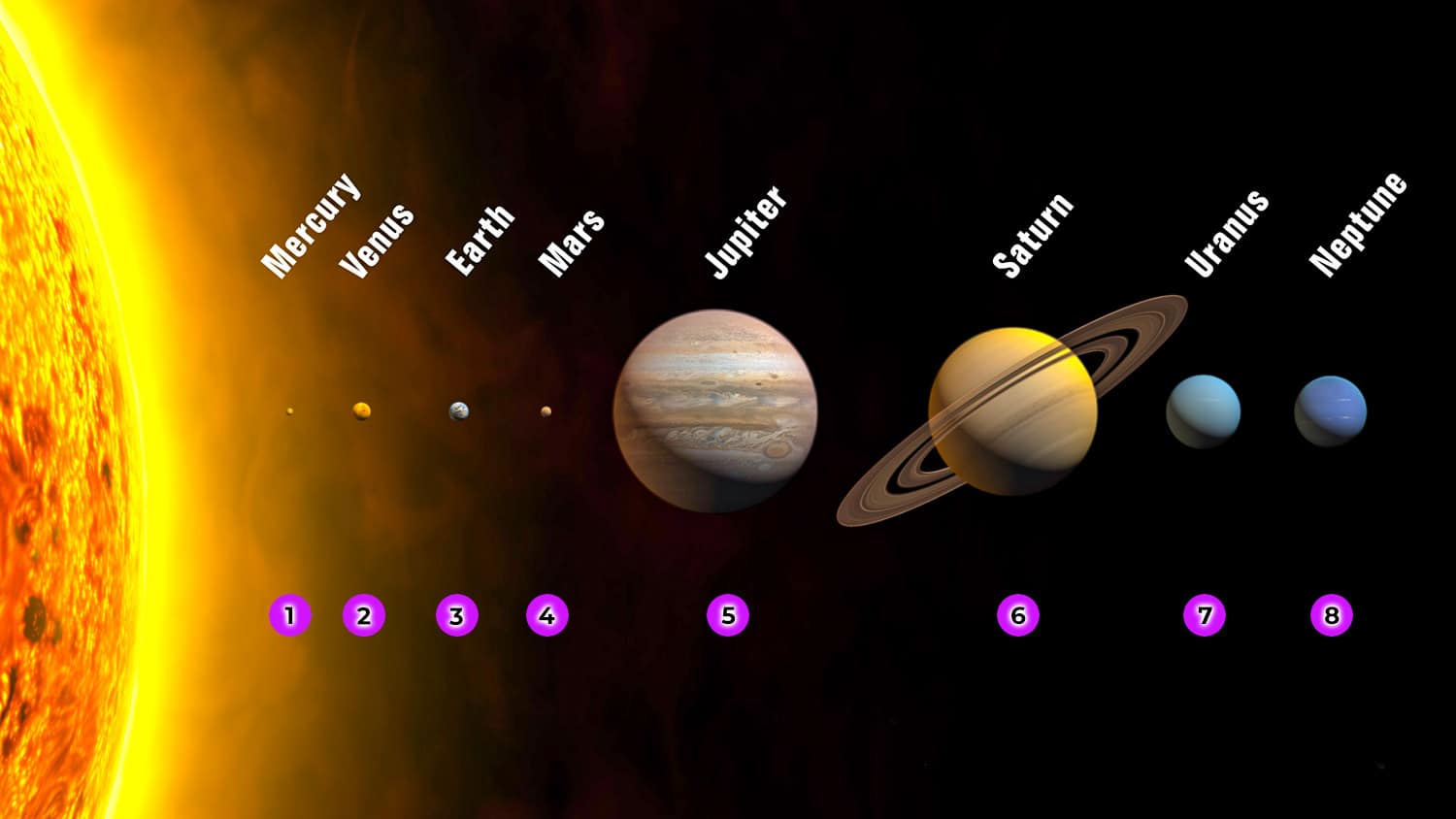
Photo: nineplanets.org
One of the strongest pieces of evidence came in 2018 with the discovery of 2017 OF201, a dwarf planet roughly 700 kilometers wide with a highly elliptical orbit. Its path suggested either a violent collision early in the solar system’s history or the pull of a massive, unseen body. If Planet Nine exists, it would be 5 to 10 times Earth’s mass and orbit the Sun every 10,000 to 20,000 years — making it nearly impossible to spot with current telescopes.
Yet skepticism persists. Some argue that the gravitational influence of known KBOs hasn’t been studied long enough to rule out other explanations, like a ring of debris or even a primordial black hole lurking in the outer solar system. Others point to the sheer scale of the search: with an orbital period of 24,000 years, even subtle gravitational effects might take four to five orbits to detect.
How 2023 KQ14 Challenges the Planet Nine Model
The latest twist comes from 2023 KQ14, a newly discovered Kuiper Belt object spotted by the Subaru Telescope. Its orbit doesn’t neatly fit the Planet Nine model, raising questions about whether the theory can explain all observed anomalies — or if it’s just one piece of a more complex puzzle.
According to ScienceDaily, the discovery underscores a growing divide in the astronomical community. While some researchers argue that Planet Nine’s gravitational signature should still be detectable in the orbits of other KBOs, others contend that the data is too sparse to draw definitive conclusions. The problem isn’t just finding Planet Nine; it’s proving that its influence is consistent across enough objects to rule out alternative explanations.
One alternative gaining traction is the "fundamental plane" hypothesis, proposed by astronomers studying exoplanets. This model suggests that the clustering of KBO orbits might stem from the solar system’s formation dynamics rather than an external gravitational force. If correct, it could redefine how we understand planetary systems — not just ours, but those around other stars.
Upcoming Telescopes That Could Resolve the Debate
So where does this leave the hunt for Planet Nine? Astronomers agree on one thing: better data is needed. Projects like the Vera C. Rubin Observatory, set to begin full operations in 2025, promise to revolutionize our view of the outer solar system. Its Legacy Survey of Space and Time (LSST) will scan the sky for moving objects, potentially uncovering more KBOs whose orbits could either confirm or disprove Planet Nine’s existence.
Scientists May Have Just Found Planet Nine (New Evidence April 2025)
But even if Planet Nine is found, the debate won’t end there. The discovery would force astronomers to revisit the 2006 definition of a planet set by the International Astronomical Union (IAU).
Photo: astrobackyard.com
Orbit the Sun.
Be massive enough to be spherical.
Have "cleared the neighborhood" around its orbit.
Planet Nine, if it exists, would likely meet the first two criteria but fail the third — since its orbit overlaps with the Kuiper Belt. This could reignite the "dwarf planet" vs. "planet" debate, with some scientists arguing for a more geophysical-based definition that focuses on an object’s physical properties rather than its orbital dominance.
Meanwhile, the discovery of 2023 KQ14 and other anomalous KBOs suggests that the outer solar system is far more dynamic than once thought.
If we can’t see it, does it still count?
The Future of Planet Nine Research and Its Broader Implications
Despite ongoing debates and tantalizing clues, the existence of Planet Nine remains unproven without direct observation or definitive gravitational evidence.
Leo Andersson covers innovation, AI, and cybersecurity. A former engineer turned journalist from Stockholm, Leo has contributed to major tech outlets across Europe. His analytical style and deep understanding of technology trends define Globally Pulse’s forward-looking reporting.