
Scientists at Aix-Marseille University have solved a 150-year-old mystery by revealing that the Venus flytrap’s lightning-fast snap is triggered by a rapid softening of its outer cell walls—not by water redistribution as previously believed. The discovery, published Thursday in Science, upends decades of research and could inspire new designs for soft robotics and adaptive materials.
The Misleading Role of Water in the Venus Flytrap’s Snap Mechanism
How the Venus Flytrap’s Snap Works: The Cell-Wall Secret
For centuries, the Venus flytrap (Dionaea muscipula) has baffled scientists with its ability to snap shut in a tenth of a second—fast enough to trap insects before they escape. But the mechanism behind this predatory reflex remained unclear, even after Charles Darwin studied it in the 1800s. Now, a team led by physicist Yoël Forterre at the French National Centre for Scientific Research (CNRS) and Aix-Marseille University has pinpointed the exact trigger: the outer cells of the trap’s lobes soften almost instantly, releasing stored elastic energy like a spring.

The breakthrough contradicts the long-held theory that water movement between cells drove the closure. As Forterre explained to The Guardian, "Classical techniques are often too invasive and immediately trigger the trap, making it very difficult to probe the plant’s mechanical state." To bypass this issue, the researchers used dental glue to immobilize the traps while keeping them functional, then measured cell wall stiffness with a nanoindenter—a device that applies precise pressure to detect changes in rigidity.
Their findings, published in Science, show that water transport is too slow to explain the snap. Instead, the outer epidermal cells soften by roughly 30–40% within one second, releasing the energy that causes the trap to buckle shut. This process is "the fastest modulation of wall mechanics reported in plants," the team wrote, and it occurs without muscles or nerves—a feat of plant biomechanics that engineers may soon replicate.
- The Water-Pressure Theory: Water moved between cells, swelling one side of the leaf to force the lobes together (like a hydraulic door).
- The Cell-Wall Softening Theory: The outer cells’ walls relaxed, releasing stored elastic energy to trigger the closure.
Both theories had flaws. The water theory struggled to explain why the snap happened so quickly—water movement between cells would take far longer than the observed 0.1-second closure. The cell-wall theory, meanwhile, lacked direct evidence until now.
Forterre’s team tested both by injecting water into cells and measuring stiffness changes. As KSL News reported, they found that water transport would take 30 to 150 seconds—far too slow to account for the snap. Instead, the nanoindenter measurements revealed that the outer cells’ walls softened within one second, matching the timing of the closure.
"What surprised us most was not only that water transport turned out to be too slow," Forterre told The Guardian, "but also that the mechanical signature of closure pointed so clearly to a rapid softening of the cell wall."
How Nanoindentation Revealed the True Trigger of the Snap
Why This Discovery Matters Beyond Botany
The Venus flytrap isn’t just a curiosity—it’s a model for understanding fast plant responses and could inspire soft robotics. As the CNRS study notes, the plant’s mechanism relies on dynamic cell wall mechanics, a process that could be mimicked in synthetic materials for adaptive structures or medical devices.
Marilyn Ball, a plant scientist at the Australian National University, called the findings "striking" in an interview with the Australian Broadcasting Corporation (ABC). "This kept the trap fully functional while preventing the large movements that would otherwise interfere with the measurements," Forterre added, describing their experimental setup. The discovery also challenges assumptions about plant speed: previous studies had shown some plants respond to stressors in seconds, but none as rapidly as the flytrap’s snap.
Forterre, who has studied the plant for 20 years, framed the breakthrough in evolutionary terms: "Evolution often reuses and refines existing mechanisms. The Venus flytrap pushes this to an extreme, using cell wall softening on a timescale of about one second." This rapid adjustment could redefine how scientists view plant biomechanics—and how engineers design materials that move without traditional actuators.
Potential Applications in Robotics and Materials Science
What Happens Next: Robotics, Medicine, and Unanswered Questions
The study leaves open questions, particularly about the molecular triggers behind the cell wall softening. As EL PAÍS noted, previous research in 1989 had hinted at this mechanism, but Forterre’s team was the first to confirm it empirically. Future work may explore whether other carnivorous plants use similar strategies—or if the Venus flytrap’s snap is a one-of-a-kind adaptation.
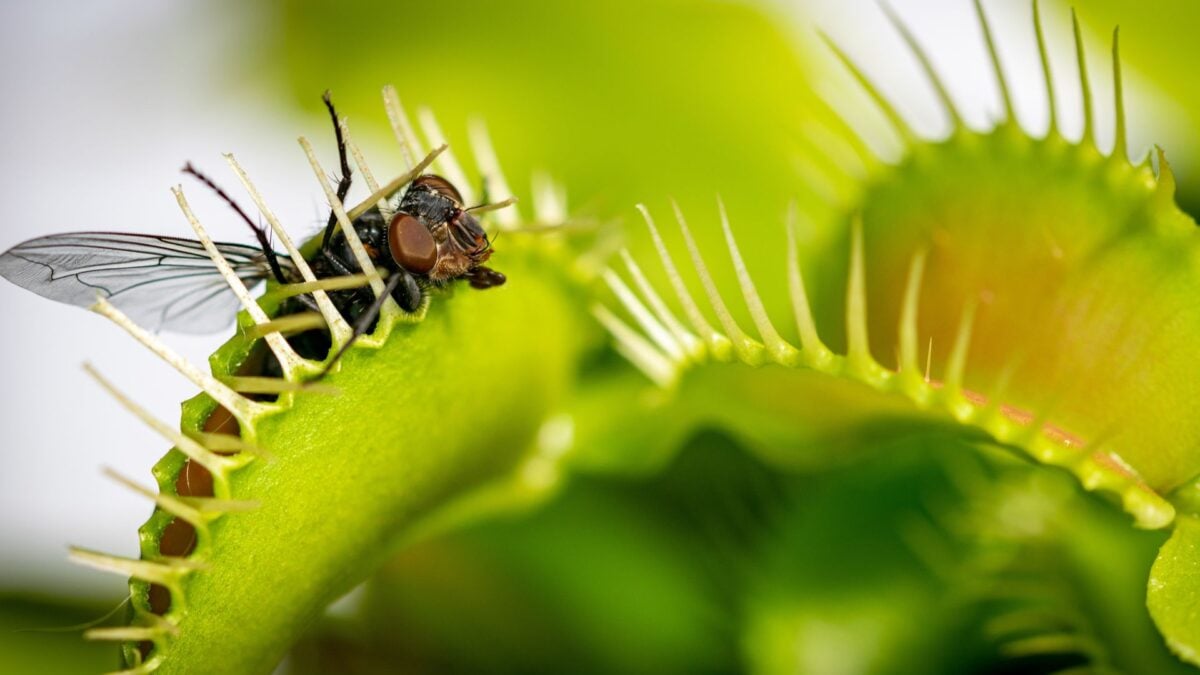
For robotics, the implications are clear. Soft robots currently rely on hydraulic or pneumatic systems to mimic movement. The flytrap’s mechanism—no pumps, no muscles, just mechanical energy release—could lead to lighter, more efficient designs. "By clarifying the importance of wall relaxation in driving the closure," the study concludes, "we’ve identified a new principle for fast, energy-efficient motion in biological and synthetic systems."
Meanwhile, plant scientists like Kim Johnson of La Trobe University are already rethinking cell wall dynamics. "But what they’ve shown that’s really novel is just how quickly that can happen," Johnson told the ABC, emphasizing that the flytrap’s speed redefines what plants are capable of.
Why This Discovery Could Redefine Plant Biomechanics Research
The Bottom Line
The Venus flytrap’s snap has been solved—but the implications stretch far beyond botany. From robotics to materials science, this discovery could reshape how we design machines that move like living things. And as Forterre put it to The Guardian: "One of the most iconic plants in the world can still surprise us. After more than a century of research, we are still discovering fundamentally new things about how the Venus flytrap works."
For now, the mystery of the snap is closed—but the applications are just beginning to open.
Find more reporting in our Technology section.
