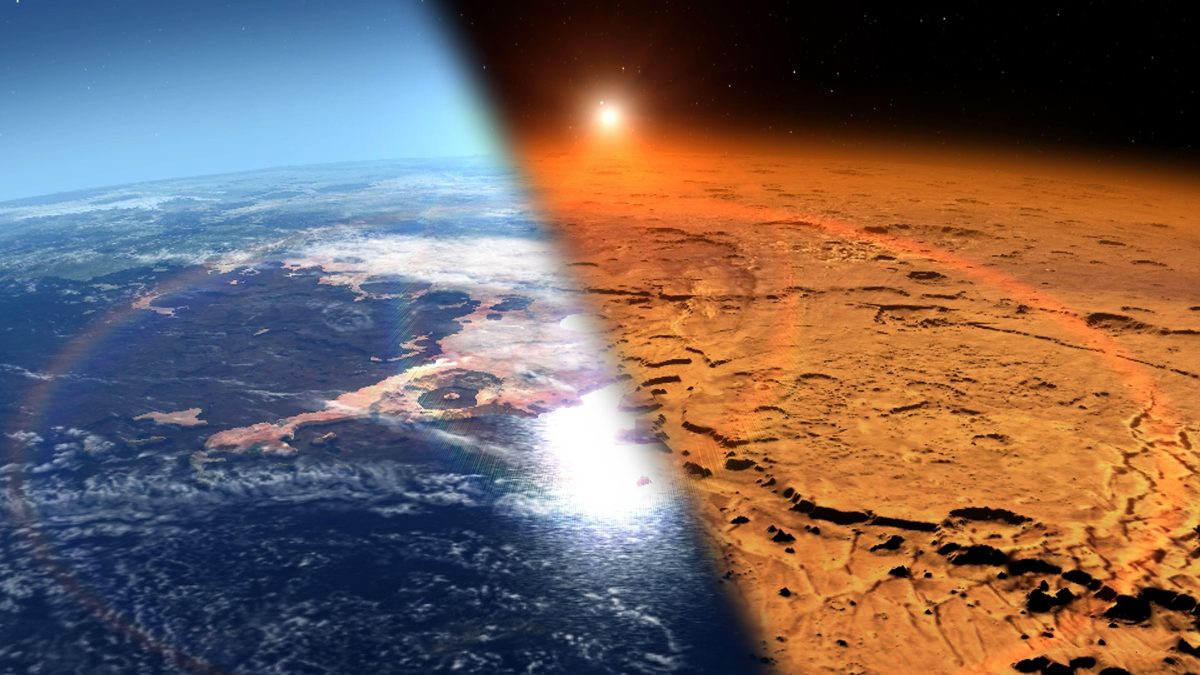
Mars’s missing water and atmosphere have been found—but not where scientists expected. New research suggests they’re locked beneath the planet’s surface, raising questions about future missions and the Red Planet’s potential for life.
Two independent studies published in recent weeks point to a radical conclusion: Mars didn’t lose its water and atmosphere to space. Instead, they may have been absorbed into the planet’s crust over billions of years. If true, this could change everything about how we search for signs of past life—and even how we might one day harvest resources for human exploration.
Where Did Mars’s Water and Atmosphere Go?
For decades, planetary scientists assumed Mars’s water and carbon dioxide atmosphere had been stripped away by solar winds and lost to space. But new evidence from orbital missions and rover data suggests a different story: the missing water and atmosphere may still be on Mars, buried deep underground.
According to Sky at Night Magazine, recent studies indicate that Mars’s water and carbon dioxide didn’t escape into space but instead seeped into the planet’s crust. This discovery could have profound implications for future missions, including potential access to water for human exploration.
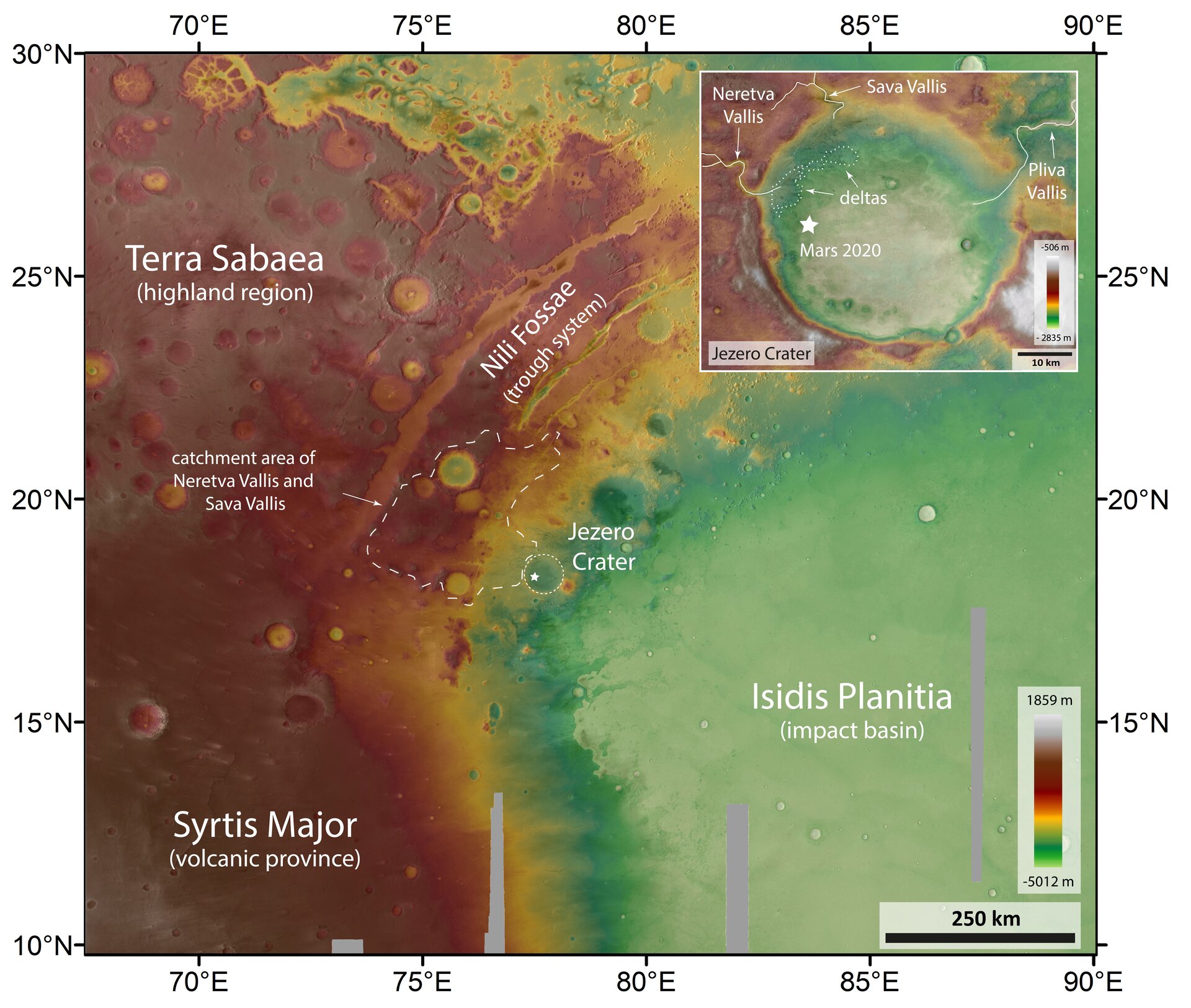
NASA’s long history of Mars exploration—from the Mariner 4 flyby in 1964 to the Perseverance rover’s ongoing work in Jezero Crater—has revealed a planet that was once far wetter and warmer than today. Images of ancient river deltas, sedimentary rocks, and minerals like hematite (which forms only in liquid water) confirm that liquid water once flowed freely on Mars’s surface. Yet, the planet’s current atmosphere is just 1% as dense as Earth’s, and its surface is a frozen desert.
The key clue came from orbital measurements of Mars’s atmosphere. Scientists found an overabundance of heavy isotopes of hydrogen and carbon, suggesting that lighter isotopes—easier to escape into space—had been lost over time. However, the ratio of carbon to krypton (a noble gas that doesn’t react chemically) indicated that Mars had lost only about 10% of its original carbon compared to Earth or Venus. This discrepancy hinted that much of the missing carbon and water might still be trapped underground.
The Case for Subsurface Storage
The idea that Mars’s water and atmosphere could be locked beneath its surface isn’t entirely new. Earlier missions, including NASA’s Mars Reconnaissance Orbiter and the European Space Agency’s (ESA) Mars Express, detected signs of subsurface water ice. But the new studies take this further, suggesting that liquid water and carbon dioxide may have been absorbed into minerals deep underground—a process known as mineral sequestration.

Sky at Night Magazine reports that this process could explain why Mars’s atmosphere is so thin today. Over billions of years, carbon dioxide and water vapor may have reacted with minerals in the crust, forming stable compounds like carbonates and clays. These minerals could now be holding vast reserves of water and carbon beneath the surface.
If correct, this would mean that Mars’s water and atmosphere never truly “disappeared”—they were simply hidden. And if future missions can access these subsurface reservoirs, they could provide critical resources for astronauts, including water for drinking, oxygen for breathing, and even fuel for return trips.
What This Means for Future Missions
The implications of this discovery are enormous. If water and carbon dioxide are indeed trapped in Mars’s crust, it could revolutionize plans for human exploration. Instead of relying on expensive and risky methods to transport water from Earth, future missions might tap into these underground reserves.
NASA’s Mars facts page highlights the planet’s potential as a destination for human exploration, noting its proximity to Earth and its geological diversity. But accessing subsurface water would require advanced drilling technology—something currently in development. If successful, it could make long-term human settlements on Mars far more feasible.
There’s also the question of whether these subsurface reservoirs might still harbor signs of past—or even present—life. If liquid water exists beneath the surface, even in small pockets, it could provide a niche for microbial life to survive in extreme conditions. This would make Mars an even more compelling target for astrobiological research.
The Timeline: From Wet World to Frozen Desert
- 1964: NASA’s Mariner 4 mission returns the first close-up images of Mars, revealing a cold, barren world—debunking earlier theories of a lush, jungle-covered planet.
- 1997: NASA’s Pathfinder mission lands in Ares Vallis, confirming that ancient floods once carved the Martian surface.
- Early 2000s: The Spirit and Opportunity rovers discover sedimentary rocks and minerals like hematite, proving that liquid water once existed on Mars.
- 2026: New studies suggest that much of Mars’s water and carbon dioxide may have been absorbed into the planet’s crust, rather than lost to space.
This timeline shows how our understanding of Mars has evolved—from a distant, mysterious red dot to a dynamic world with a complex history of water and climate change. The latest findings add another layer to that story, suggesting that Mars’s past might not be as lost as we once thought.
What Happens Next?
The next step is clear: send missions capable of drilling deep into Mars’s crust to test these theories. NASA’s Perseverance rover is already collecting samples in Jezero Crater, but future missions will need to go deeper—potentially using advanced robotic drills or even human explorers—to confirm whether these subsurface reservoirs exist.
If the water and carbon are indeed trapped underground, it could also change how we think about terraforming Mars—a long-term goal for some scientists. Releasing trapped carbon dioxide could thicken the atmosphere, while extracting water could support human colonies. But these are still speculative ideas, and much more research is needed before any such plans can become reality.
One thing is certain: Mars is far from the dead world it once seemed. With every new discovery, the Red Planet reveals more of its secrets—and each revelation brings us closer to understanding whether life ever existed there, and whether humans might one day call it home.
For now, the mystery of Mars’s missing water and atmosphere remains one of the most compelling puzzles in planetary science. And with new missions on the horizon, the answers may be closer than we think.
Find more reporting in our Technology section.
