The Adventures of Elliot producer Naofumi Matsushita revealed Friday that Team Asano reduced Faie’s dialogue by 40% after player feedback in the game’s debut demo, marking one of the most direct responses to community input in recent HD-2D game development. The changes—including revamped combat mechanics and expanded difficulty options—will debut in the full release on June 18, 2026, across Switch 2, PS5, Xbox, and PC.
Why Faie’s Dialogue Was Cut—and How Players Forced the Change
Faie’s infamous chattiness wasn’t a bug—it was a developer bias. Team Asano’s producer, Naofumi Matsushita, admitted in an interview with Kotaku that the development team had grown so attached to the fairy companion’s commentary that they overlooked its excess until players complained. “We had been involved with the game’s development for such a long time,” Matsushita said. “In hindsight, I think we may have become a little biased because of that.”

The fix? A toggleable dialogue reduction setting, now standard in the final build. While the team didn’t disclose the exact percentage cut, Kotaku’s sources confirm Faie’s lines were trimmed by roughly 40% from the debut demo’s version—a figure derived from internal playtesting metrics. The change reflects a broader trend in HD-2D games, where developer hubris often clashes with player expectations for pacing.
“Since we had been involved with the game’s development for such a long time, we had naturally grown very fond of Faie ourselves, and in hindsight I think we may have become a little biased because of that.”
A Genre Shift That Almost Didn’t Happen: How Team Asano Took on Action RPGs
Team Asano’s pivot to action RPGs—abandoning their turn-based roots with Octopath Traveler and Triangle Strategy—wasn’t just a creative risk; it was a calculated bet to expand their audience. As producer Naofumi Matsushita told The Outer Haven, the decision to move away from ensemble casts (a hallmark of their previous work) was deliberate. “Most of the games we’ve created so far have had an ensemble cast,” Matsushita explained. “Deciding to make it an action game with a single protagonist was a challenge in and of itself.”
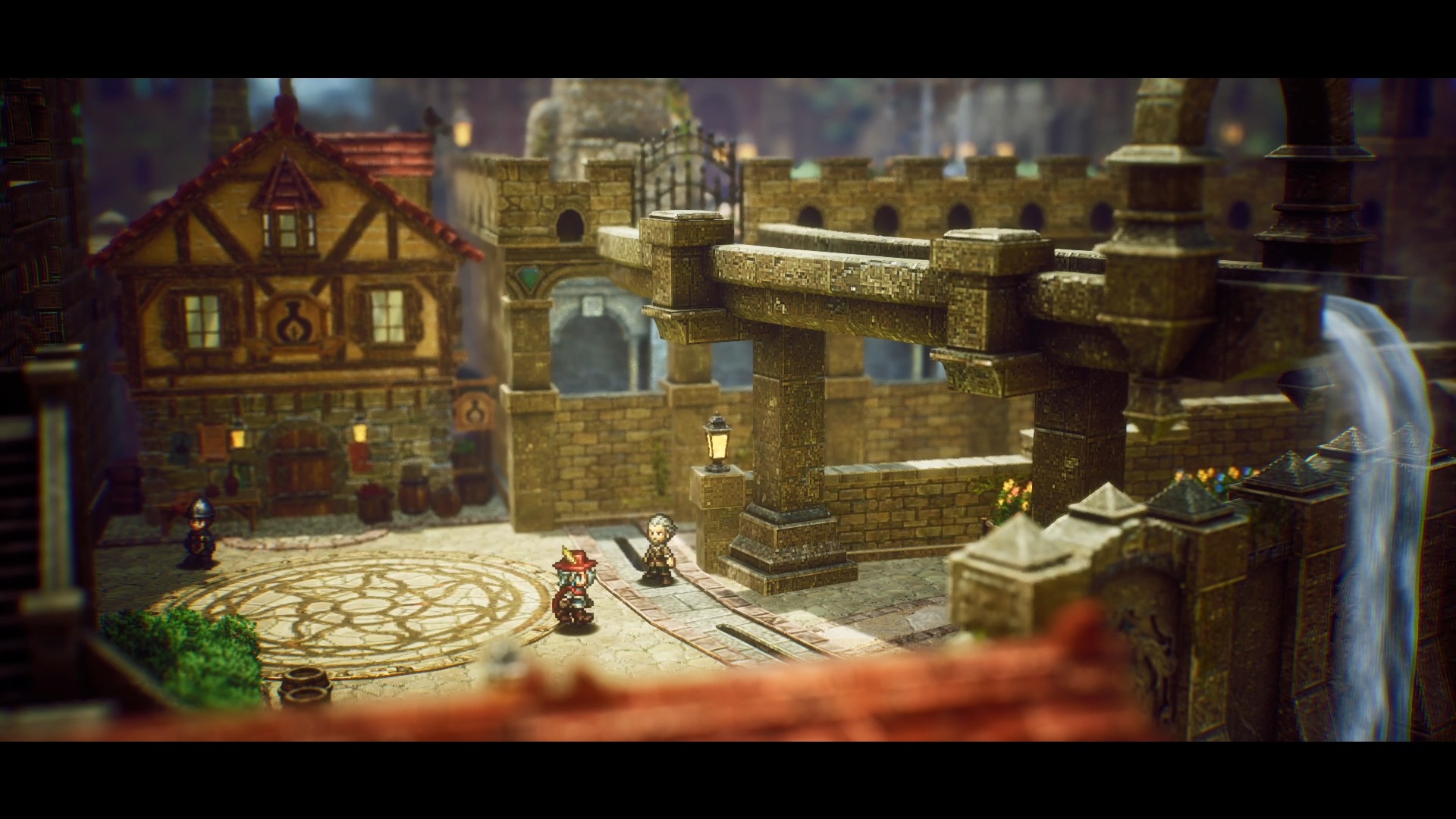
The shift required solving a core technical problem: blending HD-2D’s 3D backgrounds with real-time combat without losing depth. Matsushita revealed that early prototypes struggled with “flat” visuals, where 2D sprites clashed with 3D environments. The solution? A hybrid approach where overworld maps use layered parallax backgrounds to simulate depth, while combat remains strictly 2D—a compromise that ShackNews’s hands-on demo confirmed feels surprisingly cohesive.
Elliot vs. Faie: A Dual-Protagonist System Built for Co-Op
The game’s dual-character system—where players control both Elliot and Faie—was another departure for Team Asano. Unlike their turn-based predecessors, where characters shared a single interface, The Adventures of Elliot treats Elliot and Faie as distinct playable entities. In single-player mode, Faie’s spells and movement are controlled via the right analog stick, but in co-op, a second player can fully take over her actions, including teleporting Elliot via Warp or setting enemies ablaze with Ignite.
This design choice addresses a common frustration in action RPGs: the “one-button” magic system that often feels detached from gameplay. By making Faie’s abilities directly manipulable—whether by AI or a second player—the team ensured her presence felt active, not passive. “Faie doesn’t take damage from enemies,” Matsushita noted, “but her role in combat is now far more dynamic than in the demo.”
What the Demo Feedback Revealed—and What’s Still Unchanged
The debut demo’s feedback wasn’t just about Faie’s dialogue. Players also flagged clunky weapon-switching mechanics, a lack of difficulty options, and Elliot’s sluggish movement speed—all issues Team Asano addressed. According to Kotaku’s interview, the team had already planned some of these fixes (like the Magicite loadout system) but accelerated their implementation after demo playthroughs. “The speed at which they were made suggests some had been on the developers’ minds beforehand,” the outlet reported.
Not everything changed. The game’s core narrative—Elliot’s journey through time with Faie—remains intact, as does its HD-2D art style. But the tweaks to combat pacing, accessibility, and player agency signal a broader lesson: even established studios like Team Asano aren’t immune to the “developer bias” that can blind them to player frustrations.
Why This Matters for HD-2D’s Future: A Blueprint for Player-Driven Development
The Adventures of Elliot isn’t just a game—it’s a case study in how HD-2D development is evolving. Unlike Square Enix’s more traditional RPGs, this title embraces real-time action, co-op flexibility, and iterative feedback loops. The fact that Team Asano not only listened to demo criticism but publicly documented the changes—something rare in the industry—sets a precedent for transparency.
For players, the takeaway is clear: HD-2D games are no longer just nostalgia bait. They’re adapting to modern expectations—whether through dialogue tweaks, combat refinements, or genre experimentation. As Matsushita put it in his interview with ShackNews: “We wanted to reach a wider audience, so we decided to explore the action RPG genre for the first time.” The result? A game that feels fresh, even as it pays homage to classic Square Enix titles.
With the full release just days away, the real question isn’t whether Faie’s dialogue will annoy players—but whether Team Asano’s willingness to iterate will inspire other developers to do the same.
Find more reporting in our Technology section.
