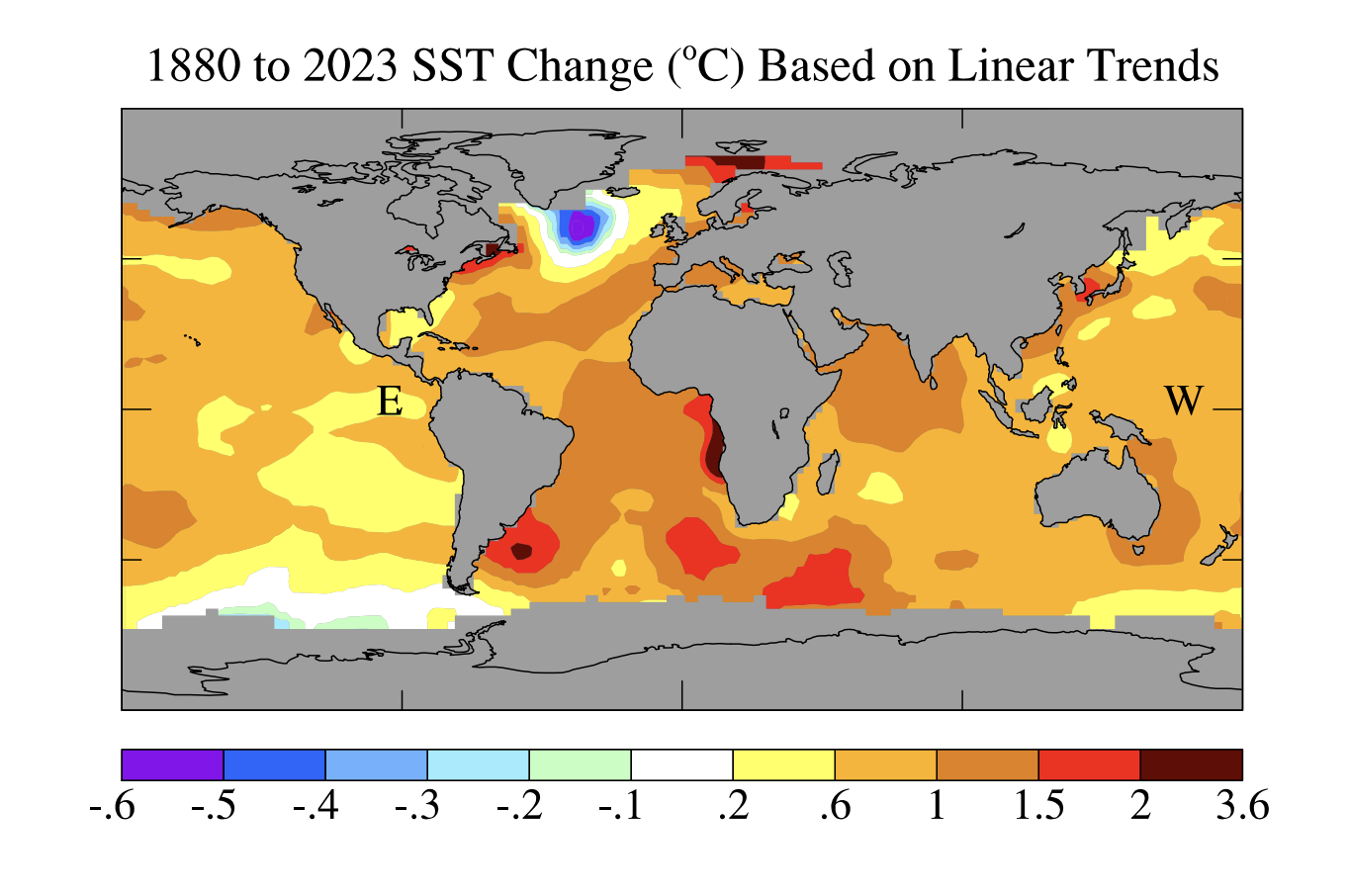
Scientists have linked an unusual “cold blob” in the North Atlantic to changes in the Atlantic Meridional Overturning Circulation (AMOC), a critical ocean current system, according to research published June 15, 2026. The region south of Greenland has cooled by up to 1 degree Celsius over decades, raising concerns about the AMOC’s weakening, which could disrupt global weather patterns and sea levels.
The Cold Blob’s Origins and Scientific Disagreements
The North Atlantic’s “cold blob” — a patch of water cooling while most of the ocean warms — has been a focal point for climate scientists. Researchers at the University of California, Riverside, found the area’s cooling is tied to shifts in the AMOC, a system of currents that redistributes heat like a “global conveyor belt.” “The region to the south of Greenland is highly sensitive to AMOC change, where the surface cooling due to an AMOC slowdown may exceed background greenhouse gas warming,” said Wei Liu, a climate scientist at UC Riverside, according to USA Today.
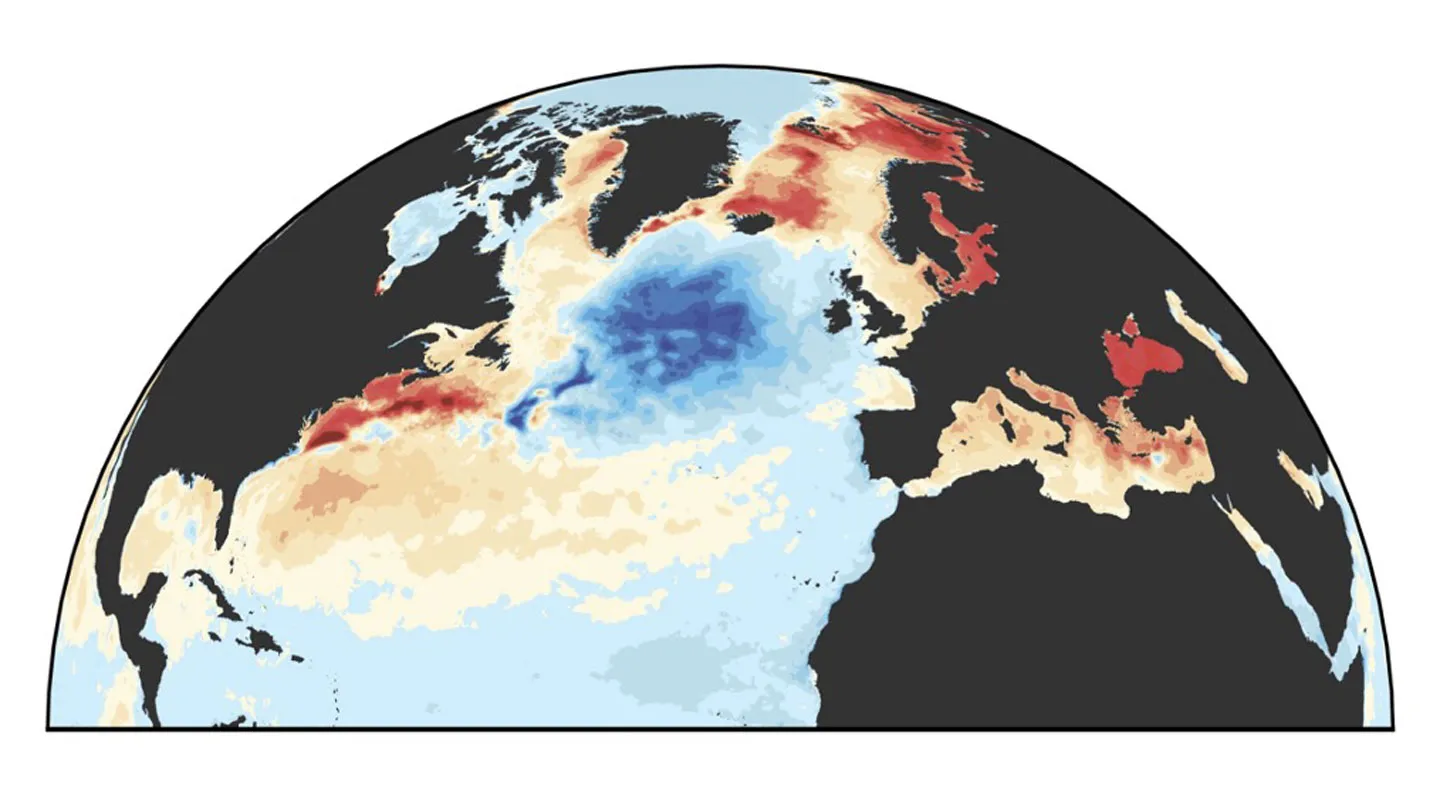
However, not all studies agree on the cause. A 2023 study in *Geophysical Research Letters* by Stefan Rahmstorf and colleagues suggested the cooling stems from reduced heat transport by the AMOC, not atmospheric heat loss. “The cold blob appears to be cooling because less ocean heat is arriving,” the study concluded, citing observations of heat content drops in the top 1,000 meters of the water column, as reported by Science News.
The Guardian highlighted conflicting interpretations, noting that some researchers argue the AMOC’s weakening is already underway, while others caution against overestimating the risk. “The Amoc is projected to weaken enough to radically change the weather… but projections vary between climate models,” the outlet wrote, citing The Guardian. The scientific debate often hinges on whether the cooling is a symptom of a temporary atmospheric shift or a long-term structural decline in the ocean’s circulation strength.
Understanding the AMOC Mechanism
The Atlantic Meridional Overturning Circulation functions as a massive, continuous system of deep-ocean circulation driven by temperature and salinity gradients. Warm, salty water flows north from the tropics toward the North Atlantic, where it cools and becomes dense enough to sink into the deep ocean. This sinking action pulls more warm water northward, effectively acting as a heat pump that keeps Northern Europe significantly warmer than other regions at similar latitudes. When this cycle is interrupted—typically by an influx of cold, fresh water from melting glaciers—the circulation slows. The resulting “cold blob” is a physical manifestation of this disruption, as the heat transport mechanism fails to deliver the expected warmth to the subpolar North Atlantic.
Global Implications and Regional Risks
A collapse of the AMOC could accelerate climate change in Europe by up to 10 times, according to The Guardian. Cooler ocean temperatures might alter storm paths, shift pressure systems, and disrupt marine ecosystems. “Europe would experience climate change up to 10 times faster than today,” the article warned, emphasizing the lack of preparedness for such a scenario.
For more on this story, see Atlantic Ocean ‘Cold Blob’ Linked to Weakening AMOC.
Sea level rise is another critical concern. A 2015 study linked a 30% slowdown in the AMOC between 2009 and 2010 to a 128-millimeter spike in sea levels north of New York City, as noted by USA Today. The San Francisco Chronicle added that the cold blob’s effects could ripple through the Pacific, influencing California’s weather patterns via atmospheric connections, even though the anomaly is thousands of miles away. Because the global climate system is interconnected, a major change in the North Atlantic’s thermal regulation can force shifts in the position of the jet stream, which in turn dictates rainfall and temperature patterns across the Northern Hemisphere.
Funding Gaps and the Need for Monitoring
Despite the risks, funding for AMOC monitoring remains precarious. The Guardian criticized the disparity between spending on asteroid detection — €1 billion annually in Europe — and the underfunded effort to track ocean currents. “We spend €1bn to monitor space for asteroids… but governments don’t commit to spend a fraction of that to monitor a more imminent threat,” the article stated, citing The Guardian.
Systematic AMOC observations began two decades ago, but recent assessments warn of “extreme vulnerability of funding,” as reported by The Guardian. Currently, the primary method for tracking the AMOC involves a series of moored sensors across the Atlantic—a project known as RAPID—which measures the flow rate and temperature of the water. However, these instruments are expensive to maintain and replace, and their coverage is limited, leaving significant blind spots in the data required to distinguish between natural variability and a genuine, irreversible decline.
What Comes Next? A Tipping Point?
Stefan Rahmstorf, a lead author of the *Geophysical Research Letters* study, has shifted his stance on the AMOC’s risks. “For thirty years of my career studying this, I considered the #AMOC tipping risk a high impact but low probability risk… Recently, I’ve changed my mind,” he wrote on X, as quoted by Science News.
While some models project a 20% weakening of the AMOC by 2100, others suggest a complete shutdown could occur if warming continues unchecked. The cold blob, once seen as a minor anomaly, now serves as a warning sign. “The region to the south of Greenland is highly sensitive to AMOC change,” Liu said, underscoring the urgency of further research and action. The concept of a “tipping point” in this context refers to a threshold beyond which the circulation would slow down regardless of future greenhouse gas emissions, potentially leading to a permanent change in the climate of the North Atlantic basin.
Find more reporting in our Technology section.
