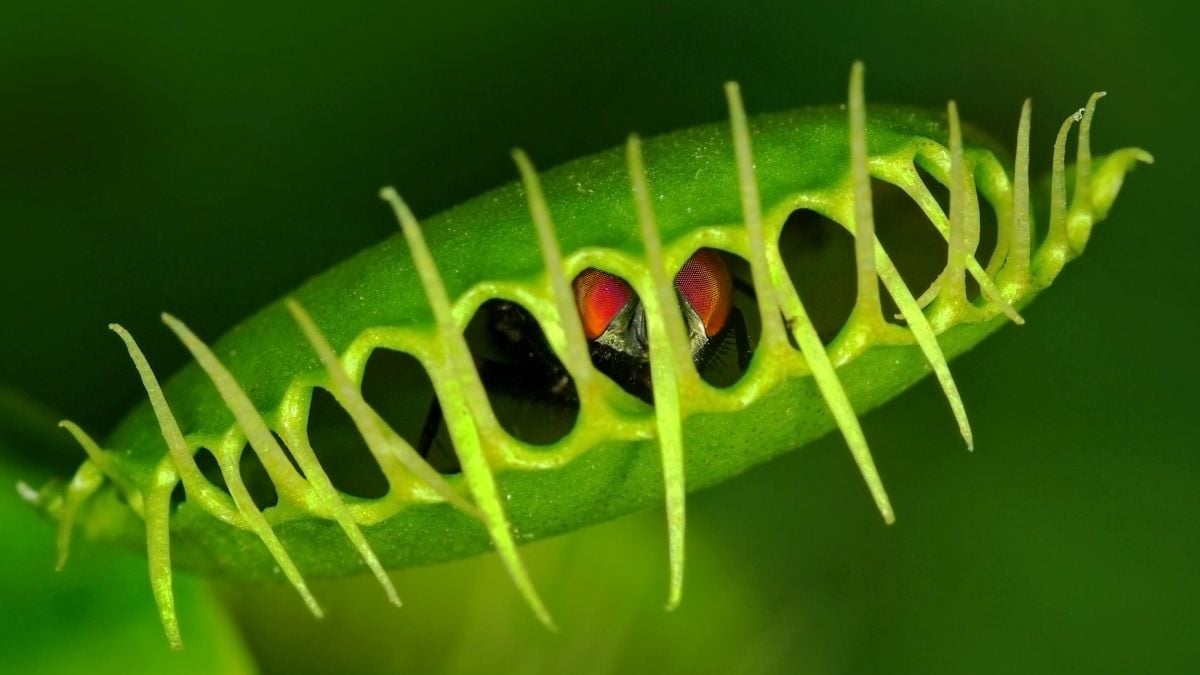
The Venus flytrap’s lightning-fast snap—long a botanical mystery since Charles Darwin—has finally been explained by researchers at the French National Centre for Scientific Research (CNRS), who discovered the plant’s trap softens its outer cell walls within milliseconds to trigger the closure. The mechanism, published this week in Science, reveals how the plant achieves its 0.21-second snap without muscles or nerves, overturning a century of hydraulic theories.
How the Flytrap’s Snap Works: A Two-Stage Mechanism
For over a century, scientists assumed the Venus flytrap’s snap was driven by water pressure shifting between its inner and outer leaf layers—a process too slow to explain the plant’s speed. But new experiments by CNRS physicist Yoël Forterre and his team prove the trap’s closure relies on a rapid softening of the outer cell walls, not fluid movement. When an insect triggers the trap’s sensory hairs twice in quick succession, an electrical signal spreads across the leaf, causing the outer epidermal cells to lose stiffness by up to 40% within a second. This asymmetry in rigidity—outer cells softening while inner cells remain rigid—creates the bending force that snaps the trap shut in just 0.21 seconds, according to the study published in Science.
The team used a nanoindenter—a probe thinner than a human hair—to measure the mechanical properties of the trap’s cells before and after stimulation. Their findings show the outer cells expand by about 8% after stimulation, directly contradicting the long-held water-pressure hypothesis. “This represents the fastest modulation of wall mechanics reported in plants,” the researchers wrote, calling it a form of muscle-free, bioinspired actuation with potential applications in robotics and materials science.
“When Darwin saw these plants move so fast, he was convinced that the plant had a muscle inside, but plants do not have muscles and they do not have nerves.”
—Dr. Yoël Forterre, CNRS physicist and senior author of the study, in a statement to The Guardian

The study involved a multidisciplinary team including Dr. Stéphane Douady, a biophysicist at CNRS, and Dr. Olivier Hamant, a plant developmental biologist at the University of Bordeaux. Together, they combined high-speed imaging, finite element modeling, and atomic force microscopy to map the mechanical changes in the trap’s leaf structure. Their simulations revealed that the outer cell walls soften asymmetrically, creating a bending moment that drives closure. The team also noted that this mechanism is highly efficient, requiring minimal energy compared to hydraulic models.
The Venus flytrap (Dionaea muscipula) is one of only a handful of plants capable of rapid movement, alongside the sensitive mimosa and the waterwheel plant. Its trap mechanism has been studied since the 18th century, with Darwin himself conducting experiments in 1875 that demonstrated its sensitivity to touch. However, the exact mechanism remained elusive until now. The CNRS team’s work builds on earlier studies, including research from the Max Planck Institute for Chemical Ecology in Germany, which identified the electrical signals involved in the trap’s response but could not explain the speed of closure.
The nanoindenter used in the study is a precision tool capable of measuring forces at the nanonewton scale. The team applied it to the trap’s outer epidermis before and after stimulation, revealing that the cell walls lose stiffness within milliseconds of the electrical signal. This rapid change is critical, as it allows the trap to close before prey can escape. The study also found that the inner cells remain rigid, acting as a structural support that amplifies the bending force generated by the softening outer layer.
Why the Water-Pressure Theory Failed: A 150-Second Lag
The hydraulic model—where water moves from one side of the trap to the other—had long been the leading explanation. But the CNRS team measured water transport across the trap’s thickness and found it would take between 30 and 150 seconds, far slower than the flytrap’s actual closure time of under a second. “If you close it accidentally with a drop of water, it will close and then reopen the next day,” Forterre noted, highlighting the impracticality of water-driven mechanics. Instead, the team observed that the trap’s outer cells soften almost instantly, releasing stored elastic energy and triggering the snap.
Botanists at Aix-Marseille University, including Dr. Pascal Simon, had previously tested the water-pressure theory and found it couldn’t account for the trap’s speed. Their experiments confirmed that water movement alone couldn’t explain the snap, leaving the cell-wall softening mechanism as the only viable explanation. The team’s simulations showed that the elasticity of the outer cell walls decreases by about 40% upon stimulation, a change that lasts for over an hour—long enough to digest prey but not so long that the trap remains permanently closed.
The water-pressure theory was first proposed in the 1960s by Dr. Julius von Sengbusch, a German botanist who suggested that turgor pressure (the pressure of water inside cells) drove the trap’s movement. This model was widely accepted until the CNRS team’s findings. The hydraulic mechanism would require water to move from the inner to the outer cells, but the team’s measurements showed that this process is far too slow to explain the snap. Additionally, the trap’s ability to reopen after closure—even when no prey is present—further contradicts the hydraulic model, as water movement would not explain this reversible process.
The CNRS team also conducted experiments using confocal microscopy to visualize the movement of water and cell wall components in real time. These images confirmed that water movement does not precede the snap but occurs as a secondary effect of the cell wall softening. The team’s data aligns with earlier work by Dr. Monica Haraguchi at the University of California, Davis, who studied the electrical signals in the flytrap but could not link them directly to the mechanical closure.
What This Means for Plant Movement—and Beyond
The discovery isn’t just a botanical curiosity—it challenges fundamental assumptions about plant movement. Unlike other carnivorous plants like the pitcher plant or sundew, which rely on passive traps or sticky surfaces, the Venus flytrap’s active snap is a rare example of rapid, precise motion in the plant kingdom. The mechanism could inspire new designs in soft robotics, where muscle-free actuation is a key challenge. “Our finding reveals a mode of plant motility based on dynamic tuning of material properties,” the researchers wrote, suggesting applications in bioengineered materials that mimic biological flexibility.
Forterre, who has studied the flytrap for 20 years, called the plant “one of the most wonderful plants in the world.” The new research resolves a debate that began with Darwin, who marveled at the flytrap’s speed but couldn’t explain it. “It’s very surprising that plant cell walls can tune their mechanical properties so fast,” Forterre said, emphasizing that the discovery opens doors to understanding how plants sense and respond to their environment without nerves or muscles.
For more on this story, see Venus Flytrap Scientists Crack 150-Year Mystery Over Its Snap Mechanism.
The implications for robotics are significant. Traditional robots rely on rigid actuators or hydraulic systems, which are bulky and energy-intensive. The flytrap’s mechanism, however, demonstrates how soft, adaptive materials can achieve rapid movement without complex machinery. Researchers at the Harvard Wyss Institute for Biologically Inspired Engineering have already begun exploring similar principles in their work on soft robots. “This could be a game-changer for developing robots that mimic biological systems,” said Dr. Robert Wood, a robotics expert at Harvard, in a statement to IEEE Spectrum.
Beyond robotics, the discovery could have applications in materials science. The ability of plant cell walls to rapidly change stiffness suggests new ways to design adaptive materials for construction, aerospace, or medical devices. For example, materials that can soften or harden in response to environmental stimuli could be used in self-healing structures or flexible electronics. The CNRS team is now collaborating with engineers at the École Polytechnique in Paris to explore these possibilities.
The flytrap’s mechanism also sheds light on plant evolution. Carnivorous plants like the Venus flytrap have evolved independently in multiple lineages, suggesting that rapid movement is a convergent solution to the challenge of capturing prey. Understanding how the flytrap achieves its snap could provide insights into other plant movements, such as the folding of leaves in the sensitive mimosa or the rapid growth of tendrils in peas.
What’s Next: The Molecular Mystery Remains
While the mechanical trigger is now clear, the molecular pathway that softens the cell walls remains unknown. The CNRS team identified that the change involves both a decrease in internal pressure and a softening of the cell wall itself—but they haven’t pinpointed the exact biochemical signal that initiates this process. “We understand the beginning of the chain of events, touch sensing, and the end, trap motion, but the molecular link connecting the two remains largely unknown,” Forterre acknowledged in New Scientist.
Some experts, like Sergey Shabala of the University of Western Australia, remain skeptical, arguing that water movement could still play a role if it occurs simultaneously rather than sequentially. However, the CNRS team’s direct measurements of cell stiffness and swelling times strongly support the cell-wall softening theory. Shabala, who studies plant ion channels, noted that while water movement may contribute to the trap’s reopening, it is unlikely to be the primary driver of closure. “The data is compelling, but we need more molecular evidence to fully understand the mechanism,” he told Nature Plants.
The CNRS team is now focusing on identifying the specific proteins or enzymes involved in the cell wall softening process. They suspect that changes in the composition of the cell wall—such as the loosening of pectin or cellulose fibers—are responsible for the rapid stiffness loss. Earlier studies by Dr. Gloria K. Muday at the University of Missouri have shown that auxin, a plant hormone, plays a role in cell wall remodeling, but its connection to the flytrap’s snap remains unclear.
To further investigate, the team plans to use genetic sequencing and proteomics to identify the molecular players in the trap’s response. They are also collaborating with Dr. Frédérique Capelle at the Institut de Biologie Intégrative de la Cellule to study the electrical signals in greater detail. “We need to find the missing link between the sensory input and the mechanical output,” Forterre said. “This could lead to breakthroughs in synthetic biology, where we might engineer plants or materials to mimic this behavior.”
A Century-Old Mystery, Solved in 2026
The Venus flytrap’s snap has fascinated scientists since Darwin’s time, but the CNRS team’s work marks the first time researchers have directly measured the mechanics of the trap’s closure. By combining high-precision probes, computer simulations, and controlled experiments, they ruled out every previous hypothesis—from water pressure to electrical signals alone—and confirmed that the plant’s speed comes from a rapid, localized change in cell-wall rigidity.
The implications extend beyond botany. Understanding how the flytrap achieves its snap could lead to advances in materials science, particularly in developing flexible, adaptive structures that don’t require traditional actuators. As Forterre put it: “Plants are just amazing. It makes you realize how all plants can sense their surroundings, transport information, react, defend themselves, feed.” The Venus flytrap’s secret is now out—but the full story of how it works at the molecular level may take even longer to uncover.
The study has already sparked interest in the scientific community. In an editorial for Science, Dr. Stephen H. Strauss, a forest biologist at Oregon State University, praised the CNRS team’s work as a “tour de force of plant biomechanics.” He noted that the discovery could reshape our understanding of plant movement and inspire new research into how plants interact with their environment. “This is a classic example of how fundamental discoveries can lead to practical applications,” Strauss said.
The Venus flytrap is native to the bogs of the southeastern United States, where it thrives in nutrient-poor, acidic soils. Its carnivorous nature allows it to supplement its diet with insects, which are rich in nitrogen. The plant’s ability to snap shut is not just for capturing prey but also for protecting itself from environmental stressors, such as excessive sunlight or drought. The new research suggests that the trap’s mechanism may also play a role in the plant’s survival strategies.
While the CNRS team’s findings resolve the mechanical mystery, the broader question of how plants achieve complex movements without nerves or muscles remains open. Other plants, such as the Mimosa pudica (sensitive plant), also exhibit rapid responses to touch, but their mechanisms are still not fully understood. The flytrap’s discovery could serve as a model for studying these processes in other plant species.
The study has also generated excitement in the field of synthetic biology. Researchers at the Salk Institute are exploring whether similar mechanisms could be engineered into synthetic materials or even lab-grown tissues. “If we can understand how plants achieve this level of control over their mechanical properties, we might be able to create materials that respond dynamically to their environment,” said Dr. Wolf Frommer, a plant biologist at Salk, in an interview with Scientific American.
For now, the Venus flytrap remains a marvel of nature—a plant that has evolved a sophisticated mechanism to survive in harsh conditions. The CNRS team’s work not only answers a century-old question but also opens new avenues for research in plant biology, robotics, and materials science. As Forterre reflects, “Nature is full of surprises, and the Venus flytrap is one of the most extraordinary examples of how life finds ingenious solutions to its challenges.”
Find more reporting in our Technology section.
