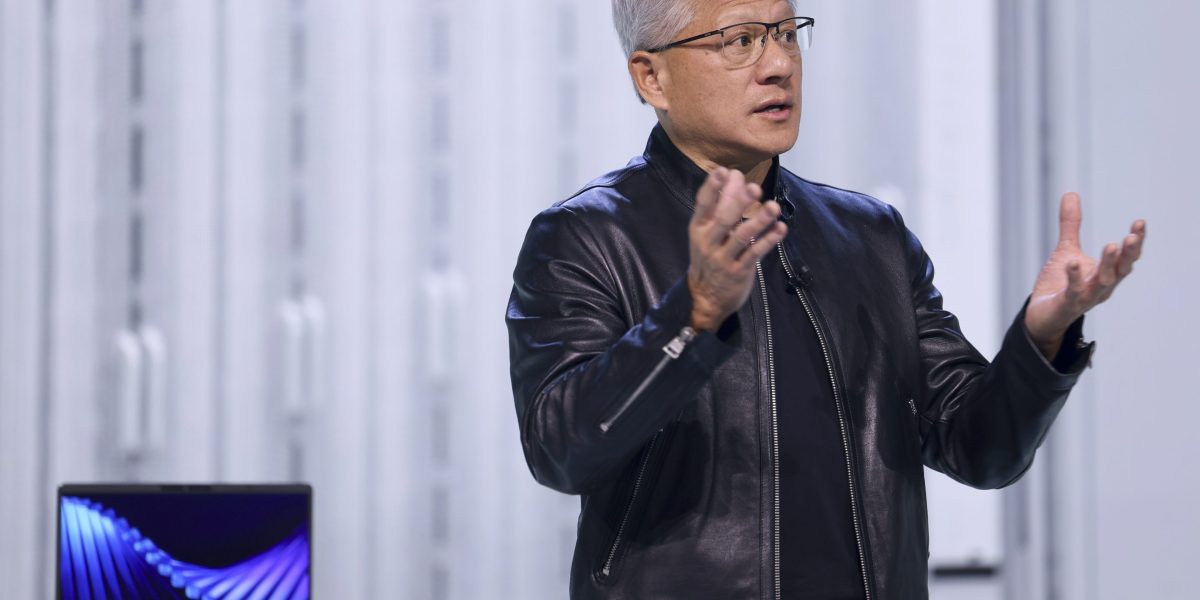
CEO Jensen Huang said during Nvidia’s Q1 earnings call, as the chipmaker navigated investor skepticism and global supply chain tensions. The company reported $91 billion in sales for the three months ending in July, outpacing analyst estimates, but its stock remained flat amid growing competition and a looming labor dispute in South Korea that could disrupt AI infrastructure.
Nvidia’s Earnings Report: Diversification and Investor Skepticism
Nvidia’s Q1 results underscored both its dominance in AI computing and the challenges of sustaining growth. The company projected that non-hyperscaler clients—governments, enterprises, and emerging “physical AI” sectors like robotics—would soon become a larger revenue driver. “The build-out of AI factories— the largest infrastructure expansion in human history—is accelerating at extraordinary speed,” Huang stated, per the Fortune report.
Despite beating revenue forecasts, Nvidia’s shares edged lower after the report, reflecting investor unease. The company’s $91 billion sales figure surpassed the $87 billion average estimate but fell short of the $96 billion high estimate cited by Bloomberg. Analysts noted that while Nvidia remains the top seller of AI accelerators, rivals like AMD and Google are gaining ground. “Nvidia’s ability to maintain its market share hinges on its capacity to innovate amid intensifying competition,” one analyst noted.
The report also highlighted a shift in spending patterns: hyperscalers—cloud giants like Amazon and Microsoft—still account for the bulk of Nvidia’s revenue. However, the company is betting on a broader adoption of its technology, including in autonomous vehicles and industrial automation. This diversification strategy, however, faces hurdles as major clients increasingly develop in-house AI chips.
Global Supply Chain Risks: Samsung’s Labor Dispute
While Nvidia grapples with competition, a separate crisis in South Korea threatens to strain the global tech sector. A dispute over semiconductor worker bonuses at Samsung Electronics has escalated, with the union threatening an 18-day strike starting May 21. The standoff centers on a 15% profit-sharing demand from employees, as the company prepares to report $200 billion in operating profits this year.
The potential strike could have far-reaching consequences. South Korea’s Prime Minister Kim Min-seok warned that a single day of factory shutdowns at Samsung would cost up to 1 trillion won ($667.68 million), per the Yahoo Finance report. Given that Samsung accounts for 22.8% of South Korea’s exports, the disruption could ripple across industries reliant on memory chips, including AI data centers, gaming, and consumer electronics.
The conflict also highlights broader tensions in the semiconductor sector. As AI demand surges, supply bottlenecks are intensifying, with companies scrambling to secure memory components. “The race to power the next generation of AI is straining supply chains,” a tech industry analyst said. “Any disruption in South Korea could delay critical projects worldwide.”
Interconnected Challenges: AI Growth vs. Supply Chain Vulnerabilities
Nvidia’s and Samsung’s stories are intertwined, reflecting the fragility of the AI supply chain. While Nvidia’s chips are central to AI infrastructure, the technology’s expansion depends on stable semiconductor production. The Samsung dispute underscores how labor issues in one region can impact global tech ecosystems.
For Nvidia, the challenge lies in balancing innovation with the risks of overreliance on hyperscalers. The company’s push into “physical AI” and enterprise markets could mitigate some risks, but it will need to navigate a crowded competitive landscape. Meanwhile, Samsung’s ability to resolve its labor conflict will be critical to maintaining the flow of components essential for AI data centers.
What’s Next?

Investors are closely watching both companies as they navigate these pressures. Nvidia’s upcoming earnings calls and product launches will be pivotal in determining its trajectory. For Samsung, the outcome of its negotiations with workers could set a precedent for labor relations in the tech sector.
As AI continues to reshape industries, the resilience of supply chains will be a key determinant of progress. “The next 30 days will reveal whether the tech sector can sustain its momentum amid these challenges,” one market strategist said. For now, the interplay between corporate strategy and global logistics remains a defining story of the AI era.
South Korea’s Prime Minister Kim Min-seok, via Yahoo Finance.
