
Nvidia Corporation, the Santa Clara-based semiconductor giant, continues to dominate the artificial intelligence hardware market as of June 3, 2026. While the company maintains a 92% share of the discrete GPU market, investors are currently balancing this technical leadership against broader macroeconomic uncertainties and geopolitical tensions impacting global technology sector valuations.
Nvidia’s Market Position and Financial Standing
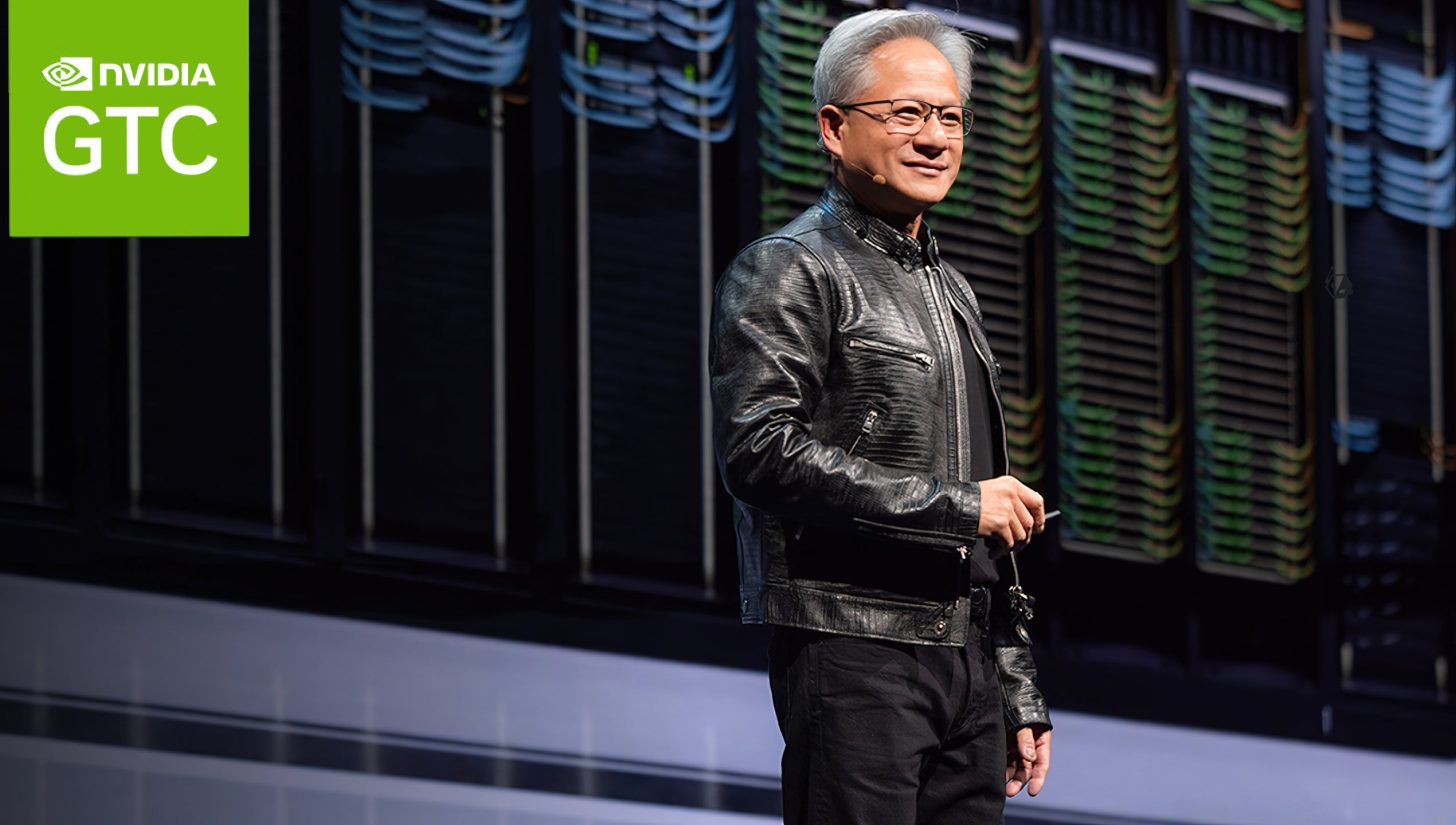
Nvidia Corporation, headquartered in Santa Clara, California, remains a central fixture of the modern technology sector. Founded in 1993 by Jensen Huang, Chris Malachowsky, and Curtis Priem, the company has evolved from a gaming-focused GPU developer into the primary architect of the hardware powering global artificial intelligence and high-performance computing workloads.
As of the fiscal year ended January 25, 2026, Nvidia reported significant financial metrics that underscore its scale. The company generated US$215.9 billion in revenue, with an operating income of US$130.4 billion and a net income of US$120.1 billion. With total assets valued at US$206.8 billion and total equity of US$144.3 billion, the firm commands a massive footprint in the semiconductor industry. This financial performance is supported by a workforce of 42,000 employees.
The company’s market dominance is particularly pronounced in the discrete desktop and laptop GPU segments. Data from the first quarter of 2025 indicates that Nvidia held a 92% market share in these categories. This ubiquity extends from the data center to the edge, providing the infrastructure necessary for enterprise AI and complex scientific research.
In its Form 10-K filing submitted to the U.S. Securities and Exchange Commission (SEC) on March 18, 2026, Nvidia explicitly identified the “concentration of its supply chain” as a critical risk factor. CEO Jensen Huang, speaking during the Q4 fiscal 2026 earnings call on February 19, 2026, emphasized that the firm’s reliance on Taiwan Semiconductor Manufacturing Company (TSMC) for advanced packaging—specifically CoWoS (Chip-on-Wafer-on-Substrate)—remains the primary bottleneck for meeting hyperscale demand. Stacy Rasgon, a senior analyst at Bernstein, noted in a client advisory dated May 14, 2026, that while Nvidia’s margins remain sector-leading at 76% gross margin, the “incremental cost of sovereign AI initiatives” in regions like the Middle East and Southeast Asia introduces new regulatory hurdles for the company’s export compliance teams.
Navigating Market Volatility and Investor Sentiment
Despite the company’s strong financial base, investors are exercising caution as of early June 2026. The stock market is currently navigating a complex environment where enthusiasm for artificial intelligence initiatives is being weighed against external pressures, including geopolitical instability in the Middle East.
Market participants are closely observing how global tensions influence the supply chains and operational stability of Big Tech firms. Because Nvidia’s products are essential to the operations of major cloud providers and enterprise data centers, any disruption in global trade or energy markets carries the potential to impact the broader technology index. Financial analysts continue to monitor Nvidia’s stock performance on the Nasdaq, where it remains a key component of major indices, including the S&P 500 and the Nasdaq-100.
On May 22, 2026, the U.S. Department of Commerce updated its Entity List, a move that prompted a brief intraday volatility spike in NVDA stock. While Nvidia disclosed in its 8-K filing on May 23 that the updated restrictions on high-end chip exports to specific regions were “within the scope of existing compliance protocols,” institutional investors remain sensitive to further policy shifts. According to a research note from Morgan Stanley’s Joseph Moore on June 1, 2026, the “valuation multiple compression” seen across the semiconductor sector is not a reflection of Nvidia’s internal fundamentals but rather a “macro-liquidity correction” triggered by rising sovereign bond yields. This sentiment was echoed by Citigroup analyst Christopher Danely, who highlighted in a note dated May 29, 2026, that while Nvidia’s backlog remains “historically elevated,” the pace of capital expenditure growth among its top-four customers—Microsoft, Meta, Google, and Amazon—is showing early signs of “linearization rather than exponential acceleration.”
Technological Expansion and Operational Focus

Nvidia’s current business strategy centers on maintaining its leadership in AI computing while diversifying its application reach. The company’s portfolio includes systems on chips (SoCs), professional visualization tools, and application programming interfaces (APIs) designed for data science and industrial applications.
The firm also continues to invest in cloud-based gaming through its GeForce NOW service, which allows users to stream high-demand PC games across various devices. This dual-track approach—serving both the high-stakes world of enterprise AI and the consumer gaming market—remains a fundamental part of the company’s identity.
Technical support and developer engagement remain core to the firm’s ecosystem. Through its official support channels and developer forums, the company maintains a connection to its user base, ranging from individual gamers to researchers deploying large-scale AI models. As of June 2026, the company continues to provide regular driver updates for its GeForce graphics cards and Quadro workstations to ensure compatibility and performance across its installed hardware base.
The company’s shift toward “Omniverse-as-a-Service,” a platform for industrial digital twins, was bolstered by a partnership announcement with Siemens AG on April 12, 2026. This collaboration, aimed at accelerating autonomous factory deployment, represents a strategic move to decouple revenue from pure data center compute sales. Furthermore, during the GTC 2026 conference held in March, Nvidia officially unveiled the “Blackwell Ultra” architecture, which the company claims offers a 3.5x improvement in training efficiency for Large Language Models compared to the previous Hopper generation. Analysts at Goldman Sachs, led by Toshiya Hari, stated in a report on March 20, 2026, that the Blackwell transition is likely to be the “most significant product cycle in the history of the semiconductor industry,” noting that lead times for the new architecture already extend into the second quarter of 2027.
The interplay between Nvidia’s sustained growth in AI infrastructure and the external macroeconomic environment will likely remain the primary focus for market analysts throughout the remainder of the year. Investors are looking for indications that the company can sustain its current trajectory despite the prevailing geopolitical uncertainties that continue to influence global equity markets. As noted in the company’s Q1 fiscal 2027 outlook provided to investors on May 15, 2026, Nvidia expects revenue for the upcoming quarter to be US$58.0 billion, plus or minus 2%, a figure that hinges on the successful ramp-up of its new manufacturing agreements in Southeast Asia designed to mitigate regional trade risks.
