One Nation targets Christian voters despite tension over monoculture vision
One Nation is courting Australia's Christian demographic, though tensions remain over the party's strict anti-immigration stance and vision for a monocultural society.
- Headline Dispatch: One Nation targets Christian voters despite tension over monoculture vision
- Core Takeaway: One Nation is courting Australia's Christian demographic, though tensions remain over the party's strict anti-immigration stance and vision for a monocultural society.
- Source Synthesis: Continuous live monitoring aggregated across major news wires and independent bureaus.
One Nation targets Christian voters despite tension over monoculture vision
One Nation is attempting to expand its voter base by courting Australia’s Christian community, though the party's pursuit of a monocultural
society may alienate a diverse religious population. The strategy involves leveraging anti-abortion rhetoric to attract believers, even as leader Pauline Hanson maintains a platform rooted in strict anti-immigration positions.
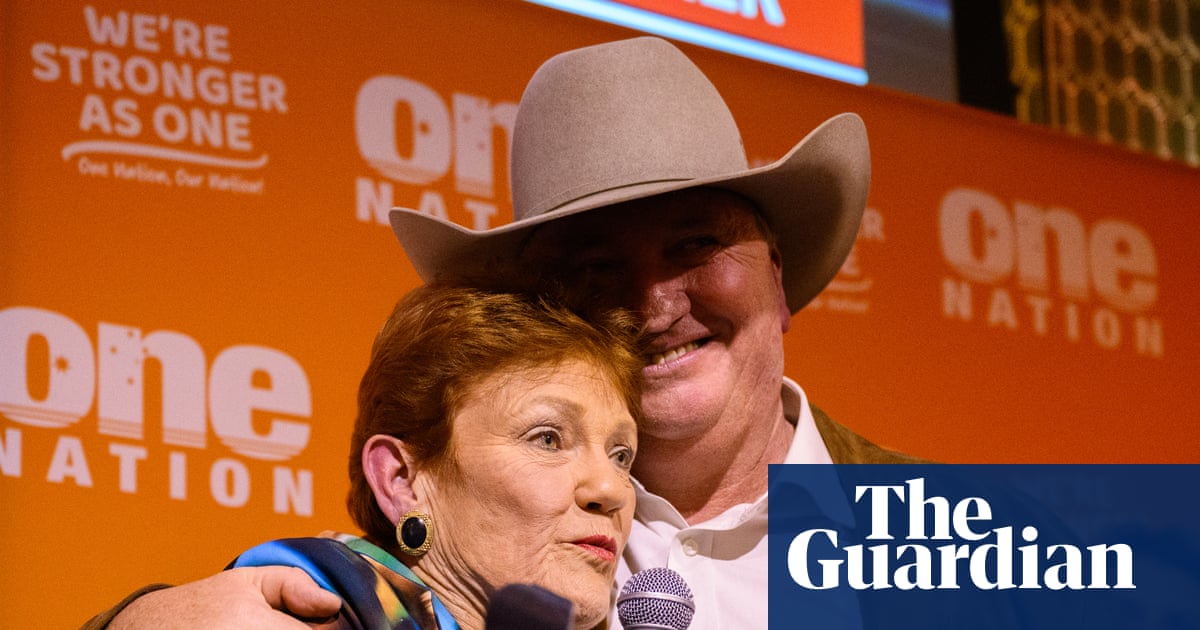
During a Sydney rally in early June, One Nation recruit and former deputy prime minister Barnaby Joyce addressed anti-abortion campaigners. He noted the presence of approximately 1,500 people capable of distributing how to vote
cards. The event featured the recitation of the Lord’s Prayer and speeches from Christian leaders.
The party is targeting a demographic that represents the largest religion in Australia, with about 44% of the population identifying as Christian. This group includes two primary affiliations: Catholicism and Anglicanism. According to the National Church Life Survey (NCLS), about one in five Australians regularly attend church.
The Monoculture Conflict
The drive for Christian support faces a contradiction in One Nation's core ideology. Pauline Hanson has asserted that Australia must be a monoculture
and has warned of a growing language problem which is a function of immigration
. This vision conflicts with the reality of modern Australian churches; NCLS data shows that more than one in three church attenders were born overseas, and about a quarter of churchgoers speak a language other than English at home.
Simon Smart, the executive director of the Centre for Public Christianity, suggests that Hanson's anti-refugee and anti-immigration stances may act as a stumbling block
for those whose faith mandates welcoming the stranger. Smart stated that the Christian vision of community across every tribe and tongue doesn’t seem to sit well with that monoculture idea
.
One Nation’s vision emphasizes a return to Judeo-Christian
values, which Hanson links to a Western way of life under siege from immigrants. However, Jarrod McKenna, a pastor and mobilisation strategist at Act for Peace, argued that politicians rarely use the term Judeo-Christian
to refer to the actual teachings of Jesus, such as the love of neighbor.
Political Strategy and Populism
Barnaby Joyce has officially joined One Nation, drawing parallels between the party and the UK’s far-right Reform UK party led by Nigel Farage. Joyce stated that One Nation embodies a desire for change
for citizens seeking alternatives to traditional parties. He intends to focus on national sovereignty, economic policies favoring Australian citizens, and immigration.
The party is currently drawing aspirational supporters away from Labor and the Coalition. Among Christians, One Nation specifically threatens to peel away traditional working-class Catholics from Labor and evangelicals from the Coalition. This comes as Hanson records higher net approval ratings than Prime Minister Anthony Albanese or Opposition Leader Angus Taylor.
Political analysts differ on the influence of this vote. John Black, founder of Australian Development Strategies, suggests that while mortgage belt
issues are the foundation of support in marginal suburban seats, religious voters can sway a tight election if they vote as a bloc. Conversely, John Warhurst, emeritus professor at the Australian National University, noted that One Nation lacks an obvious Christian voice to appeal to the broader churchgoing population, suggesting any impact must come from their policy program and a general vibe
of representing believers.
Controversies and Economic Rhetoric
The party's approach has been marked by friction. During her first address to the National Press Club, Hanson’s speech was interrupted by a protest banner from the activist group GetUp!. In that address, she attributed the housing crisis to immigration-driven demand and called for a complete overhaul
of the industrial relations system.
Barnaby Joyce has also faced criticism for his use of ethnic stereotypes. When describing government capital gains tax reforms, Joyce remarked that they had more hairs than a Greek cook
. This comment has been viewed by some as a retreat into cultural clichés rather than engaging with the complexity of economic policy.
One Nation's platform further includes refusing entry to migrants from nations that foster ideas deemed incompatible with Australian values
. Hanson has previously been censured in the Senate for questioning the existence of good Muslims
.
As Australia moves toward elections anticipated in 2025, the impact of Joyce's affiliation and the party's attempt to reconcile its monoculture
vision with a diverse Christian electorate remains to be seen.
How significant is this development?
Participate in our community survey on the trajectory and real-world impact of this news.