Trump Threatens to Impose 100% Tariff on European Countries Over Tech Taxes
President Trump has vowed to impose 100% import tariffs on any European country that implements a digital services tax on American technology companies.
- Headline Dispatch: Trump Threatens to Impose 100% Tariff on European Countries Over Tech Taxes
- Core Takeaway: President Trump has vowed to impose 100% import tariffs on any European country that implements a digital services tax on American technology companies.
- Source Synthesis: Continuous live monitoring aggregated across major news wires and independent bureaus.
Trump Threatens 100% Tariff on European Countries Over Tech Taxes
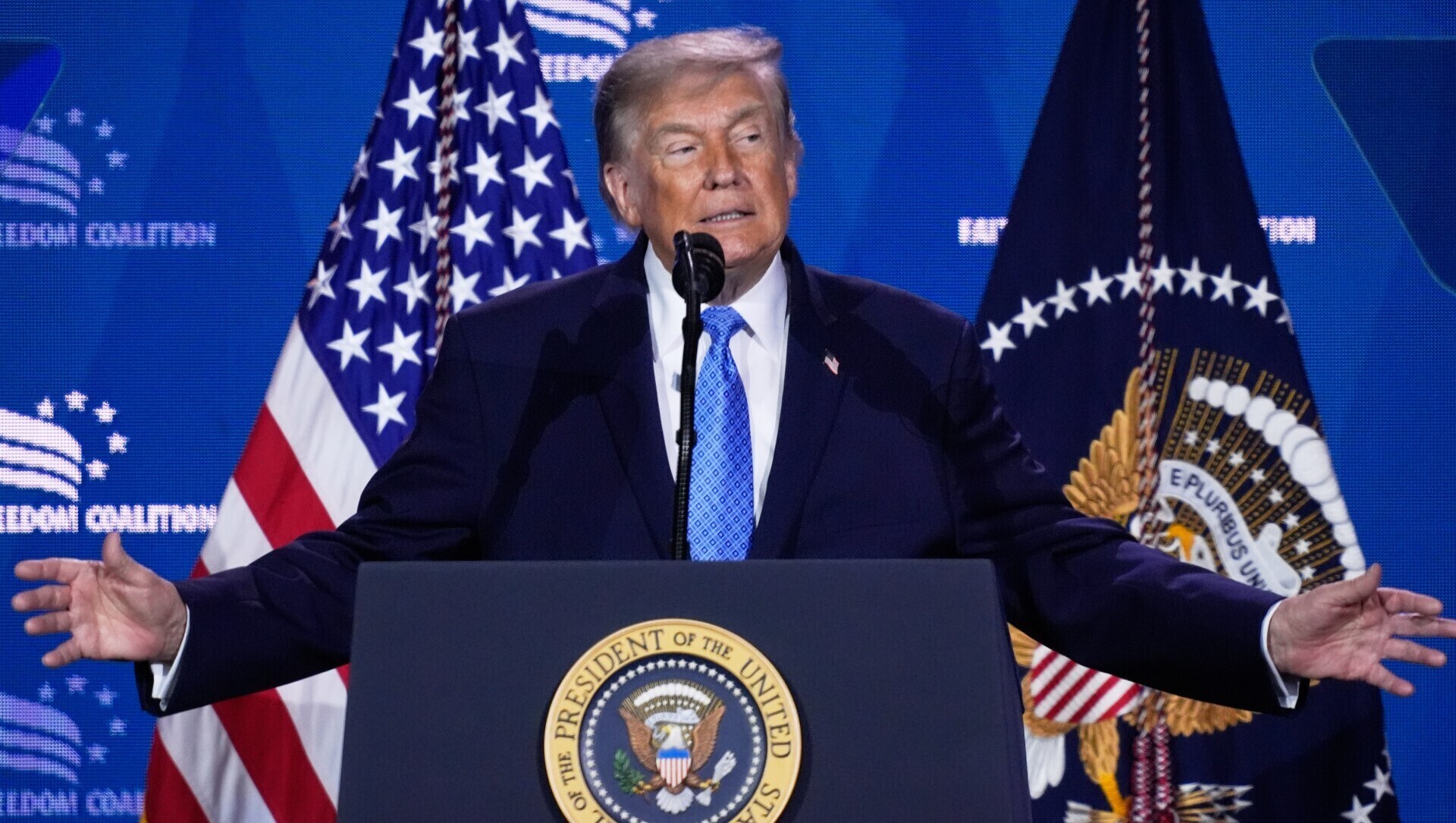
President Donald Trump has vowed to impose a 100% import tariff on any European nation that implements a digital services tax on American technology companies. Writing on Truth Social on Friday, the U.S. President stated that numerous European countries
have discussed the imminent implementation
of such levies and that some are close to actually doing this
.
Trump declared that any country imposing such a tax would be immediately
met with a 100% tariff on any and all Goods sent to the United States of America
. He further specified that these penalties would supersede any existing bilateral trade agreements, whether they are signed or already in force.
The threat emerges as a potential catalyst for a broader trade war between the U.S. And the 27-member European Union. The announcement comes just days before a July 4 deadline for the U.S. And EU to begin implementing a trade deal signed in May, which caps most tariffs on EU exports at 15%. This agreement followed months of tension and was tentatively struck during a visit by European Commission chief Ursula von der Leyen to Trump's golf course in Scotland. However, digital services taxes were not included in that deal and remain a point of contention.
European Response and Current Taxes
The European Commission defended its regulatory autonomy. Olof Gill, a spokesperson for the commission, stated that unilateral measures against these legitimate policies are unjustified
and warned that the EU would respond swiftly and decisively
if such tariffs are pursued. Gill argued that the taxes are non-discriminatory and apply to all large companies, regardless of their origin
.
Several European nations already have such taxes in place or have proposed them:
- France, Italy, and Spain: These countries impose a 3% digital services tax on large companies operating within their borders.
- United Kingdom: Since 2020, the UK has levied a 2% Digital Services Tax on search engines, social media platforms, and online marketplaces with global digital revenues exceeding £500 million and UK revenues surpassing £25 million. According to the Treasury, this tax raised more than £800 million in 2024–25, increasing from £678 million in 2023–24.
The U.S. Government has previously conducted investigations into these taxes under Section 301 of the Trade Act of 1974, arguing they unfairly target American firms such as Google, Apple, Meta, Amazon, and Microsoft.
Escalating Tensions with France and the UK
The president has specifically targeted France in recent weeks. Before attending a G7 summit in France, Trump told the New York Post that if President Emmanuel Macron did not eliminate the sales tax on American companies, he would have no choice but to charge a 100 percent tariff on all champagnes and all wines coming out of France
. President Macron responded last week, asserting that France would maintain its digital services tax despite pressure from Washington.
The UK has also been singled out. In April, Trump stated the UK could face a big tariff
for targeting U.S. Companies, claiming, They think they’re going to make an easy buck, that’s why they’ve all taken advantage of our country
.
Broad Trade Strategy and Legal Constraints
This latest move is part of a wider economic strategy. In August of the previous year, Trump warned that digital taxes and regulations are all designed to harm, or discriminate against, American Technology
, stating that U.S. Companies are no longer the ‘piggy bank’ nor the ‘doormat’ of the World
. Canada previously reversed course on its own digital services tax last year, rescinding it before its July implementation after the president suspended trade negotiations.
Trump's use of tariffs has faced legal challenges. In February, the U.S. Supreme Court struck down an attempt to impose a global tariff of 10%, ruling the initiative overstepped the International Emergency Economic Powers Act. Despite this, the U.S. Recently announced new tariffs of 10-12.5% on dozens of countries based on claims that they are not sufficiently tackling forced labor.
The immediate future of U.S.-EU trade relations now hinges on the July 4 deadline and whether European nations proceed with the implementation or revision of their digital services taxes.
How significant is this development?
Participate in our community survey on the trajectory and real-world impact of this news.