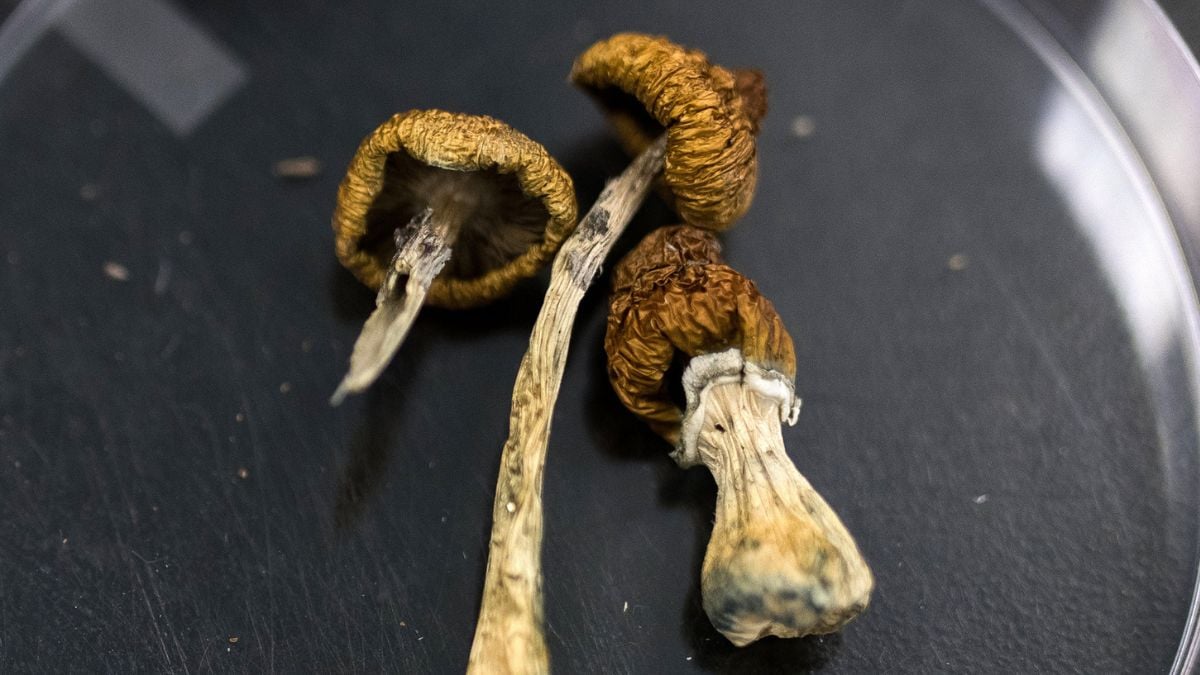
A recent case study published in Frontiers in Neuroscience describes an 80-year-old woman with advanced Alzheimer’s disease who regained speech, mobility, and cognitive function following high-dose psilocybin treatment. Under clinical supervision in Brazil, the patient—who had been essentially non-verbal for five years—showed significant, albeit temporary, improvements in communication, humor, and self-care after receiving psilocybin.
Clinical Observations Following Psilocybin Administration
The patient, a Japanese-American woman living with Alzheimer’s for a decade, had reached a stage of severe decline characterized by near-total loss of communication and reliance on caregivers for basic activities. According to reporting by ScienceAlert, her condition prior to the intervention was marked by flat affect and an inability to speak beyond monosyllables.
The treatment protocol involved two supervised sessions. In the first, the patient received 5 grams of psilocybin-containing mushrooms—a quantity described by PAB Counseling as capable of causing a “complete disconnect from consensus reality,” and powerful hallucinations that can be “overwhelming, perhaps bizarre, and indescribable.” Following this initial dose, the patient entered a deep, prolonged sleep state. Approximately 19 hours later, she became lucid and began engaging in what researchers described as an “autobiographical conversation.”

The clinical setting utilized for this administration adhered to protocols designed to manage potential adverse cardiovascular events, a common safety concern in geriatric patients receiving potent serotonergic agonists. The researchers monitored the patient’s blood pressure and heart rate throughout the session, noting that while psilocybin is known to induce transient tachycardia and hypertension, these effects were within manageable limits for this subject. The administration was conducted under the oversight of a multidisciplinary team, ensuring the presence of personnel trained in both emergency medicine and psychedelic-assisted therapy.
Functional Recovery and Cognitive Gains
The results extended beyond simple verbalization. As detailed by the New York Post, the patient regained urinary continence, the ability to dress herself, and improved motor control. These functional gains were sustained for weeks following the session. A second, smaller dose of 3 grams was administered one month later, leading to further improvements in emotional reciprocity and physical agility.
Researchers, including neurologists Mariana Cerveira and Joe Xavier Simonet, highlighted the return of urinary continence as particularly significant. They noted that such control relies on integrated interoceptive awareness and complex fronto-insular network function, which are typically compromised in advanced neurodegeneration. During the second session, the patient expressed a sense of well-being, stating, “It is pleasant to come here,” and describing visions of surfing with her son.

From a neurobiological perspective, Cerveira and Simonet theorize that the psilocybin may have acted as a transient “metabolic jumpstart” for the default mode network (DMN), a system that is often hypoactive in patients with advanced dementia. By stimulating 5-HT2A receptors, the substance may have fostered a temporary increase in synaptic connectivity, allowing for the retrieval of stored information that the patient’s brain was otherwise unable to access. This observation aligns with preliminary findings in broader studies on neuroplasticity, where psychedelics have been shown to increase the expression of brain-derived neurotrophic factor (BDNF) in animal models, though such mechanisms have not been confirmed in human Alzheimer’s patients.
Scientific Cautions and Research Limitations
Despite the positive outcomes, the medical team emphasized that the intervention does not constitute a cure. The study authors, led by neuroscientist Marcos Lago from the University of Sao Paolo, were careful to define the scope of their findings.
“The findings should not be interpreted as a reversal of Alzheimer’s pathology. Rather, they raise the possibility that latent functional capacities may persist in advanced neurodegeneration and become temporarily accessible under specific neuromodulatory conditions.”
While the patient’s improvements—including “greater verbal expressivity, improved facial mimicry, spontaneous humor, emotionally valenced autobiographical imagery, and increased agility while walking”—were documented extensively, the duration of these effects remains a subject of ongoing observation. As reported by Upworthy, the researchers acknowledged that the study is limited by its single-patient model, meaning these results cannot yet be generalized to the broader population of dementia patients.
Current clinical standards, such as those provided by the Alzheimer’s Association, emphasize that FDA-approved therapies—including monoclonal antibodies like lecanemab or donanemab—target amyloid-beta plaques to slow cognitive decline in early-to-moderate stages. These treatments are not indicated for advanced-stage patients. Because the patient in the Frontiers study was in a state of severe, long-term decline, her response represents an outlier that cannot be replicated in clinical practice without extensive, randomized controlled trials. Readers should conclude only that the case documents a rare, positive, and transient behavioral response in a single individual, rather than a viable treatment pathway for the public.
The Regulatory and Ethics Landscape
The regulatory status of psilocybin remains a significant barrier to further investigation. In the United States, psilocybin is classified as a Schedule I substance under the Controlled Substances Act, a designation that the Drug Enforcement Administration (DEA) applies to drugs with a “high potential for abuse” and “no currently accepted medical use.” While the Food and Drug Administration (FDA) has granted “Breakthrough Therapy” designation to psilocybin for treatment-resistant depression, this status does not extend to Alzheimer’s or other dementias. Consequently, any attempt to replicate these findings requires specific institutional review board (IRB) approval and specialized federal licensing, which are rarely granted for geriatric populations due to concerns regarding informed consent and the potential for psychological distress during a “bad trip.”
Researchers at institutions like the Johns Hopkins Center for Psychedelic and Consciousness Research have previously noted that elderly patients may face unique risks, including increased sensitivity to the substance’s psychoactive effects and potential interactions with standard dementia medications like cholinesterase inhibitors (e.g., donepezil). Because the study from the University of Sao Paolo involved a single patient, the medical community lacks data on long-term safety, potential for neurotoxicity, or the risk of precipitating psychosis in a brain already compromised by tau protein accumulation.
The Broader Context of Psychedelic Research
The use of psilocybin in this context marks a shift from historical research, which largely focused on the substance’s potential for treating depression, anxiety, and addiction. Because psilocybin interacts with serotonin receptors—which are integral to mood, perception, and cognition—scientists are increasingly exploring its role in neuroplasticity.
While the medical community remains cautious, the case highlights a potential avenue for addressing the isolation often experienced by families of those with Alzheimer’s. Current standard-of-care strategies remain largely supportive, and functional recovery in late-stage patients is considered highly unlikely. This case study suggests that some cognitive and functional capacity may remain dormant rather than permanently destroyed, providing a new, albeit experimental, framework for future investigation into neurodegenerative conditions.
Those interested in the current state of dementia care or potential participation in clinical trials should speak with a neurologist or a geriatric specialist affiliated with an academic medical center. These professionals can provide guidance on available FDA-approved treatments and explain the strict criteria required for enrollment in experimental research programs.
Disclaimer: This report is for informational purposes and does not constitute medical advice. Consult your healthcare provider regarding any treatment or medical concerns.
