
South Carolina’s Republican-led Senate killed a controversial redistricting plan on Tuesday, May 26, 2026, just hours before early voting began for the state’s June 9 primary elections—ending a last-ditch effort to redraw congressional districts at the behest of former President Donald Trump.
The Senate’s rejection of the map, which would have eliminated the state’s lone majority-Black district held by Rep. James Clyburn, marks a rare defeat for Trump’s push to reshape election maps nationwide after a 2024 Supreme Court ruling struck down racial gerrymandering as unconstitutional. The failure also exposes deep fractures within the GOP, where some lawmakers argued the rushed process undermined democracy by altering districts mid-election.
Why the Senate Rejected the Map: A Timing Crisis
The redistricting push collapsed under the weight of its own contradictions. The South Carolina House had approved the new map last week, but the Senate—convened for a special session by Gov. Henry McMaster—struggled to reconcile the political urgency with the logistical nightmare of implementing changes during an active election cycle. According to NBC News, the delay would have required a second primary on August 18, costing the state more than $5 million to administer. The South Carolina Election Commission estimated the total price tag at $6 million—a steep burden for a state already grappling with post-ruling redistricting costs.
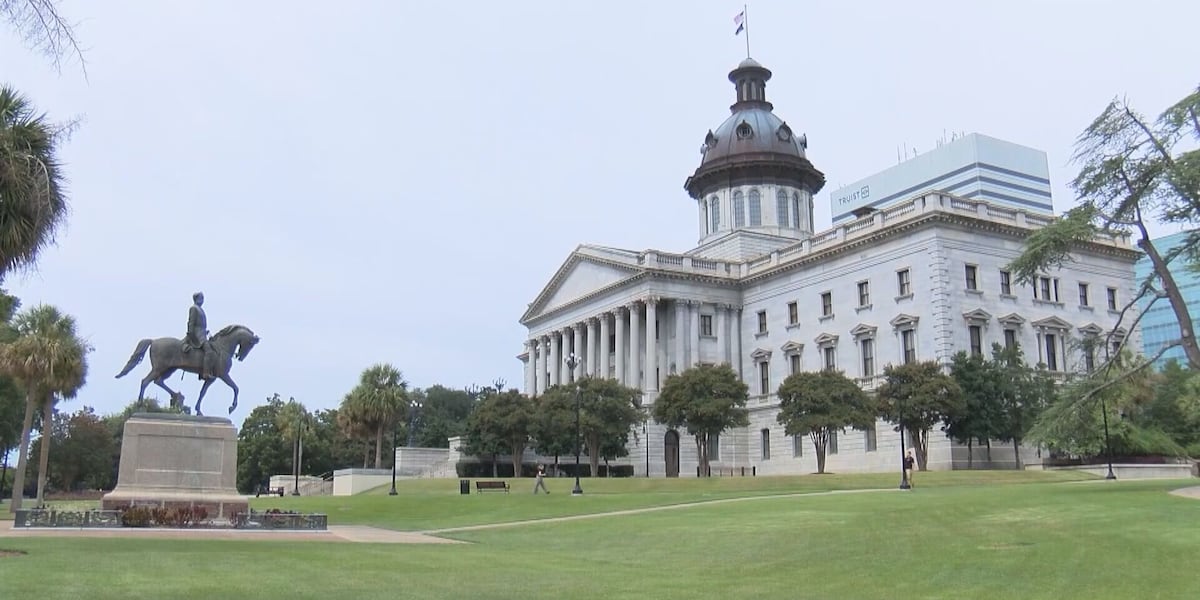
The timing was particularly fraught: early voting for the June 9 primary had already begun when the Senate convened for its final vote. Republican state Sen. Richard Cash, who switched his vote at the last minute, framed the dilemma bluntly: “Neither my conscience nor my common sense will allow me to stop an election that is already underway.” His objection wasn’t ideological—it was practical. The new districts would have rendered thousands of absentee ballots invalid, forcing voters to cast a second ballot under unfamiliar lines.
Critics, including state Sen. Tom Davis, went further, accusing lawmakers of abdicating their constitutional duty. “We have completely outsourced our constitutional obligation to prepare a congressional redistricting map to a consultant in Washington, D.C.,” Davis told reporters. “We have no idea, no idea how that map was created.” The admission underscored a broader concern: South Carolina’s redistricting process had become a black box, with lawmakers rubber-stamping a map designed by an outside firm—likely one aligned with Trump’s legal team—without full transparency.
The Political Earthquake: Trump’s Push vs. GOP Realities
Trump’s involvement in the redistricting effort was no secret. The former president had publicly urged South Carolina Republicans to adopt a map that would dilute Clyburn’s majority-Black district, a move that would have weakened the state’s most influential Democratic voice in Congress. But the Senate’s rejection reveals how Trump’s influence—once a unifying force for the GOP—has become a liability when it clashes with local priorities.
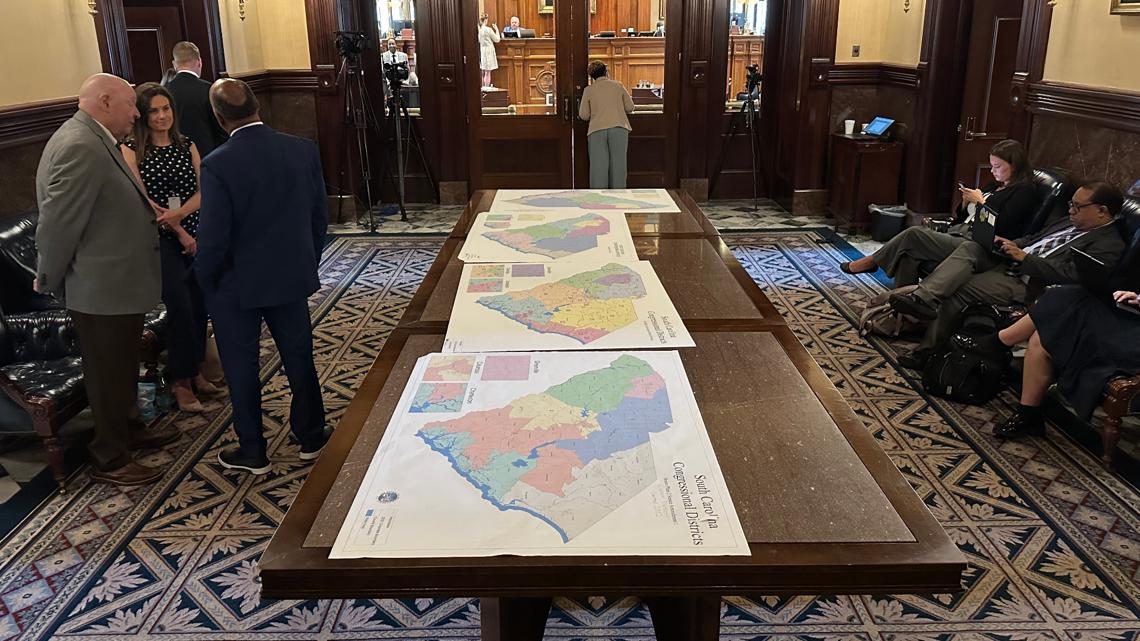
Republican Senate Majority Leader Shane Massey had initially resisted the push, arguing that “Republicans are stronger when the Democrat Party is vibrant and viable.” His stance reflected a growing recognition among some GOP leaders that gerrymandering for its own sake risks alienating moderates and independent voters. Yet the party’s internal divisions were laid bare during Saturday’s five-hour debate—the first weekend session in 40 years—where lawmakers grappled with whether to prioritize partisan gains or democratic norms.
Sen. Larry Grooms, a supporter of the map, captured the tension: “I like the map; I want to see the map passed. There are those who are adamantly opposed to the map. I get that. I do,” he said. “I’ve been in this body long enough to know that if you don’t want something to pass, delay is always on your side.” His comment hinted at a broader strategy: stall until the political moment passes. But this time, the clock ran out.
The Legal and Democratic Fallout: What’s Next?
The Senate’s vote doesn’t kill the redistricting effort entirely—it merely delays it. The House-approved map remains in play, and lawmakers could revive it in a future session. But the political damage is done. Legal challenges are now inevitable, with groups like the ACLU of South Carolina already framing the process as undemocratic. “It’s not how a democracy works—it’s exactly backwards,” Paul Bowers, communications director for the ACLU, told WCNC. “It’s cheating. They’re just cheating.”

The bigger question is whether this becomes a precedent. South Carolina is one of several states rushing to redraw maps after the Supreme Court’s 2024 ruling, which barred racial gerrymandering. But altering districts during an election cycle—especially when it invalidates votes—sets a dangerous precedent. As Sen. Chip Campsen noted during the debate: “Many of them will be annulled because they would have voted in the wrong congressional district, because we are going to change the congressional lines while an election is happening. I’m not aware of that ever happening in United States history.”
Campsen’s claim is striking. While mid-cycle redistricting isn’t unheard of, altering districts in a way that nullifies votes is unprecedented. Legal scholars warn that such moves could open the door to even more aggressive gerrymandering in future cycles, particularly in states where one party controls the legislature. The South Carolina debacle may become a case study in how far partisan actors will go—and how courts will respond.
The Cost of Chaos: $6 Million and Counting
The financial stakes were as high as the political ones. Implementing the new map for this year’s election would have cost the state $6 million, according to the South Carolina Election Commission. That figure doesn’t include the logistical nightmare of holding a second primary in August—a move that would have required reprinting ballots, retraining poll workers, and notifying voters whose districts had shifted. As WIS News 10 reported, the Election Commission estimated the delay alone would cost more than $5 million.
For a state where every dollar counts, the math was simple: the cost outweighed the potential partisan gain. But the real losers may be South Carolina voters, who now face an uncertain path forward. If the map is revived, legal battles will drag on through the primary. If it’s scrapped, the state risks falling behind in the redistricting process, leaving it vulnerable to lawsuits over delayed compliance with federal mandates.
The Bigger Picture: What This Means for Redistricting Nationwide
South Carolina’s failure is a cautionary tale for other states grappling with redistricting in the wake of the Supreme Court’s ruling.
- Timing is everything. Altering districts mid-election cycle creates chaos for voters and election officials alike. The South Carolina debacle shows how quickly a well-intentioned (or partisan) push can spiral into logistical disaster.
- Transparency is non-negotiable. Lawmakers’ admission that they outsourced map-making to a D.C. consultant without oversight raises serious questions about accountability. If states can’t explain how their maps are drawn, courts will step in.
- The GOP’s internal divisions are widening. Trump’s influence is a double-edged sword. While it energizes the base, it also alienates pragmatists who fear the fallout of aggressive gerrymandering. The South Carolina vote suggests that even in deep-red states, some Republicans are pushing back.
The next 30 days will be critical. Lawmakers may attempt to revive the map in a special session, but the political and legal hurdles are steep. Meanwhile, the ACLU and other groups are likely to file lawsuits challenging any rushed process. What’s clear is that South Carolina’s redistricting saga isn’t over—it’s just entered a new, more contentious phase.
For now, Clyburn’s district remains intact, and South Carolina’s voters can proceed with the June 9 primary without the threat of a second ballot. But the state’s experiment in real-time gerrymandering has exposed a fundamental truth: democracy doesn’t work on a deadline. And when the clock runs out, the consequences ripple far beyond one state’s borders.
