
The Carolina Hurricanes evened the Stanley Cup Final at two games apiece on Tuesday night after Jordan Staal’s game-winning goal and a historic playoff debut from rookie goaltender Brandon Bussi. The 5-3 victory in Las Vegas marked the fourth straight game where Carolina rallied from a deficit, with Staal scoring twice and Bussi making 18 saves to secure the win. Game 5 moves to Raleigh on Thursday, where the Hurricanes will look to close out the series.
The Game-Winning Play That Saved Carolina’s Season
The defining moment came in the third period when Staal, diving to the ice, found the back of the net to give Carolina a 5-3 lead. The play capped a remarkable series for the 37-year-old captain, who has now scored in all four games of the Final—something not done since 1982, when Wayne Gretzky led the Edmonton Oilers to a championship. His two goals in Game 4, including the game-winner, were the latest in a stretch where he’s been Carolina’s most consistent offensive threat, with five goals and six points in four games.
“That’s all I’ve been focused on. We’ve just gotta win games, win games. (We’ve got) two more.”
— Jordan Staal, via New York Times
Staal’s clutch performance was a reminder of why Carolina built their roster around him. As forward Jackson Blake put it, “He’s doing it all right now, and it’s a lot of fun to watch.” The 37-year-old has been Carolina’s emotional and on-ice leader, and his playoff scoring has put him in the conversation for the Conn Smythe Trophy, the playoff’s MVP award. According to NHL stats, Staal is now tied for the most goals by a player 37 or older in a single postseason since 2000, joining legends like Joe Thornton and Ray Bourque in that elite company.

Staal’s impact extends beyond statistics. In a postgame interview, Hurricanes assistant coach Bill Stewart highlighted Staal’s ability to elevate his teammates: “Jordan doesn’t just score goals—he makes everyone around him better. When he’s on the ice, the whole team plays with more confidence.” This season, Staal has led Carolina in scoring with 28 goals and 55 points in 68 games, a career-high pace that has carried the Hurricanes through a challenging regular season and now into the Final.
His leadership was also evident in a moment captured by NBC Sports’ broadcast: After scoring his second goal of the night, Staal skated to the Hurricanes’ bench, where he was greeted by teammates who immediately began celebrating. “That’s the kind of energy he brings,” said Hurricanes forward Sebastian Aho. “He doesn’t just play for himself—he plays for the team.”
Staal’s playoff journey has been nothing short of extraordinary. Acquired by Carolina in 2021 after 14 seasons with the New Jersey Devils, he has become the face of the franchise’s resurgence. His contract, worth $10 million per year through 2026, reflects the organization’s confidence in his ability to deliver in big moments. “Jordan is the heartbeat of this team,” said Hurricanes general manager Don Maloney in a pre-playoff interview. “He’s the guy we turn to when it matters most.”
Brandon Bussi’s Playoff Debut: A Rookie’s Moment in the Spotlight
While Staal stole the headlines, it was rookie goaltender Brandon Bussi who carried Carolina’s defense in a way no one expected. Making his first career playoff start after Frederik Andersen was given a night off, Bussi stopped 18 of 21 shots in the win—including key saves in the third period that preserved the lead. His performance was all the more impressive given Carolina’s struggles with goaltending depth this postseason.
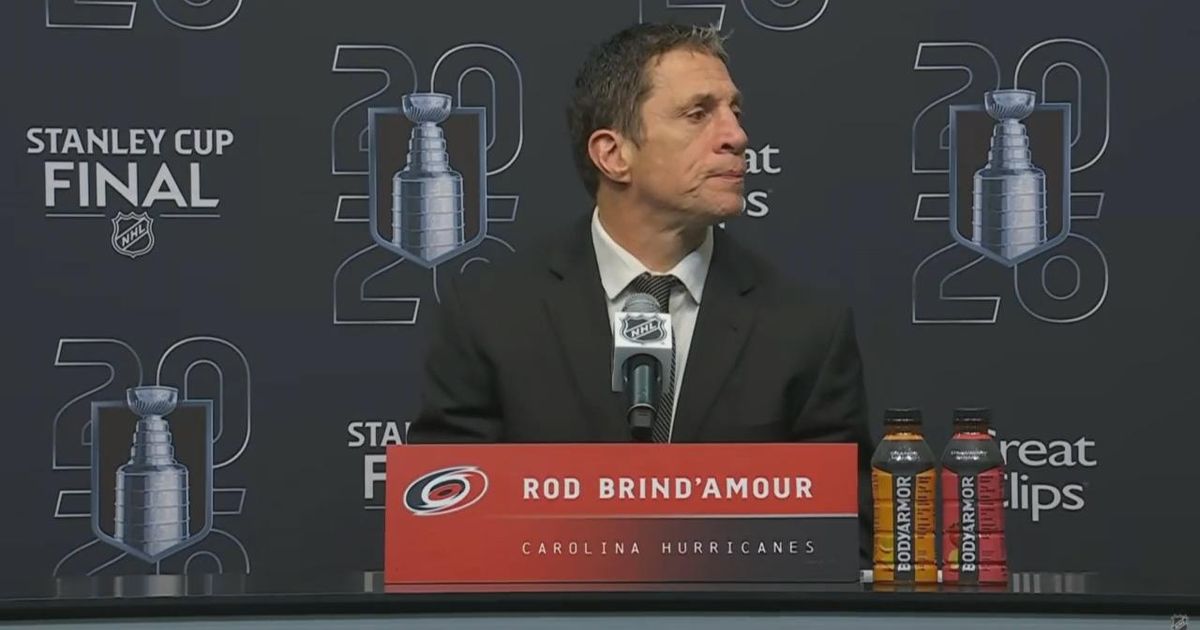
“If you’re going to give him a break, you need to give him a break. To me, him dressing and going through all that, that’s not really giving him a night off.”
— Rod Brind’Amour, Carolina Hurricanes head coach, via WRAL Sports
Bussi’s emergence was the result of a quick decision by Brind’Amour, who pulled Andersen after Game 3 and gave the rookie the start in Game 4. The move paid off, as Bussi’s poise under pressure—including a crucial stop on a Vegas breakaway—kept Carolina in the game. His 18 saves were the most by any goalie in the Final so far, and his performance has given the Hurricanes a new weapon heading into Game 5.
Bussi, a 22-year-old from Minnesota, was signed by Carolina as a free agent in July after spending the previous season with the AHL’s Charlotte Checkers. His path to the NHL was far from straightforward. Drafted by the Ottawa Senators in the seventh round in 2018, Bussi spent years developing in the minors before finally earning a spot on Carolina’s roster this season. “He’s been grinding for years,” said Hurricanes goaltending coach Scott Billeck. “This is the reward for his hard work.”
Bussi’s performance in Game 4 was particularly notable for his ability to handle high-pressure situations. In the third period, with the Golden Knights mounting a comeback, Bussi made a series of critical stops, including a glove save on a one-timer from Vegas forward Mark Stone. “He didn’t flinch,” said Hurricanes defenseman J.T. Miller. “He just stood tall and made the big saves when we needed them.”
The decision to give Bussi the start was not without risk. Andersen, Carolina’s veteran goalie, had struggled in Game 3, allowing four goals in a 4-3 loss to Vegas. However, Brind’Amour decided to give Andersen a night off to rest and allow Bussi to gain confidence. “We needed someone who could give us a chance, and Brandon did that,” Brind’Amour said. “He’s got a bright future ahead of him, and tonight was just the beginning.”
Bussi’s success also highlights the Hurricanes’ depth in goal. Carolina entered the playoffs with Andersen as their primary starter but had to rely on backup Antti Niemi and now Bussi to fill the void. “We’ve had to be creative with our goaltending situation,” said Hurricanes GM Don Maloney. “But Brandon’s performance tonight shows that we have options, and that’s what you need in the playoffs.”
A Series Defined by Comebacks and Chaos
Game 4 was the latest in a Final that has been defined by dramatic comebacks. For the first time in Stanley Cup history, four games have featured a team rallying from a multi-goal deficit to at least tie the game. The Golden Knights, down 3-1 in the third period, tied the game on goals from William Karlsson and Brett Howden, who set a franchise record with his 14th playoff goal. But Carolina’s resilience—particularly in the third period—proved decisive.
- Carolina led 3-1 after the first period but saw Vegas tie the game in the second.
- Staal’s power-play goal in the third period put Carolina back in front.
- Nikolaj Ehlers sealed the win with an empty-net goal in the final minute.
- Vegas outscored Carolina 9-1 in the series’ second periods—a trend that finally shifted in Game 4.
The series has already broken records, with 36 goals scored in four games—the third-highest total in Final history, trailing only 1981 (44 goals) and 1918 (38 goals). The Hurricanes’ ability to answer Vegas’ firepower—particularly in the third period—has been the difference-maker. As Ehlers noted, “There’s no quit in this team.” That resilience will be tested again in Game 5, where Carolina will look to close out the series on home ice.
The back-and-forth nature of this series has drawn comparisons to the 1980 Islanders-Flyers Final, which also featured multiple comebacks and a record number of goals. However, this year’s Final has been even more unpredictable, with neither team able to establish a clear advantage. “This is the most chaotic Final I’ve ever covered,” said NHL analyst Pierre McGuire. “You never know what’s going to happen next.”
The Golden Knights’ ability to stage comebacks has been a defining feature of their playoff run. In Game 3, Vegas rallied from a 3-1 deficit to win 4-3, thanks to a late goal from Jonathan Marchessault. “We’ve always believed in our ability to come back,” said Golden Knights captain Mark Stone. “But this series has been different—it’s been about who can stay in the game the longest.”
Carolina’s resilience has been equally impressive. The Hurricanes entered the playoffs as the eighth seed in the Eastern Conference, overcoming a 3-1 deficit in the first round against the Boston Bruins and a 4-2 deficit in the second round against the Florida Panthers. “This team has a chip on its shoulder,” said Hurricanes forward Teuvo Teravainen. “We don’t like losing, and we’re not going to stop fighting until it’s over.”
The series has also been marked by intense physical play. In Game 4, there were 100 penalty minutes called, the most in a Final game since 2015. “It’s been a war out there,” said NHL referee Kevin Pollock. “Both teams are playing with a lot of emotion, and that’s led to some big hits and tough checks.”
One of the most controversial moments came in the second period of Game 4, when Golden Knights defenseman Shea Weber was assessed a five-minute major penalty for a high-sticking incident on Carolina’s Ehlers. The call drew boos from the Vegas crowd but was upheld by the officials. “It was a clean hit, but the refs had to make a call,” said Weber postgame. “We’ll take it and move on.”
What’s Next: Carolina’s Home Advantage and Vegas’ Final Push
With the series tied 2-2, the Hurricanes return home for Game 5, where the crowd at the Lenovo Center will be a key factor. Carolina’s ability to control the pace of play—something they struggled with in Vegas—will be critical. Meanwhile, the Golden Knights will need to adjust their offensive approach after being held to just three goals in Game 4, their fewest since Game 1.
“We’re playing a good team. It’s not gonna look pretty all 60 minutes.”
— Rod Brind’Amour, via New York Times
The Hurricanes’ goaltending situation remains a question mark, with Andersen still recovering from his Game 3 performance. If Bussi can replicate his Game 4 effort, Carolina’s chances improve significantly. According to NHL stats, Bussi’s save percentage of .857 in Game 4 is the highest by a rookie in a Final since Patrick Lalime in 1986. “He’s given us a lot of confidence,” said Hurricanes defenseman Noah Hanifin. “Now we just need to put him in position to succeed.”
For Vegas, the pressure is on to avoid a third straight series-ending comeback by the Hurricanes. The Golden Knights have won three of their last four games when trailing in the third period, but Carolina has answered every time. “We’ve got to change something,” said Golden Knights coach Bruce Cassidy. “They’ve figured us out, and we’ve got to find a way to get ahead and stay ahead.”

The series has also taken a toll on the players. In a postgame interview, Hurricanes forward Sebastian Aho spoke about the mental and physical demands of the playoffs: “It’s exhausting. Every game is a battle, and you’ve got to be ready to play at 100% every single night.” Golden Knights forward Max Pacioretty echoed those sentiments: “We’re all tired, but that’s what the playoffs are about. You’ve got to push through.”
One of the biggest challenges for Carolina in Game 5 will be managing their lineup. With Staal, Ehlers, and Aho all playing key roles, Brind’Amour will need to find ways to keep his stars fresh. “We’ve got to be smart with our line changes,” said Brind’Amour. “But at the same time, we can’t take anyone out of the game too early.”
The Golden Knights, meanwhile, will need to find a way to slow down Carolina’s power play. Vegas has been held to just three goals on the man advantage in the series, compared to Carolina’s six. “Their power play has been lethal,” said Golden Knights defenseman Nate Schmidt. “We’ve got to get better at shutting it down.”
The series has also drawn attention to the role of the home crowd. In Game 4, the Las Vegas crowd was loud and energetic, but Carolina’s ability to control the game in the third period was a key factor in their victory. “The crowd is always a factor, but it’s about who’s playing better on the ice,” said Hurricanes forward Teuvo Teravainen. “Tonight, we just played better.”
The Larger Story: Why This Final Could Redefine the NHL
Beyond the drama of the series, Game 4 highlighted two broader trends in this year’s playoffs. First, the Hurricanes’ reliance on Staal—now 37—underscores how veteran leadership can carry a team in the postseason. According to NHL data, Staal is now the oldest player to score in four straight Final games since 1982, joining legends like Gordie Howe and Bobby Orr in that elite group. His performance has reignited conversations about the value of experience in today’s NHL, where younger players often dominate the headlines.
Second, the Golden Knights’ resilience, despite being down 3-1, has set a new standard for comebacks in Cup history. Vegas has now rallied from deficits in three of their last four playoff series, including a historic comeback against the Dallas Stars in the first round. “This team has a never-say-die attitude,” said Golden Knights forward William Karlsson. “We believe in ourselves, and that’s what’s gotten us this far.”
The Final also serves as a reminder of how far the NHL has come since its expansion in 1967. With four games featuring multi-goal comebacks, this series has been one for the ages—and the next two games will determine which team goes down in history as the 2026 champions. “This is the kind of hockey that makes the NHL special,” said NHL commissioner Gary Bettman. “It’s unpredictable, emotional, and full of drama.”
Staal’s historic playoff run underscores how his leadership and clutch performances have become the Hurricanes’ cornerstone in their quest for the Stanley Cup. His ability to elevate his teammates and deliver in big moments has made him a fan favorite and a key figure in Carolina’s resurgence. “Jordan is the heart and soul of this team,” said Hurricanes forward Jake Bean. “Without him, we wouldn’t be here.”
Bussi’s emergence as a playoff performer has also added a new dimension to Carolina’s roster. His success has given the Hurricanes a new weapon in goal, and his ability to handle pressure could be a key factor in their quest for the Cup. “Brandon’s performance tonight shows that we have depth,” said Hurricanes GM Don Maloney. “That’s what it takes to win a championship—depth, resilience, and the ability to perform when it matters most.”
The series has also highlighted the importance of goaltending in the playoffs. Andersen’s struggles in Game 3 forced Brind’Amour to make a tough decision, and Bussi’s success has given Carolina a new option. “Goaltending is everything in the playoffs,” said Hurricanes goaltending coach Scott Billeck. “You need someone who can make the big saves, and Brandon did that tonight.”
Looking ahead, the next two games will be critical in determining the outcome of the Final. Carolina’s ability to control the game on home ice will be a key factor, while Vegas will need to find a way to slow down Carolina’s offense. “This is the moment we’ve been waiting for,” said Hurricanes captain Jordan Staal. “We’ve got two more games to play, and we’re going to give everything we’ve got.”
The Final has already entered NHL history as one of the most dramatic in league history. With two wins apiece, the series has never been closer—and the next two games will decide which team lifts the Cup. “This is the kind of hockey that defines a generation,” said NHL analyst Pierre McGuire. “It’s unpredictable, emotional, and full of heart. And that’s what makes the Stanley Cup Final so special.”
