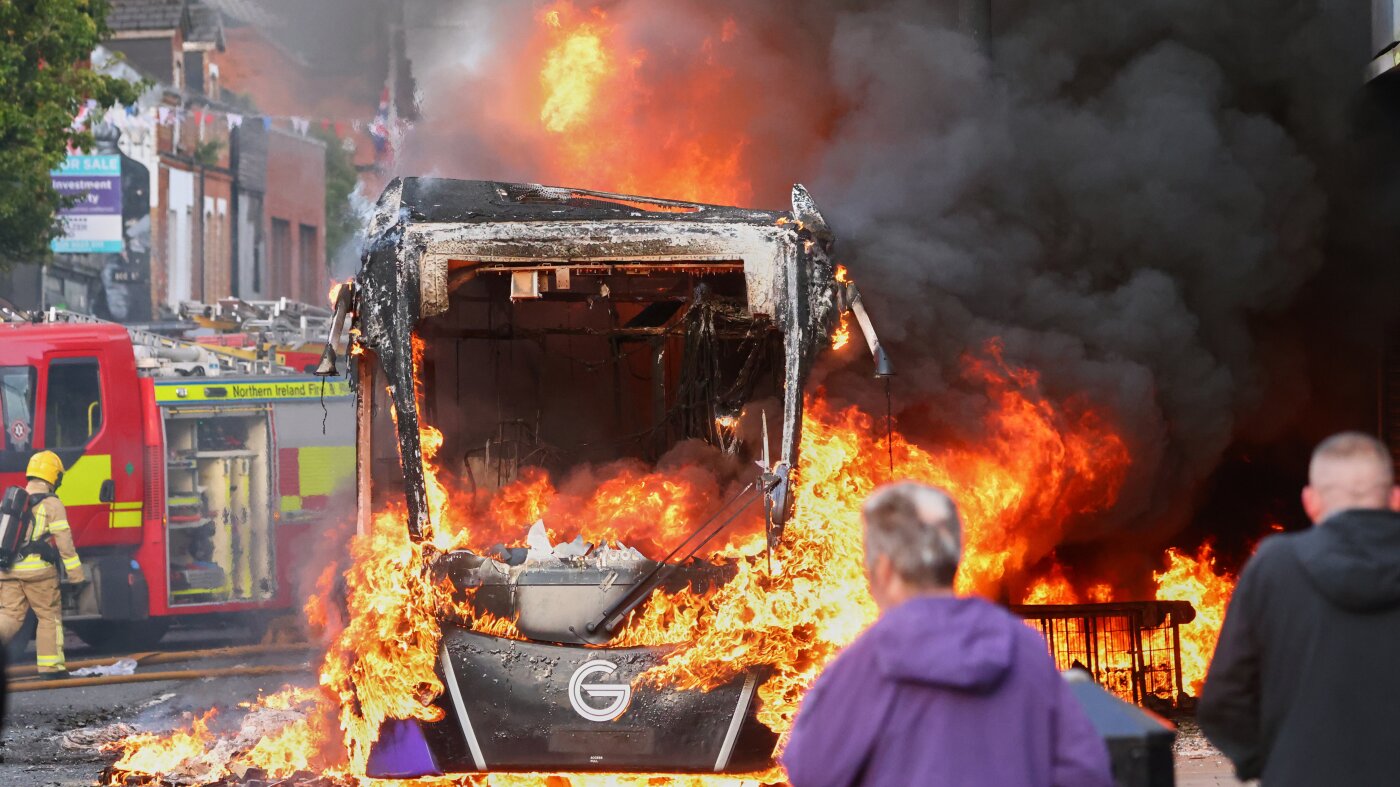
A 30-year-old Sudanese asylum seeker was charged with attempted murder Tuesday following a violent stabbing in Belfast that left a man in his 40s with serious injuries. The attack, which occurred late Monday, triggered widespread anti-immigration protests across Northern Ireland, resulting in torched vehicles and property damage in Belfast.
The Stabbing Incident and Legal Proceedings
Police in Northern Ireland have charged the 30-year-old suspect with attempted murder, possession of a knife in a public place, and making threats to kill. According to NPR, the victim suffered severe injuries to his eyes, face, and back during the Monday night attack in north Belfast. A kitchen knife was recovered at the scene.

While the attack was captured on video, the Police Service of Northern Ireland (PSNI) has stated there is no evidence to suggest the incident was terrorism-related. The suspect is expected to appear at Belfast Magistrates Court on Wednesday. Police have confirmed that the suspect was not previously known to Northern Irish authorities, a detail that has been closely scrutinized as officials work to reconstruct the circumstances leading up to the confrontation.
Immigration Status and Official Details
The suspect’s background has become a focal point of public and political discourse. Northern Ireland’s chief constable, Jon Boutcher, provided a timeline of the man’s arrival in the United Kingdom to clarify the administrative path the suspect took before settling in the region.
- February 2023: The suspect entered Northern Ireland across the Irish border after flying from Paris to Dublin.
- September 2023: The suspect was granted a five-year visa and leave to remain in the U.K. until 2028.
When questioned in Parliament, Northern Ireland Secretary Hilary Benn declined to confirm whether the suspect had entered the country illegally, emphasizing that the investigation must be allowed to proceed without interference. Under current U.K. immigration policy, individuals who are granted leave to remain are typically subject to specific monitoring requirements, though the specifics of the suspect’s compliance with those conditions remain under review by the Home Office.
Protests and Community Unrest
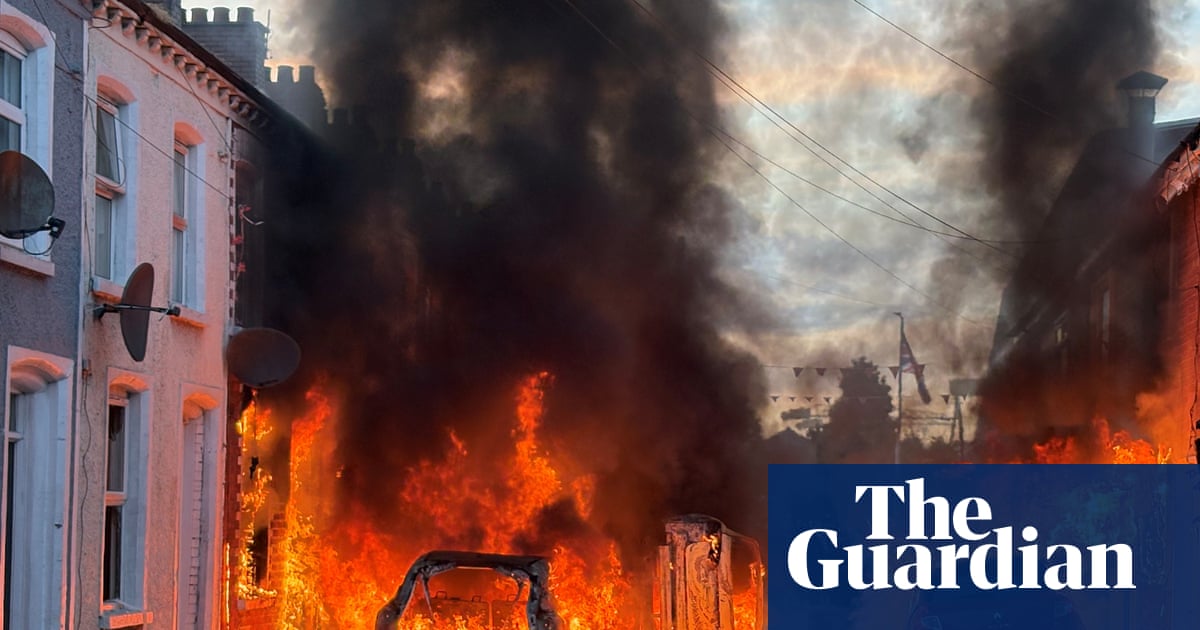
Following the attack, civil unrest broke out in several parts of Belfast. Masked individuals torched a bus and multiple cars, while fires were reported in buildings near the city center. Al Jazeera reported that protesters also gathered in Antrim, approximately 25 kilometers west of Belfast. The violence marks a significant escalation in public disorder, testing the resources of the PSNI, which has been tasked with managing both the criminal investigation into the stabbing and the containment of the subsequent rioting.
Political leaders have responded with calls for calm. Northern Ireland’s Minister of Justice, Naomi Long, sharply criticized those organizing the protests, suggesting that the unrest was being driven by individuals who had little connection to the city.
“What distresses and disturbs me is there are those that prior to yesterday would have struggled to find Belfast on a map who are online, who are sharing incitement and encouragement for people and weaponising the fear that people genuinely have about what happened to try and turn this into some kind of anti-immigration issue or a racist protest.”
Naomi Long, Minister of Justice of Northern Ireland, via The Guardian
Political Reactions and Broader Tensions
The Belfast violence follows a period of heightened national tension across the United Kingdom. Similar protests occurred in Southampton, England, where demonstrators targeted a hotel housing asylum seekers following the separate murder of a university student. In that case, the victim and the convicted killer were both British, yet the event was used by some to promote anti-immigration narratives, highlighting how local tragedies are increasingly being framed within broader debates over national immigration policy and social cohesion.

In Belfast, the Democratic Unionist Party (DUP) leader Gavin Robinson has called on authorities to address “uncontrolled immigration,” framing the incident as a failure of the current system. Meanwhile, law enforcement officials are urging the public to avoid sharing graphic footage of the stabbing online, noting that the circulation of such content can exacerbate community tensions and interfere with the integrity of the ongoing legal proceedings.
Assistant Chief Constable Ryan Henderson noted that while the community is understandably fearful, the focus must remain on the judicial process, which is designed to handle the charges of attempted murder and weapons possession through the formal court system rather than through street-level vigilantism.
“This brutal attack will have sent shock waves through the community, causing real concern.”
Ryan Henderson, Assistant Chief Constable of the Police Service of Northern Ireland, via NPR
Prime Minister Keir Starmer condemned the violence as “sickening,” and his office issued a statement reaffirming that there is “no tolerance for abhorrent scenes of violence” on U.K. streets. Authorities remain on high alert as they continue to investigate the motive for the attack and manage the fallout from the subsequent public disorder. The PSNI has indicated that they are analyzing social media activity to identify organizers of the unrest, signaling that further arrests related to the rioting are possible as the investigation into the stabbing reaches the court phase.
Find more reporting in our News section.
