NASA Hubble spots ancient star cluster
NASA Hubble spots ancient star cluster
- Headline Dispatch: NASA Hubble spots ancient star cluster
- Core Takeaway: NASA Hubble spots ancient star cluster
- Source Synthesis: Continuous live monitoring aggregated across major news wires and independent bureaus.
NASA Hubble spots ancient star cluster
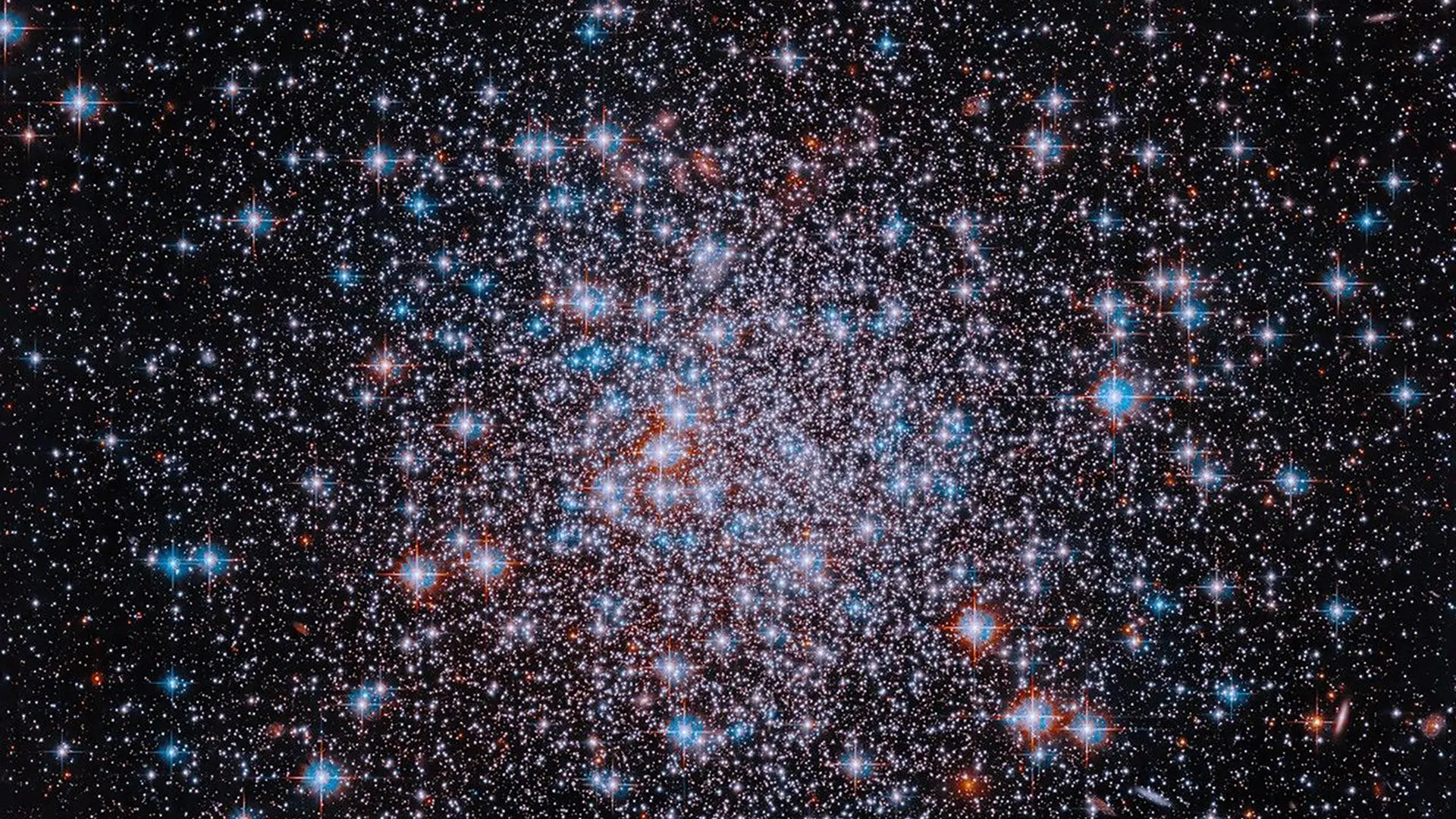
NASA's Hubble Space Telescope has captured a stunning image of a globular cluster, NGC 6426, located in the outer halo of the Milky Way galaxy. The image, released to commemorate the United States' 250th anniversary, showcases a brilliant field of red, white, and blue stars, resembling a sparkler glowing against the night sky.
NGC 6426 is a spherical collection of stars bound together by their mutual gravity, one of approximately 150 known globular clusters in the Milky Way. These groups of stars are thought to form as a unit from the same collapsing cloud of gas, resulting in stars that typically have similar ages. The stars in globular clusters tend to be ancient, and NGC 6426 is no exception, with an estimated age of approximately 13 billion years, making it one of the oldest globular clusters in the Milky Way.
The image of NGC 6426 offers a rare glimpse into the early universe, with the cluster's age and composition providing valuable insights into the formation and evolution of the galaxy. The stars in NGC 6426 have low metallicity, meaning they contain relatively small amounts of elements heavier than hydrogen and helium, which is similar to the conditions found in the young universe.
Researchers have also found evidence of two chemically distinct populations of stars in NGC 6426, indicating that the slightly younger and more metallic stars were enriched with material from the explosive deaths of the cluster's earlier stars. This process, which involves the scattering of elements heavier than hydrogen and helium throughout the cluster, is thought to have played a crucial role in the formation of future generations of stars and planets.
The vibrant colors in the Hubble image are based on the wavelengths of light captured through different telescope filters using standard image processing methods. Blue represents shorter wavelengths of visible light, while red shows longer visible wavelengths along with some near-infrared light. The color and temperature of stars are directly related, with the blue stars being hotter and the red stars being cooler.
Hubble captured this image as part of a larger project examining globular clusters throughout the Milky Way's halo. By studying these ancient stellar systems, astronomers hope to better determine their ages and gain new insights into how our galaxy formed and evolved. The Hubble Space Telescope has been instrumental in transforming our understanding of the universe over the past three decades, and its discoveries continue to be expanded by other NASA observatories, including the James Webb Space Telescope.
The upcoming Nancy Grace Roman Space Telescope, scheduled to launch in late summer, is expected to build on this legacy even further, providing new and exciting opportunities for astronomers to study the universe.
How significant is this development?
Participate in our community survey on the trajectory and real-world impact of this news.