Vantablack 310 satellite paint aims to reduce light pollution for astronomy
A new satellite coating aims to reduce light pollution by minimizing spacecraft reflectivity. A test mission aboard the Jovian 1 satellite is scheduled for 2026.
- Headline Dispatch: Vantablack 310 satellite paint aims to reduce light pollution for astronomy
- Core Takeaway: A new satellite coating aims to reduce light pollution by minimizing spacecraft reflectivity. A test mission aboard the Jovian 1 satellite is scheduled for 2026.
- Source Synthesis: Continuous live monitoring aggregated across major news wires and independent bureaus.
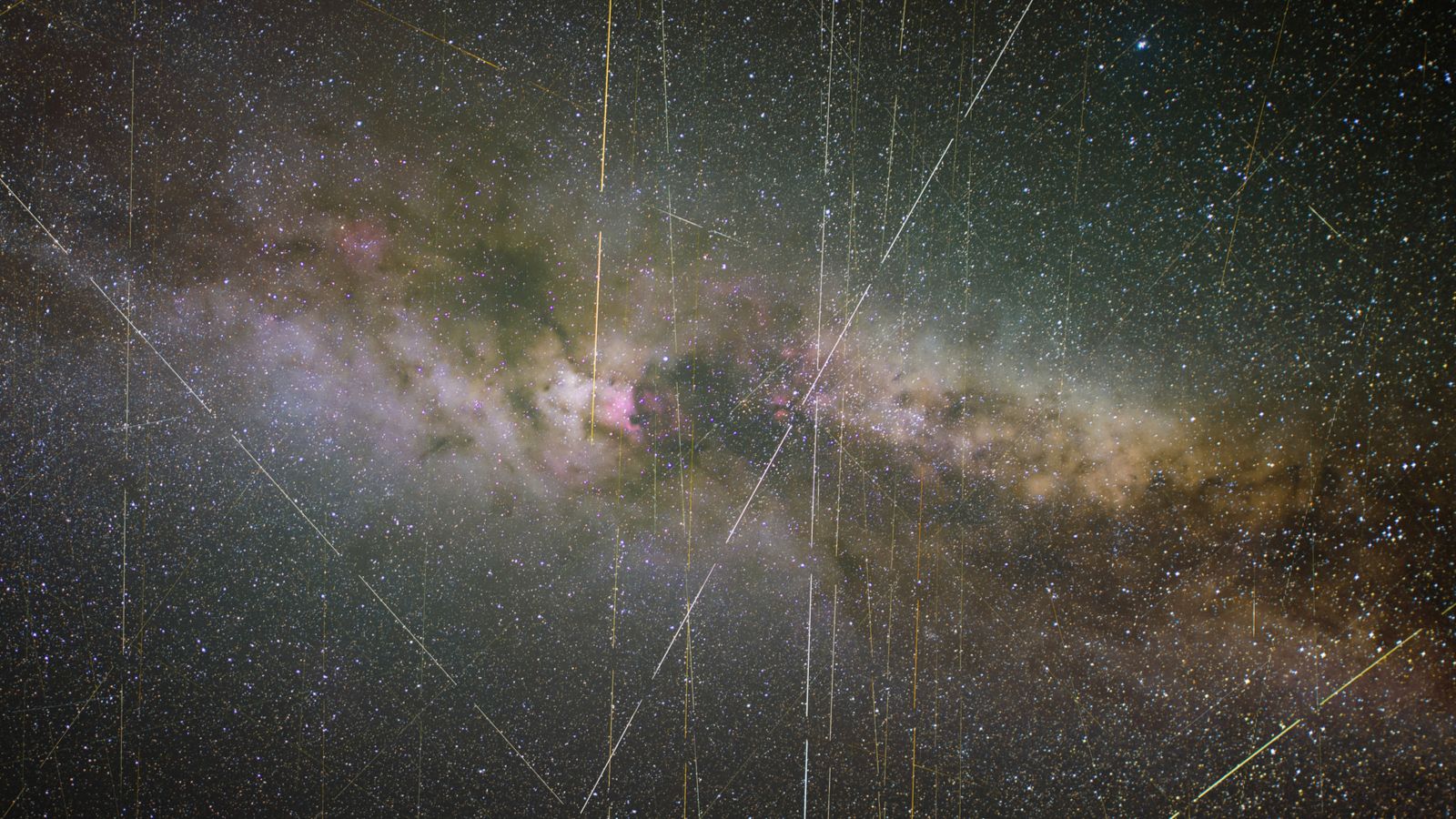
Astronomers and materials scientists are preparing to test a specialized coating designed to dim the visibility of satellites, an effort to curb the light pollution that has increasingly complicated ground-based telescopic research. The rise of these constellations has introduced luminous, persistent trails into long-exposure images taken by professional observatories. Research indicates that the Vera C. Rubin Observatory in Chile, a facility designed for unprecedented sky mapping, may see between 30% and 40% of its images impacted by these satellite streaks. While researchers at the observatory note that many streaks are not destructive, they describe the interference as a significant nuisance, comparing the effect to bugs on the windshield
of a telescope.
To address this, a team from the University of Surrey and the spin-off firm Surrey NanoSystems has developed Vantablack 310. This material is a successor to earlier, more delicate ultra-black coatings. While original versions of Vantablack relied on a carbon nanotube structure so fragile that a human touch could collapse it, Vantablack 310 uses a proprietary blend of carbon black and durable binders. This design allows the coating to survive the harsh environment of space, including temperature fluctuations and radiation, while remaining practical for application by engineers in clean-room facilities.
Testing for this new material is scheduled to occur in 2026 aboard Jovian 1, a shoebox-sized satellite known as a CubeSat. The mission is managed by the Joint Universities Programme for In-Orbit Training, Education and Research (JUPITER), a collaborative initiative involving the Universities of Surrey, Portsmouth, and Southampton. During the mission, the rear of the satellite's deployable solar panel will be coated with Vantablack 310, allowing researchers to measure its performance and brightness reduction compared to uncoated surfaces as the craft rotates in orbit.
Current estimates suggest the new paint could reduce reflected light significantly. While competing space coatings reflect roughly 5% of incoming light, Vantablack 310 is designed to reflect approximately 2% of light across the visible and near-infrared spectrum. Scientists involved in the project emphasize that the goal is not total invisibility, but rather operational compatibility that keeps satellite brightness below specific thresholds, making it easier to filter artifacts from scientific data.
The necessity for such solutions arises from the sheer scale of modern orbital traffic. According to figures, there are approximately 14,904 active satellites currently in orbit, with some projections anticipating that number could rise to more than 60,000 by 2030. Operators like SpaceX, which manages the Starlink network, have previously experimented with dark coatings, though early efforts faced technical challenges such as overheating due to the increased absorption of solar energy. Developers of Vantablack 310 believe their formulation avoids these thermal complications.
The push for these mitigations also carries broader implications for equity and heritage. Beyond the technical challenges of image corruption, researchers view the night sky as a shared resource and a piece of global cultural heritage. There is concern that, without intervention, the ability to study the universe will be restricted, particularly affecting observatories in lower-income nations where some of the world's last pristine dark skies remain. Looking ahead, the success of the Jovian 1 trial could encourage the adoption of hull-darkening standards across the industry, though experts warn that light pollution is only one of several mounting concerns, which also include radio signal interference and the rising risk of orbital collisions.
How significant is this development?
Participate in our community survey on the trajectory and real-world impact of this news.