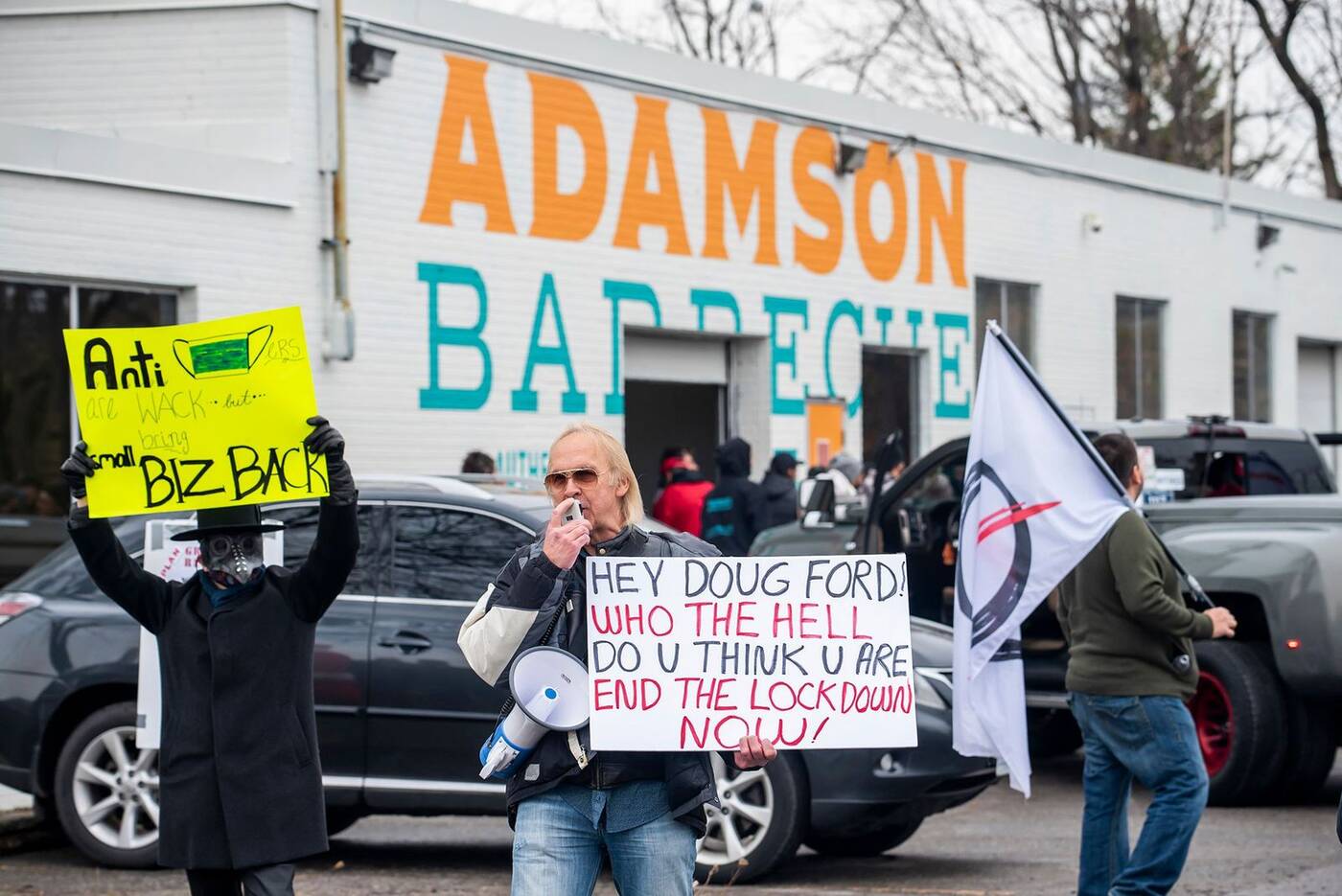
Public health discourse has fractured into a volatile cycle of blame and public shaming, as seen in the heated polarization surrounding pandemic-era restrictions. While some physicians argue that calling out non-compliance is a moral duty, research suggests that such tactics often backfire, damaging trust and discouraging the transparency needed for effective disease management.
The Weaponization of Public Shame
Public Health Consequences Adamson Barbecue
The pandemic transformed public health directives into intense political battlegrounds, where the line between social regulation and weaponized humiliation became increasingly blurred. In Toronto, palliative care physician Dr. Naheed Dosani experienced this firsthand after criticizing a local restaurant, Adamson Barbecue, for defying provincial indoor dining bans. For Dosani, the restaurant’s public defiance while vulnerable populations remained restricted felt like a slap in the face to front-line workers struggling to support patients separated from their families.
This confrontation triggered a torrent of online vitriol, including death threats directed at Dosani. The incident highlights a broader tension identified by health experts: while peer pressure can sometimes reinforce ethical standards, intensified shaming often serves as a counter-cultural movement against science and evidence. When shame shifts from a tool of social regulation to an instrument of stigma, it frequently leads to withdrawal rather than reform.
The Psychological Fallout in Clinical Practice
cluster (priority): cambridge.org
The impulse to assign blame is not limited to public policy debates; it is deeply embedded within the culture of medicine itself. Dr. Will Bynum, an associate professor of family medicine at Duke University School of Medicine, has become a leading voice in identifying how the high-stakes environment of medical training can leave clinicians vulnerable to intense feelings of inadequacy. After a difficult emergency delivery early in his career, Bynum recalled retreating to an empty room to isolate himself.
“I didn’t want to see anybody. I didn’t want anybody to find me,” — Bynum, Duke University School of Medicine, via NPR
Bynum describes this reaction as a really primitive response. Along with his research colleagues, he is now advocating for shame competence—a framework designed to help medical students and physicians recognize when shame is influencing their decision-making. The stakes are significant: when doctors fail to address their own shame, they risk projecting that same judgment onto their patients, which can lead to defensive behavior, isolation, and worse health outcomes.
Institutional Blame and the Policy Shift
Toronto Restaurant Gets Unexpected Review From Food Critic | Your Morning
The current political landscape has amplified the tendency to frame health outcomes as individual moral failures rather than systemic issues. Recent rhetoric from high-level officials, including Health and Human Services Secretary Robert F. Kennedy Jr. and FDA Commissioner Marty Makary, has frequently linked chronic conditions like diabetes and ADHD to personal lifestyle choices. Makary, for instance, suggested in a recent media appearance that diabetes could be better addressed through cooking classes instead of just throwing insulin at people.
This shift toward individual accountability is not new, but it is increasingly formalized. A 2023 study cited by NPR found that approximately one-third of physicians reported feelings of repulsion when treating patients with Type 2 diabetes. Furthermore, 44% of those surveyed viewed such patients as lacking motivation, while 39% characterized them as lazy. This clinical bias, when combined with public shaming, creates a cycle where patients are less likely to seek care or disclose their health status for fear of judgment.
The Path Forward: Accountability Versus Humiliation
cluster (priority): npr.org
Distinguishing between accountability and humiliation remains the central challenge for health authorities. As noted in research published in The British Journal of Psychiatry, shame targets the self—leading a person to feel that they are inherently flawed—whereas guilt focuses on specific actions, which can be corrected. When institutions weaponize shame to control behavior, they risk destroying the trust necessary for public health cooperation.
Dr. Dosani maintains that physicians have a specific responsibility to speak out when public health protocols are ignored, arguing that it is more crucial than ever that health care workers, and particularly physicians, stand up and speak out against conspiracy theorists, anti-maskers, and anybody who is creating a movement that moves us away from the pandemic protocol. However, he also acknowledges that there is a fine line; he points to the case of Dr. Jean Robert Ngola, who faced intense public scrutiny and shaming following a COVID-19 outbreak in New Brunswick, despite the lack of clarity regarding his role in the cluster.
As the medical community continues to grapple with these dynamics, the focus is shifting toward creating environments where clinicians can process their own vulnerabilities without resorting to the dehumanization of their patients. Whether this can be achieved in a political climate that favors aggressive individual blame remains an open question for the coming year.
Claire Donovan coordinates breaking-news coverage across global time zones. She has reported on elections, social movements, and investigative stories in over ten countries. Known for her calm leadership under pressure, Claire guarantees Globally Pulse delivers news that is fast, factual, and fair.