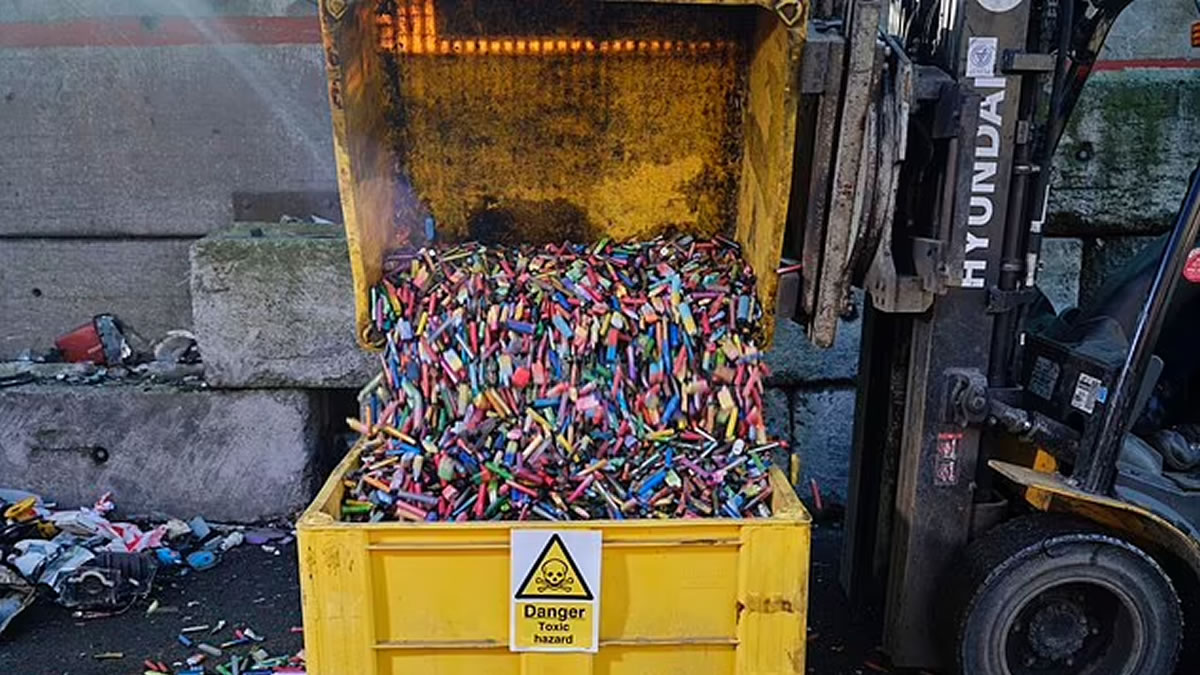
The UK’s waste management industry has proposed a £5 deposit on single-use vapes to cut littering, with trade groups citing mounting evidence
of environmental harm from discarded devices. The plan, backed by companies handling 90% of England’s waste, faces opposition from retailers and public health advocates over cost and accessibility.
Trade Groups Push for Deposit Scheme Amid Vape Litter Crisis
Waste management firms in England are uniting behind a £5 deposit return scheme for single-use vapes, framing it as a necessary measure to combat rising litter levels and environmental damage. The proposal, led by the Environmental Services Association (ESA) and Valpak—which together process 90% of the country’s waste—comes as discarded vapes become one of the most visible forms of litter, with an estimated 1.5 million found on England’s streets and beaches every week
, according to a 2025 report by Keep Britain Tidy.
The scheme would require retailers to charge a refundable deposit on single-use vapes, with collection points at stores and recycling centers. Proponents argue the model has worked for glass bottles and cans, reducing litter by over 90% since its introduction in 2023
, per ESA data. Richard Kirkman, ESA’s policy director, told reporters the current system is failing
, with only 3% of discarded vapes recycled
.
Opposition is fierce. The British Vaping Association (BVA) warns the deposit could price out millions of smokers
, while public health groups like Action on Smoking and Health (ASH) argue it may undermine harm reduction
by discouraging vaping as a substitute for cigarettes. Retailers, including Tobacco Retailers’ Association, have raised operational concerns, noting that small shops lack the infrastructure
for deposit handling.
Evidence of Harm: Why Vapes Are a Littering Epidemic
The push for a deposit scheme stems from mounting data on vape pollution. A 2025 study by University of Portsmouth found that 98% of discarded vapes end up in landfills or as litter
, with batteries leaking toxic chemicals into soil and water. The Department for Environment, Food & Rural Affairs (Defra) reported in April 2026 that vapes now account for 12% of all litter collected in England
, up from 3% in 2022
.
Local authorities are bearing the cost. Council tax payers spend an estimated £100 million annually cleaning up vape-related litter, according to Local Government Association (LGA) figures. Cllr David Renard, LGA’s environment spokesperson, described the situation as a national embarrassment
, adding that councils are drowning in vapes
.
The problem is exacerbated by single-use devices, which make up 60% of the UK’s vape market
, per YouGov research. Unlike reusable vapes, these are often discarded within weeks, with no recycling infrastructure in place. The ESA’s Kirkman highlighted that even if every vape were recycled, current systems can’t handle the volume
.
Retailers and Public Health Groups Dig In
Industry resistance centers on practicality and principle. The BVA argues that a deposit scheme would disproportionately affect low-income smokers
, who already face higher costs for vaping products. Deborah Arnott, ASH’s chief executive, warned that raising the price of vapes could push people back to smoking
, undermining public health goals.

Retailers echo these concerns. John Fox, chief executive of the Tobacco Retailers’ Association, stated that small shops can’t afford to become deposit collection points
, particularly when many already struggle with staff shortages
. He proposed instead expanding existing recycling schemes, such as those run by TerraCycle, which currently handle vape waste but lack retailer participation.
Defra has not yet committed to the proposal. A spokesperson told reporters the department is reviewing all options
to reduce vape litter, including behavioral campaigns, retailer responsibility schemes, and potential legislation
. The ESA’s Kirkman urged Defra to act swiftly, citing a tipping point in public frustration
over litter.
What Comes Next: Legislation or Compromise?
With no immediate government response, the debate is likely to intensify. The ESA has launched a public consultation
on the deposit scheme, aiming to gather evidence by September 2026. Meanwhile, Scotland is considering a similar measure, with its environment minister, Màiri McAllan, signaling support for exploring deposit return for single-use vapes
.
If implemented, the UK scheme would align with broader EU efforts to curb vape waste. The European Commission proposed in 2025 a ban on single-use vapes by 2030, though member states have yet to agree on enforcement. In the UK, the focus remains on short-term solutions. The ESA’s Kirkman acknowledged that no single policy will solve this overnight
, but stressed that a deposit scheme is the most proven way to drive change
.
For now, the fate of the proposal hinges on three factors: whether Defra will prioritize it over other waste policies, how retailers and public health groups respond to the consultation, and whether public pressure—amplified by images of vape-strewn beaches and streets—will force action. With local authorities already stretched thin, the clock is ticking.
