
The World Health Organization declared the Ebola outbreak in the Democratic Republic of the Congo and Uganda a Public Health Emergency of International Concern (PHEIC) on May 16, 2026, citing the speed and scale of its spread. As of May 19, over 500 suspected cases and 130 suspected deaths have been reported, prompting WHO Director-General Tedros Adhanom Ghebreyesus to warn of escalating risks.
WHO Declares Ebola Outbreak a Global Emergency
The World Health Organization (WHO) has formally classified the ongoing Ebola epidemic in the Democratic Republic of the Congo (DRC) and Uganda as a Public Health Emergency of International Concern (PHEIC)—the highest level of alert under the International Health Regulations (2005). The declaration, announced on May 16, 2026, follows a rapid escalation of cases linked to the Bundibugyo virus, a less common but still deadly strain of Ebola.
The outbreak, concentrated in Ituri Province (DRC), has already spread to three health zones—Bunia, Rwampara, and Mongbwalu—with eight laboratory-confirmed cases, 246 suspected cases, and 80 suspected deaths as of May 16. By May 19, reports indicated the toll had risen further, with at least 500 suspected cases and 130 suspected deaths, according to the WHO.
In a statement, WHO Director-General Tedros Adhanom Ghebreyesus emphasized the “scale and speed” of the outbreak, describing it as “deeply concerning” and requiring “urgent, coordinated action” to prevent further spread. The declaration does not classify the outbreak as a pandemic emergency, but it signals a global risk requiring heightened surveillance and response.
The event meets the criteria of a PHEIC for its extraordinary nature, the risk of international spread, and the potential for interference with international traffic.
Tedros Adhanom Ghebreyesus, WHO Director-General
Why This Outbreak Demands Immediate Attention
The Bundibugyo virus, one of six known Ebola virus species, is less common than the Zaire ebolavirus (responsible for past major outbreaks), but its case fatality rate remains high—historically between 25% and 75%. The current outbreak’s rapid transmission suggests effective human-to-human spread, likely through direct contact with bodily fluids or contaminated surfaces.
- Geographic spread: Cases have crossed borders into Uganda, raising concerns about regional stability.
- Urban proximity: Bunia, one of the hardest-hit areas, is a major transport hub, increasing the risk of international dissemination.
- Delayed response: Early containment efforts faced challenges due to conflict zones, displaced populations, and weak healthcare infrastructure in affected regions.
Unlike the 2014–2016 West Africa Ebola outbreak, which killed over 11,000 people, this strain has not yet triggered a pandemic emergency, but the WHO’s PHEIC declaration signals a preemptive global alert. The agency has praised the DRC and Uganda’s transparency in reporting cases, which has allowed for early international preparedness measures.
WHO’s Response: Containment and Global Preparedness
- Enhanced surveillance: Strengthening laboratory testing and contact tracing in high-risk zones, with support from WHO’s Emergency Operations Centre.
- Vaccine and treatment deployment: The Ervebo vaccine (approved for Zaire ebolavirus) is being assessed for potential use, though its efficacy against Bundibugyo virus remains unproven. Experimental therapies, including monoclonal antibodies, are under consideration.
- Cross-border coordination: Uganda and the DRC are collaborating with neighboring countries to monitor travel routes and screen for symptoms at key entry points.
The WHO has also urged global stockpiles of personal protective equipment (PPE) to be mobilized, while airport health screenings in high-risk regions are being reinforced. Meanwhile, non-governmental organizations (NGOs)—including Médecins Sans Frontières (MSF) and the Red Cross—are scaling up mobile clinics and safe burial teams in affected areas.
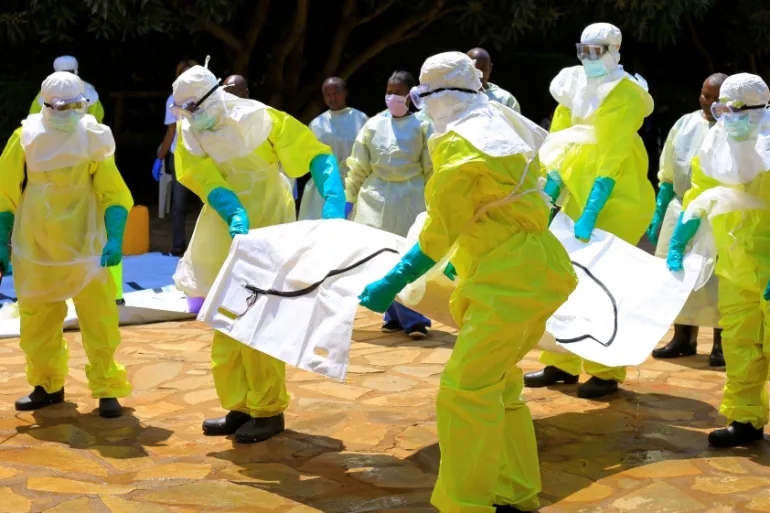
However, logistical hurdles persist. The ongoing conflict in eastern DRC has hindered access to some regions, while misinformation and community resistance to healthcare workers remain obstacles. The WHO has called for “unified international support” to address these challenges.
What Comes Next: Uncertainties and Watch Areas
- Virus mutation: If the Bundibugyo virus undergoes genetic changes, it could alter its transmissibility or resistance to treatments.
- Regional stability: The DRC’s eastern conflict risks disrupting response efforts, while Uganda’s border regions remain vulnerable.
- Global travel risks: Unlike COVID-19, Ebola does not spread via airborne transmission, but close contact—such as in high-density urban settings—could accelerate spread.
- Vaccine limitations: The Ervebo vaccine’s cross-protection against Bundibugyo virus is not yet confirmed, leaving gaps in immunity strategies.
Public health experts warn that delayed action could lead to wider regional outbreaks, particularly if the virus reaches major cities like Goma (DRC) or Kampala (Uganda). The WHO has stressed that early detection and rapid response remain the best tools to contain the threat.

For now, the focus remains on local containment, but the global health community is on high alert. The declaration serves as a call to action for countries to review their Ebola preparedness plans and enhance surveillance at ports of entry.
Key Takeaways for the Public
For travelers and the general public, the WHO and U.S.
- Avoid non-essential travel to Ituri Province (DRC) and high-risk areas in Uganda.
- Monitor official travel advisories from the WHO, CDC, or local health authorities.
- If symptoms (fever, fatigue, muscle pain, vomiting, bleeding) appear within 21 days of travel to the region, seek medical attention immediately and disclose travel history.
- Support global health funding for Ebola response efforts, as early investment saves lives.
While the risk to low-risk populations outside Africa remains low, the WHO’s declaration underscores the need for vigilance. Ebola outbreaks, though rare, demonstrate how quickly a localized crisis can become a global concern—a lesson reinforced by the COVID-19 pandemic.
For now, the world watches as health workers, governments, and international agencies race against time to contain the outbreak before it spreads further. The stakes could not be higher.
