China launches ballistic missile into South Pacific drawing global rebuke
The People’s Liberation Army Navy's submarine-launched missile test has drawn sharp rebukes from Australia and Pacific leaders over transparency and security.
- Headline Dispatch: China launches ballistic missile into South Pacific drawing global rebuke
- Core Takeaway: The People’s Liberation Army Navy's submarine-launched missile test has drawn sharp rebukes from Australia and Pacific leaders over transparency and security.
- Source Synthesis: Continuous live monitoring aggregated across major news wires and independent bureaus.
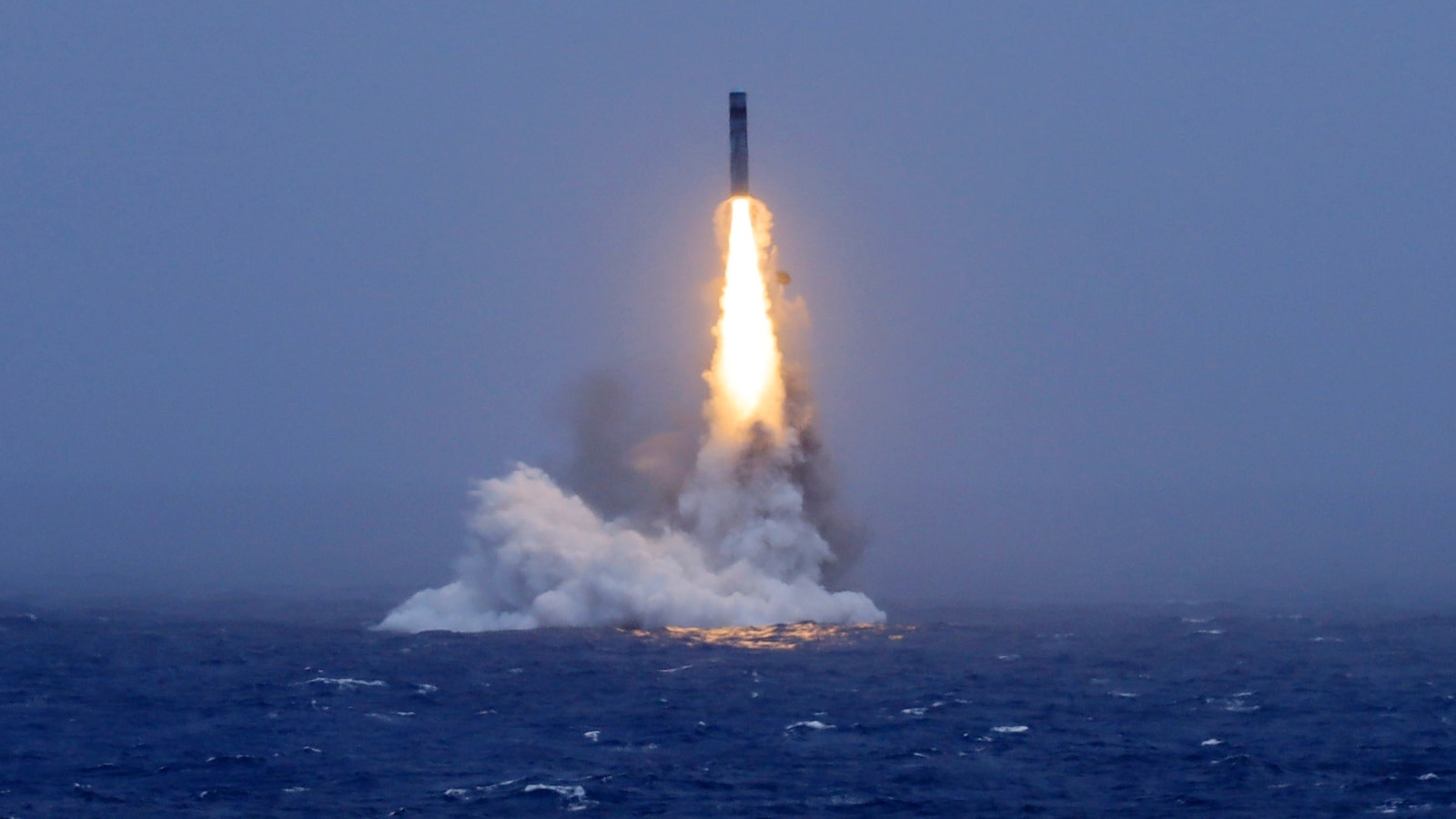
China launches ballistic missile into South Pacific drawing global rebuke
China launched a nuclear-capable ballistic missile into the South Pacific Ocean on July 6, 2026, sparking international criticism and raising concerns over regional stability. The test, conducted by the People’s Liberation Army (PLA) Navy from a nuclear-powered submarine, follows a similar land-based intercontinental ballistic missile (ICBM) launch in 2024.
The missile landed in the South Pacific Nuclear Free Zone. This region was established by the 1986 Rarotonga accord to prohibit nuclear weapons. China ratified the protocols of this accord in 1987, which prohibit testing nuclear weapons within the zone or threatening their use against signatories with territory in the region.
Strategic Messaging and Military Capabilities
Experts suggest the launch served as a political signal directed primarily at the United States and Australia. Tong Zhao, a senior fellow with the Nuclear Policy Program at the Carnegie Endowment for International Peace, said:
"The most important message is the PLA is becoming a powerful military with a very strong strategic nuclear capability,"
Tong Zhao, senior fellow, Carnegie Endowment for International Peace, via AP
The test demonstrated the sea-based component of China's nuclear triad — the ability to maintain land, sea, and air-based nuclear systems. Dominic Meagher, a research fellow at the Crawford School of Public Policy in Australia, noted that this confirms a second-strike capability
, meaning China could strike back even if attacked first because launch capabilities are dispersed across land and ocean.
The timing of the launch coincided with the signing of the Ocean of Peace Alliance (also known as the Veitacini Treaty) between Australia and Fiji in Suva. This treaty makes Fiji Australia's fourth ally and mirrors the Pukpuk Treaty signed by Australia and Papua New Guinea in October 2025. Analysts suggest Beijing used the military action to warn Pacific Island nations of the risks of deepening security ties with Australia.
Regional Backlash and Lack of Transparency
The launch drew sharp rebuke from Pacific leaders and regional powers. Solomon Islands Prime Minister Matthew Wale told reporters in Honiara on July 7, 2026, that while China is a good friend
of the Solomon Islands, this is not something a friend does
.
Australian Prime Minister Anthony Albanese called the launch a provocative act by China which does destabilize the region
while speaking in Honiara on July 7. He expressed concern that the test took place with very little notice
.
While the Chinese Defense Ministry issued a statement on July 7 claiming it informed the relevant countries in advance
to demonstrate openness and transparency
, other nations disputed this. Australia and New Zealand stated they lacked sufficient prior notice, and Japan reported the act was done without transparency. Though China notified Australia, New Zealand, Japan, and Papua New Guinea, some of these governments said they were informed only hours before the launch. It remains unclear if the United States was notified; a State Department statement declined to address the question.
The lack of transparency extends to the hardware used. On July 8, 2026, the secretary-general of Taiwan's National Security Council stated the missile was a JL-2 launched from waters off Guangdong. Conversely, Chinese state media cited experts, including Shao Yonglin on CCTV, who suggested it was likely a JL-3, which has a longer range and can strike the east side of the Pacific from the west side.
Historical Context and Diplomatic Friction
For many Pacific nations, the test recalled the historical trauma of nuclear detonations by the U.S., UK, and France, which led to birth defects, cancers, and environmental contamination. Meagher noted that the 1986 Treaty of Rarotonga and the nuclear test ban treaty were created specifically to prevent such events.
The missile test occurs as China accelerates its naval expansion. A report from the International Institute for Strategic Studies indicates that in the past five years, China has built nuclear-powered submarines faster than the U.S. This military growth is coinciding with a diplomatic struggle for influence in the region. In the last year, Australia has inked defense and security pacts with Papua New Guinea, Fiji, and Vanuatu.
Regarding international standards, K. Tristan Tang of the National Bureau of Asian Research noted that the non-legally binding Hague Code of Conduct expects 24-hour advance notice for ballistic missile launches, but China is not a member of that code.
Beijing has indicated that this was part of annual exercises, suggesting further launches may follow. Australia and the Solomon Islands are currently in the process of negotiating a comprehensive treaty as regional tensions persist.
How significant is this development?
Participate in our community survey on the trajectory and real-world impact of this news.


