Germany indicts Ukrainian national over Nord Stream pipeline blasts
German prosecutors have charged a former Ukrainian special forces officer with leading a sabotage mission to destroy the Nord Stream gas pipelines.
- Headline Dispatch: Germany indicts Ukrainian national over Nord Stream pipeline blasts
- Core Takeaway: German prosecutors have charged a former Ukrainian special forces officer with leading a sabotage mission to destroy the Nord Stream gas pipelines.
- Source Synthesis: Continuous live monitoring aggregated across major news wires and independent bureaus.
Germany indicts Ukrainian national over Nord Stream pipeline blasts
Germany's top prosecutor has indicted a Ukrainian national over the September 26, 2022, explosions that crippled the Nord Stream gas pipelines under the Baltic Sea. The indictment, served on Wednesday, July 1, 2026, moves one of Europe's most politically sensitive sabotage cases closer to trial.
The accused, identified under German privacy rules as Serhii K, is a 50-year-old soldier from Kyiv. Court records and media reports describe him as a former officer in a Ukrainian special forces unit. According to German public broadcaster ARD and newspapers Sueddeutsche Zeitung and Die Zeit, prosecutors accuse him of attacking civilian energy infrastructure, causing an explosion, and destroying structures.
The federal prosecutor's office declined to comment on the matter, though the office confirmed to AFP that a man had been charged. Berlin law firm Menaker, representing the suspect, confirmed the indictment was served but provided no details on the charges. His lawyer, Nicola Canestrini, stated he is confident his client will be acquitted.
The Alleged Operation
Prosecutors and the Federal Court of Justice allege that Serhii K served as the on-board coordinator and team leader for a sabotage mission. He is accused of leading a team of seven accomplices, consisting of a skipper, an explosives specialist, and four deep-sea divers.
According to the findings, the team boarded a chartered sailing yacht named the Andromeda in the port of Wiek on the German island of Rügen no later than September 8, 2022. Other reports indicate the vessel departed from Rostock port using forged documents.
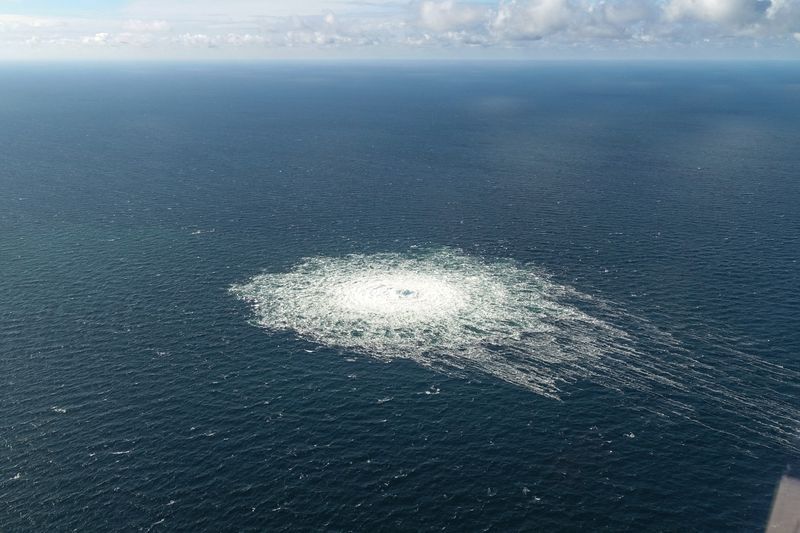
The group allegedly attached four explosive devices with time-delay fuses to the pipelines on the seabed near Denmark's Bornholm island at depths of up to 80 meters. Investigators reportedly discovered traces of military-grade explosives, specifically HMX and RDX, on the Andromeda. These high-performance explosives were designed to detonate at great depths, which they did on September 26, 2022, rupturing three of the four pipelines.
Among the seven alleged accomplices, one has reportedly been killed during the ongoing war in Ukraine.
Legal Journey and Evidence
Serhii K was arrested on August 21, 2025, in the Italian province of Rimini. He fought extradition for several months and went on a hunger strike, claiming mistreatment. He was transferred to Germany on November 27, 2025, and a judge activated a German arrest warrant the following day. He has remained in pre-trial detention in Hamburg since then.
The evidence is reportedly considered overwhelming. Specifically, the suspect is alleged to have incriminated himself during intercepted phone calls made while in custody in Italy pending his extradition.
A separate Ukrainian suspect was also detained near Poland's capital, Warsaw, one month after the arrest of Serhii K, under another German arrest warrant.
Geopolitical and Environmental Impact
The Nord Stream 1 pipelines provided Russian gas to north-eastern Germany via a 1,200km stretch of the Baltic Sea, ending at Lubmin in Mecklenburg-Vorpommern. While Nord Stream 2 was owned 100% by Gazprom, Germany cancelled its approval process shortly before Russia's February 2022 invasion of Ukraine. Russia had shut down Nord Stream 1 months before the blasts, citing equipment problems.
The September sabotage released record-breaking amounts of methane into the Baltic Sea and left the multi-billion dollar infrastructure inoperable, deepening an energy crisis that hit Germany especially hard and triggering sharp rises in European energy prices.
German courts claimed jurisdiction because the pipelines end in Germany and their loss affected the nation's internal safety and energy security. However, the prosecution faces a complex political backdrop. Ukraine has denied involvement, and Germany remains Ukraine's largest source of European military aid.
While Western countries and Russia both described the blasts as sabotage, suspicions previously shifted between parties. Moscow blamed the US and UK, while the West suspected Russia. To date, no evidence has emerged linking any specific state to the attacks.
The case now proceeds toward trial in Germany, where the suspect continues to deny any involvement.
How significant is this development?
Participate in our community survey on the trajectory and real-world impact of this news.