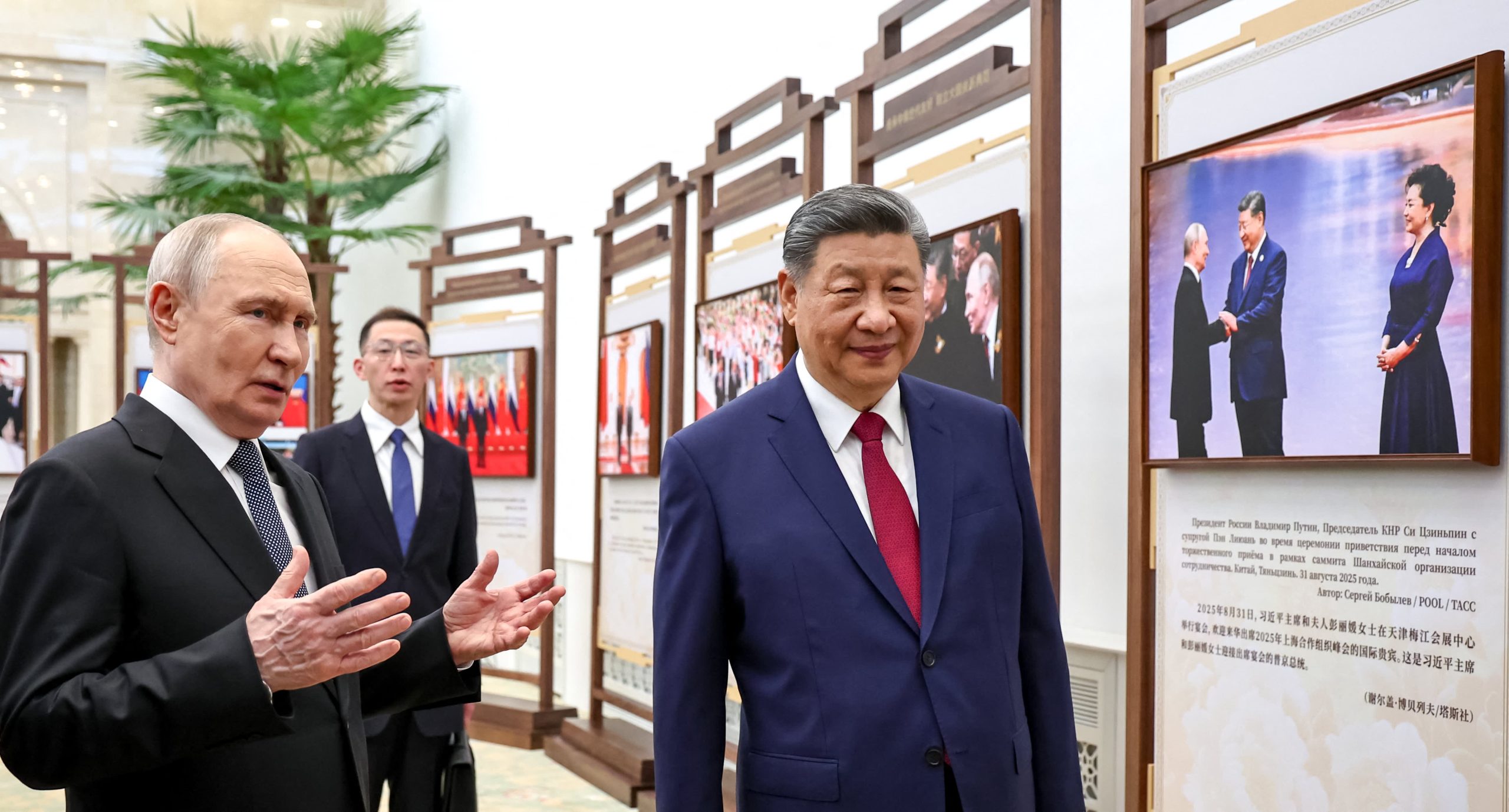
Chinese President Xi Jinping and Russian President Vladimir Putin concluded a high-stakes summit in Beijing on May 20, 2026, cementing their “unyielding” alliance while failing to resolve a long-stalled gas pipeline deal that Moscow had hoped would solidify its post-Ukraine war energy strategy. Despite the diplomatic warmth, the absence of a breakthrough on the Power of Siberia 2 project marked a setback for Moscow, which had sought to pivot gas exports to China after European markets dwindled. The meeting, held days after Xi’s contentious talks with U.S. President Donald Trump, underscored the shifting dynamics of Sino-Russian ties, where Beijing’s growing leverage is reshaping the partnership’s contours.
Energy Stalemate and Strategic Calculus
The summit’s most contentious issue remained the Power of Siberia 2 pipeline, a $20 billion project aimed at delivering 50 billion cubic meters of natural gas annually from Russia to China via Mongolia. Russian Press Secretary Dmitry Peskov acknowledged that “some nuances remain to be ironed out,” with no clear timeline for the deal, according to a CNBC translation of RIA Novosti reports. Chinese President Xi Jinping, however, refrained from addressing the pipeline directly, instead emphasizing energy cooperation as a “ballast stone” in bilateral relations.
Analysts highlighted the strategic asymmetry. “There is no way to sugarcoat it: Putin was embarrassed by the failure to agree to the pipeline,” said Lyle Morris, a senior fellow at the Asia Society Policy Institute, noting Beijing’s reluctance to become overly dependent on a single supplier. Moscow, which has lost access to European markets since its 2022 invasion of Ukraine, views the pipeline as critical to sustaining its energy exports. Yet Beijing’s cautious approach reflects broader concerns about geopolitical risk, with the project stalled since a 2025 memorandum over pricing, financing, and delivery terms.
The impasse reveals a deeper tension: while Russia seeks to deepen economic reliance on China, Beijing prioritizes diversification. Russia has already increased oil shipments to China following disruptions in the Strait of Hormuz, but the gas pipeline remains a symbol of the complex trade-offs in their partnership. “Beijing is playing hardball at a time when Russia has lost some leverage,” Morris added, citing the EU’s reduced gas imports from Moscow.
Bilateral Agreements Amid Geopolitical Shifts
Despite the energy deadlock, the leaders signed over 40 agreements spanning trade, education, technology, and nuclear security, signaling momentum in their long-standing ties. The deals followed a joint statement condemning U.S. missile defense systems and reaffirming “unprecedented” cooperation, a nod to their shared skepticism of Western dominance. Putin’s visit, timed just days after Trump’s Beijing summit, underscored the duo’s efforts to counterbalance U.S. influence, with Xi and Putin framing their alliance as a pillar of a “multipolar world.”
The summit also highlighted Xi’s evolving role as a global power broker. His meetings with Trump earlier in the week had centered on the “Thucydides Trap,” a concept warning of conflict between an ascending power (China) and a ruling one (the U.S.). While Trump’s visit focused on trade and security, Putin’s arrival intensified the narrative of a Sino-Russian bloc challenging Washington. “This is a huge setback for Russia and Putin, who hinted before the visit that a breakthrough was in the works,” CNBC reported, noting the diplomatic disappointment in Moscow.
China’s strategic calculus, however, remains focused on stability. Xi’s 2023 constitutional reforms removed term limits, cementing his leadership, while his administration has increasingly emphasized “common prosperity” and domestic resilience. The summit’s emphasis on bilateral deals over energy diplomacy suggests a broader effort to insulate China from global volatility, even as it deepens ties with Russia.
Implications for Global Geopolitics
The summit’s outcome reflects a recalibration of Sino-Russian relations, where economic interdependence is growing but remains constrained by mutual caution. For Russia, the failure to secure the pipeline deal underscores its vulnerability in the wake of Western sanctions. For China, the reluctance to finalize the project highlights its strategic prudence, balancing energy needs with geopolitical risks. “Beijing may be using the pipeline as a leverage tool,” Morris noted, “to ensure Moscow remains dependent on Chinese markets without ceding too much control.”

The broader implications are profound. As the U.S. grapples with domestic divisions and shifting alliances, the Sino-Russian partnership could reshape global trade routes, security dynamics, and energy markets. The Power of Siberia 2 project, if revived, would solidify China’s role as Russia’s primary energy partner, but its current stagnation signals the limits of their “unyielding” alliance. For now, the summit has reinforced a pragmatic but asymmetrical partnership, where Beijing’s growing influence is redefining the terms of engagement.
As analysts watch for the next chapter, the question remains: will the energy deadlock be resolved, or will it further strain the delicate balance between two rising powers? The answer will shape not just Sino-Russian ties, but the broader contours of 21st-century geopolitics.
