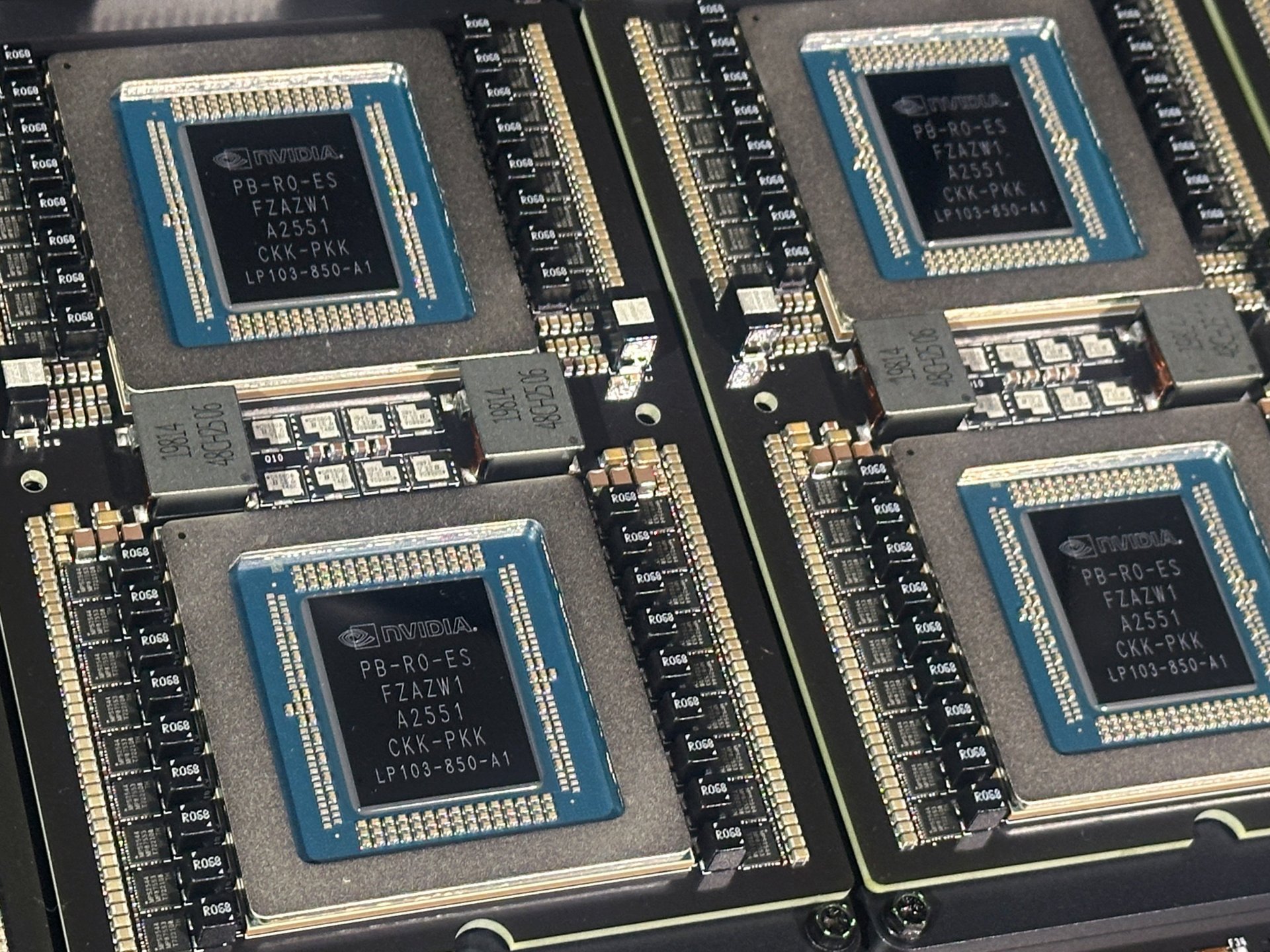
Nvidia reported record profit of $58.3bn for the February-April period, a 37% increase from the previous quarter and 200% year-on-year, as demand for its AI chips surged. Revenue jumped to $81.6bn, up 20% from the prior quarter and 85% compared to the same period in 2025. Despite beating analyst expectations, the company’s stock fell 1.3% in after-hours trading, reflecting high market expectations.
Record Profits and Market Reaction
Nvidia’s financial results underscored the explosive growth of its AI chip business, driven by surging demand from data centers and enterprises. The Santa Clara-based company’s net income reached $58.3bn, with revenue hitting $81.6bn, marking the 15th consecutive quarter of exceeding Wall Street forecasts. CEO Jensen Huang attributed the success to the emergence of agentic AI, stating during the earnings call that “Demand has gone parabolic.”

Analysts noted the muted stock reaction—dropping 1.3% in after-hours trading—highlighted investor caution amid sky-high valuations. Jay Goldberg, a senior analyst at Seaport Research, observed that “Expectations are very high, and when a company like Nvidia has been doing as well as it has for so long, it takes a lot for people to get excited.” William Rhind of GraniteShares echoed this sentiment, suggesting the market had “caught up to fundamentals,” with Nvidia’s dominance now serving as the benchmark for the sector.
The company’s stock performance this year has been mixed—up 20% year-to-date—while trailing peers like AMD, which has seen a 30% rise during the same period. The divergence underscores growing concerns about whether Nvidia’s growth can be sustained beyond the current AI-driven boom.
Financial Breakdown and Competitive Landscape
The company’s data-center division was the primary growth engine, with revenue surging to $75.2bn year-on-year—a 92% increase. Its hardware unit also showed strong growth, generating $6.4bn in revenue, a 29% increase from the previous year. Nvidia announced a $80bn share buyback program and raised its quarterly dividend to 25 cents per share, up from 1 cent.
Huang emphasized the scale of the AI infrastructure expansion, stating that “The buildout of AI factories—the largest infrastructure expansion in human history—is accelerating at extraordinary speed.” However, analysts cautioned that the rapid growth may face headwinds. Gartner’s latest report, cited in the earnings materials, warned that while Nvidia’s market share remains dominant at 82% in AI accelerators, competitors like AMD, Broadcom, and Google are aggressively investing in alternatives.
Nvidia forecasted $91bn in revenue for the current quarter, exceeding analyst estimates but falling short of the highest projections, which had ranged up to $95bn. The company’s guidance reflects confidence in continued demand, though some investors remain skeptical about the sustainability of the current growth trajectory.
Global Market Impact and Diversification Efforts
Nvidia’s results sent ripples through global markets, with Asian stock exchanges reacting strongly. South Korea’s Kospi index rose 9%, while Taiwanese shares climbed 3.3%, driven by optimism about AI-driven growth. Huang highlighted opportunities beyond data centers, stating that robotics and automated vehicles represent a “second category” for growth, signaling the company’s push into new markets.
The company is actively diversifying its customer base to reduce reliance on hyperscalers like Microsoft and Amazon, which together accounted for 42% of its data-center revenue last quarter. Huang noted during the earnings call that “We’ve got it all covered,” pointing to expanding partnerships with automotive manufacturers and industrial firms. However, challenges persist, including the development of in-house alternatives by major clients and regulatory scrutiny over AI chip exports.
Analysts remain cautious about the broader adoption of AI beyond tech giants. Goldberg warned that “All these stocks have run a lot this year, but a lot of it is driven by press releases,” emphasizing the need for a “broad-based consumer case” for AI to sustain long-term growth. Meanwhile, Rhind noted that Nvidia is “no longer beating a high bar—it is the bar,” underscoring its pivotal role in shaping the AI ecosystem.
Investor Sentiment and Future Outlook
While Nvidia’s performance remains unmatched, the market’s mixed reaction signals a shift in investor sentiment. The company’s market capitalization exceeded $5 trillion, making it one of the most valuable publicly traded firms in history. However, with the semiconductor sector facing potential slowdowns, Nvidia’s ability to innovate and diversify will be critical to its long-term success.
Huang addressed these concerns during the earnings call, stating that “The reason is simple. Agentic AI has arrived,” and that the company is positioned to capitalize on this shift. Yet, the stock’s after-hours decline suggests that investors are increasingly focused on whether Nvidia can maintain its momentum in a more competitive landscape.
Looking ahead, the company’s next moves—particularly in robotics, autonomous systems, and next-generation AI chips—could redefine the future of artificial intelligence. However, the path forward remains uncertain, with analysts divided on whether the current growth spurt is sustainable or merely a temporary surge in a rapidly evolving sector.
“The reason is simple. Agentic AI has arrived,” Jensen Huang said during Nvidia’s earnings call on May 21, 2026.
