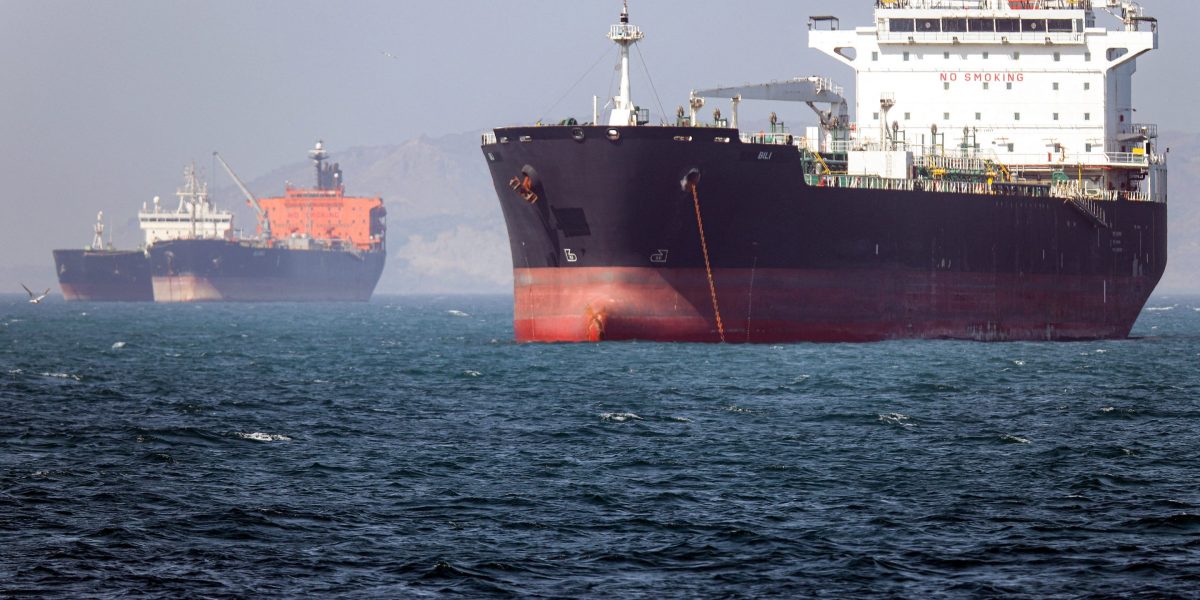
Global crude oil prices experienced a sharp decline on Sunday, May 24, 2026, as the United States and Iran moved closer to a potential agreement regarding the blockade of the Strait of Hormuz. Benchmark Brent crude fell as much as 5.2% to $98.12 a barrel, while West Texas Intermediate crude traded near $92 per barrel.
Market Volatility and the Geopolitical Fear Premium
The recent retreat in energy prices follows weeks of intense market volatility driven by the conflict in the Persian Gulf. Since hostilities broke out in February involving the United States, Israel, and Iran, the closure of the Strait of Hormuz—a vital artery for global energy—forced producers to halt the output of millions of barrels of crude daily.
Market analysts suggest that the recent price drop is a direct consequence of shifting expectations regarding the sustainability of the conflict. “A lot of oil was trading on worst case assumptions for weeks,” said Haris Khurshid, chief investment officer at the Chicago-based Karobaar Capital LP. “But once it became clear talks were still alive and escalation wasn’t accelerating, a chunk of that fear premium comes out pretty fast.”
As reported by Fortune, this adjustment in market sentiment has led to a significant correction in futures trading. By Monday, WTI crude futures had dropped roughly 5% toward $91 per barrel, extending the decline that began late last week. The movement reflects a broader repricing of risk among hedge funds and institutional energy traders, who had previously priced in a prolonged closure of the shipping lane.
Status of the Potential Agreement
Despite the optimism driving the market sell-off, the path to a finalized deal remains fraught with uncertainty. President Donald Trump has cautioned against premature expectations, noting in social-media posts that the agreement “isn’t even fully negotiated yet.”

According to Trading Economics, the proposed framework reportedly includes the reopening of the Strait of Hormuz, an cessation of active hostilities, and the release of certain frozen Iranian assets. These discussions are also expected to pivot toward long-term constraints on Tehran’s nuclear program. However, senior U.S. officials indicate that final approval could still take several days, citing the need for verification mechanisms that ensure the waterway remains open to international commercial traffic.
For more on this story, see Trump’s Iran talks push oil prices down 6% amid Middle East tensions.
The complexity of the negotiations is compounded by internal political pressures. Iran’s Tasnim news agency has suggested that the draft could collapse if the United States continues to obstruct key clauses, particularly regarding the demand for unfrozen assets. For now, the administration has maintained that the blockade will remain in effect until a formal, completed agreement is signed. Diplomatic envoys are currently working through the technical language of the draft, with specific focus on the timeline for asset release and the withdrawal of military assets from the immediate vicinity of the Strait.
Domestic Impact and Economic Implications
The conflict has had tangible consequences for the U.S. economy, with gasoline prices reaching levels not seen since 2022. With midterm elections approaching in November, the pressure on the White House to stabilize energy costs has intensified. Independent energy analysts have noted that the retail price of gasoline is highly sensitive to the prompt-month WTI price, creating a direct link between the current diplomatic negotiations and consumer sentiment at the pump.
Kevin Hassett, the President’s chief economic adviser, signaled that the administration is counting on the deal to provide a necessary macroeconomic reset. “We expect energy prices, as soon as there’s a deal, to plummet,” Hassett told Fox News on Sunday. He suggested that such a decline could provide the Federal Reserve with the flexibility to cut interest rates, potentially easing the financial strain on consumers. This sentiment is echoed by several Wall Street firms, which have begun issuing revised inflation forecasts contingent on a successful resolution of the Persian Gulf impasse.

This follows our earlier report, Oil Prices Jump to $89.50 as Red Sea Tanker Attack and Iran Tensions Escalate.
The stakes for the broader energy sector remain high. As Markets Insider notes, crude oil serves as an essential raw material for manufacturing, with estimates suggesting that 45 per cent of crude is used for primary materials production, including plastics, medicines, and cosmetics. A full reopening of the Strait of Hormuz—which in peacetime handles roughly one-fifth of the world’s oil and liquefied natural gas—would provide a critical relief valve for major importers in Asia, including China, Japan, and South Korea, where industrial output has been hampered by the supply shortage.
Market Outlook and Trading Volatility
Market participants are now bracing for a period of lower trading volume as public holidays in the United States and the United Kingdom coincide with the delicate state of diplomatic talks. Thin liquidity in the futures market, coupled with high headline risk, has led to wider bid-ask spreads for WTI contracts. Traders remain particularly sensitive to any statements from the U.S. Department of State or the Iranian Ministry of Foreign Affairs regarding the status of the draft agreement.
While current models and analyst expectations from Trading Economics anticipate a potential recovery toward $98.72 per barrel by the end of the quarter, the immediate trajectory of the market remains tethered to the outcome of the negotiations in the Persian Gulf. The market is also monitoring potential shifts in OPEC+ production quotas, which may be adjusted if the Strait of Hormuz remains closed longer than anticipated. For the time being, the benchmark crude prices remain highly reactive to any updates from the negotiation table, reflecting the extreme uncertainty surrounding the global energy supply chain.
