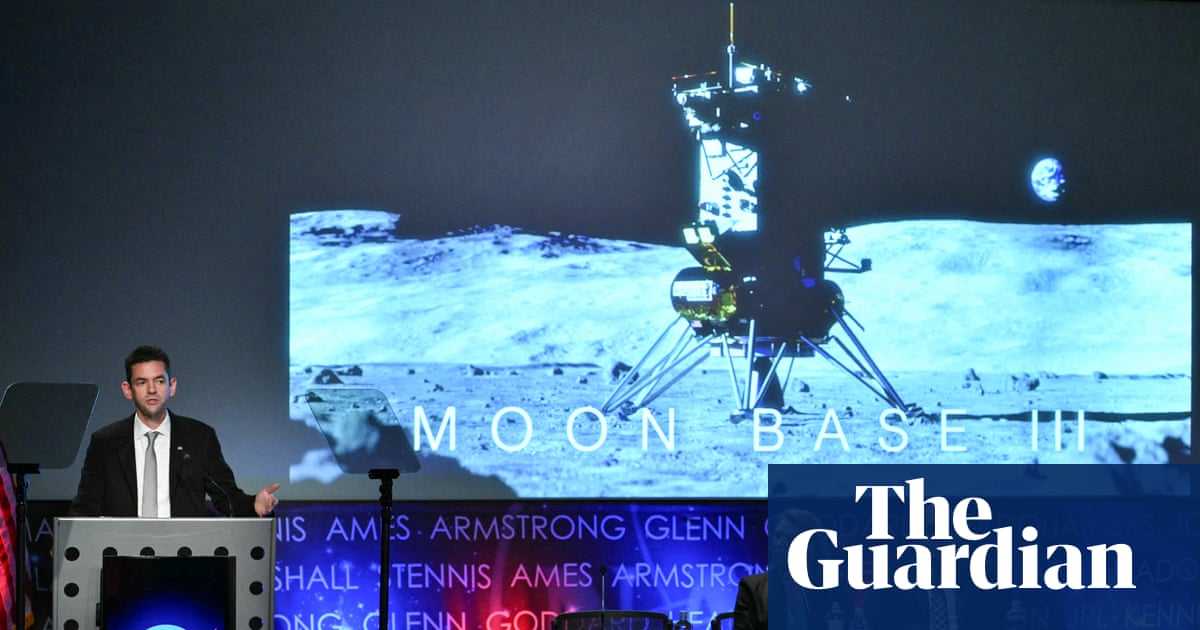
NASA has selected Jeff Bezos’s Blue Origin to lead the first of three uncrewed lunar missions in 2026, marking a pivotal step toward a $20 billion moon base. The agency awarded Blue Origin $230.4 million for the initial mission, which will deploy its Blue Moon Mark 1 Endurance lander to the moon’s south pole, carrying scientific payloads to test systems for future crewed Artemis missions.
Blue Origin’s Role in the Artemis Program
NASA Administrator Jared Isaacman emphasized that Blue Origin’s selection was driven by its critical role in the Artemis program, which aims to establish a sustainable human presence on the moon. “We are leveraging the NASA playbook from the 1960s, figuring out what works and what doesn’t in this epic science of survival,” Isaacman said during a press conference. The first mission, slated for fall 2026, will focus on demonstrating capabilities to reduce risks for human landing systems, including the upcoming Artemis IV mission in 2028.

Blue Origin’s Blue Moon lander will carry the Stereo Cameras for Lunar Plume-Surface Studies and the Laser Retroreflective Array, instruments designed to study lunar surface interactions and improve navigation accuracy for future missions. This collaboration underscores NASA’s strategy of iterative development, as outlined in the agency’s recent statement: “We are not jumping right into the glass dome moon base. We intend to take an iterative approach, sending a demand signal to industry for a lot of landers and rovers and tech demonstrations.”
The decision to prioritize Blue Origin over SpaceX reflects broader tensions in the space industry. While SpaceX’s Starship Human Landing System (HLS) remains a contender for Artemis III, NASA’s contracts with Blue Origin, Astrolab, and Lunar Outpost highlight a diversified approach to lunar infrastructure. Astrolab received $219 million to develop lunar terrain vehicles, while Lunar Outpost was awarded $220 million for similar projects, according to a Yahoo Finance report.
The Three Pillar Missions
NASA’s moon base plans are structured around three foundational missions, each targeting specific technical and scientific goals. The first, led by Blue Origin, will focus on testing landing systems and surface operations. The second, scheduled for later this year, involves Astrobotic’s Griffin lander delivering over 1,100 pounds of cargo, including Astrolab’s FLIP rover, to mature mobility systems for future lunar terrain vehicles. The third mission will deploy the Lunar Vertex investigation via Intuitive Machines’ Nova-C Trinity lander, studying lunar swirls to better understand surface evolution under extreme conditions.
These missions are part of a broader Artemis initiative, which includes international partnerships with the European Space Agency (ESA) and the Korea Astronomy and Space Science Institute. The agency’s revised plan, initially outlined during the Trump administration, now emphasizes infrastructure development and commercial collaboration. “The Moon Base will be America’s and humanity’s first outpost on another celestial world,” Isaacman stated, framing the project as a gateway for deep-space exploration.
The technical challenges are significant. The moon’s south pole, a key target for these missions, features extreme temperatures and permanently shadowed regions, making it both a scientific prize and a logistical hurdle. NASA’s approach mirrors the Apollo era’s “test and learn” philosophy, with each mission designed to inform the next. “Every mission, crewed and uncrewed, will be a learning opportunity,” Isaacman said, underscoring the agency’s commitment to incremental progress.
Broader Implications for Lunar Exploration
The selection of Blue Origin and other private firms signals a shift in NASA’s strategy, blending public and commercial expertise to accelerate lunar development. This model has drawn comparisons to the 1960s, when NASA partnered with aerospace giants to achieve the moon landing. However, the current era introduces new complexities, including international competition and the need for sustainable, cost-effective solutions.
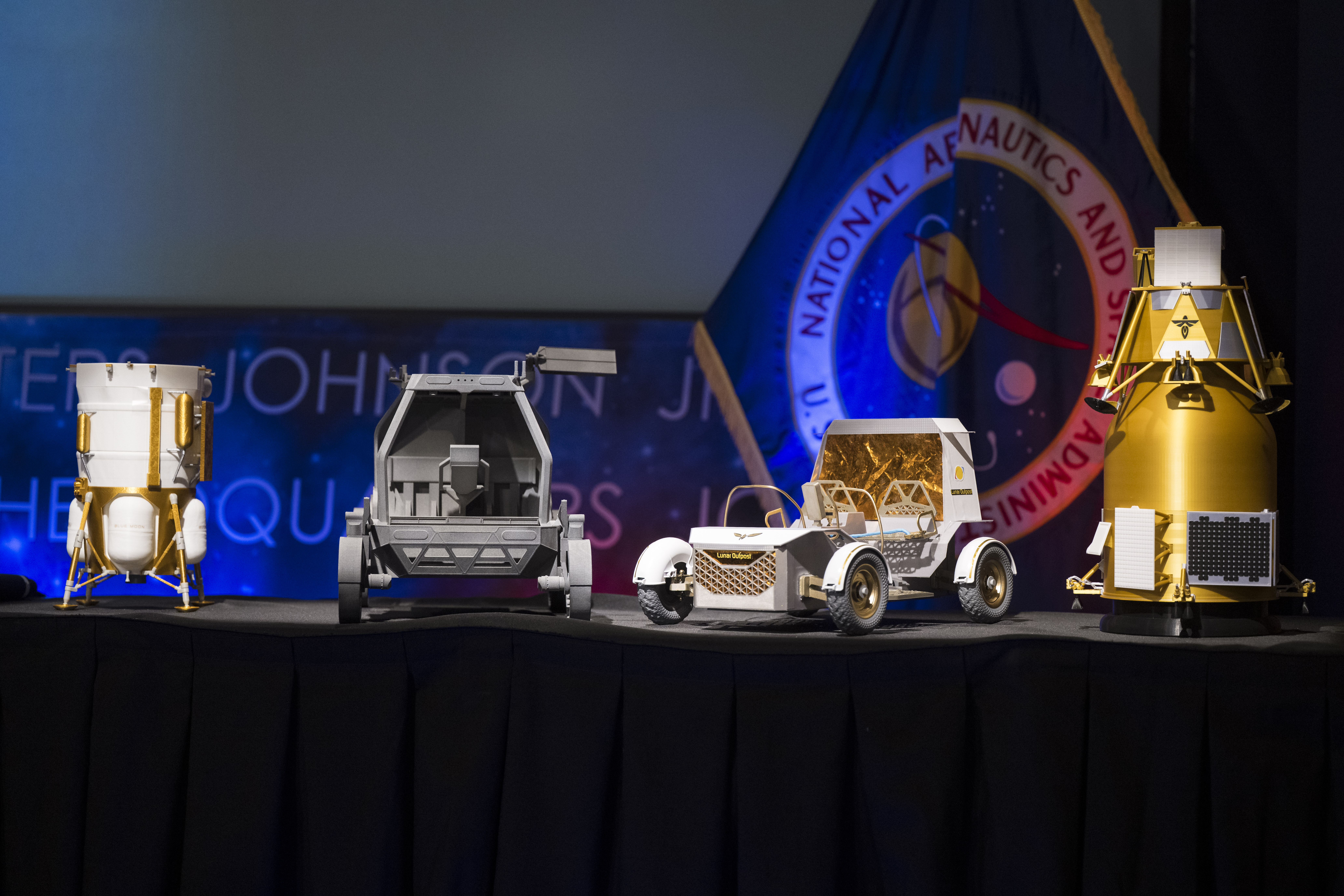
Analysts note that the $20 billion moon base project could reshape global space policy. “This isn’t just about technology; it’s about geopolitical influence,” said a space policy expert, though no specific source is cited here. The involvement of private companies like Blue Origin and SpaceX also raises questions about long-term governance of lunar resources, a topic expected to dominate international discussions in the coming years.
Looking ahead, NASA’s focus will shift to refining landing systems and ensuring the reliability of robotic and crewed missions. The agency has already begun evaluating SpaceX’s Starship HLS and Blue Origin’s Blue Moon lander for Artemis III, with decisions expected by 2027. Meanwhile, the MoonFall mission, involving Firefly Aerospace’s drones, is targeted for 2028, further expanding the lunar exploration timeline.
As NASA moves forward, the success of these early missions will determine the feasibility of a permanent lunar presence. The agency’s emphasis on collaboration—between government, industry, and international partners—reflects a recognition that the moon base is not a solitary endeavor but a collective leap for humanity. “People are looking up again, believing in big things again,” Isaacman said, encapsulating the renewed optimism driving this ambitious vision.
Source 1 | Source 2 | Source The selection of Blue Origin over SpaceX to play a major role in the agency's expanding Moon Base initiative is seen as a crucial step towards realizing NASA's ambitious vision for a permanent lunar presence.
