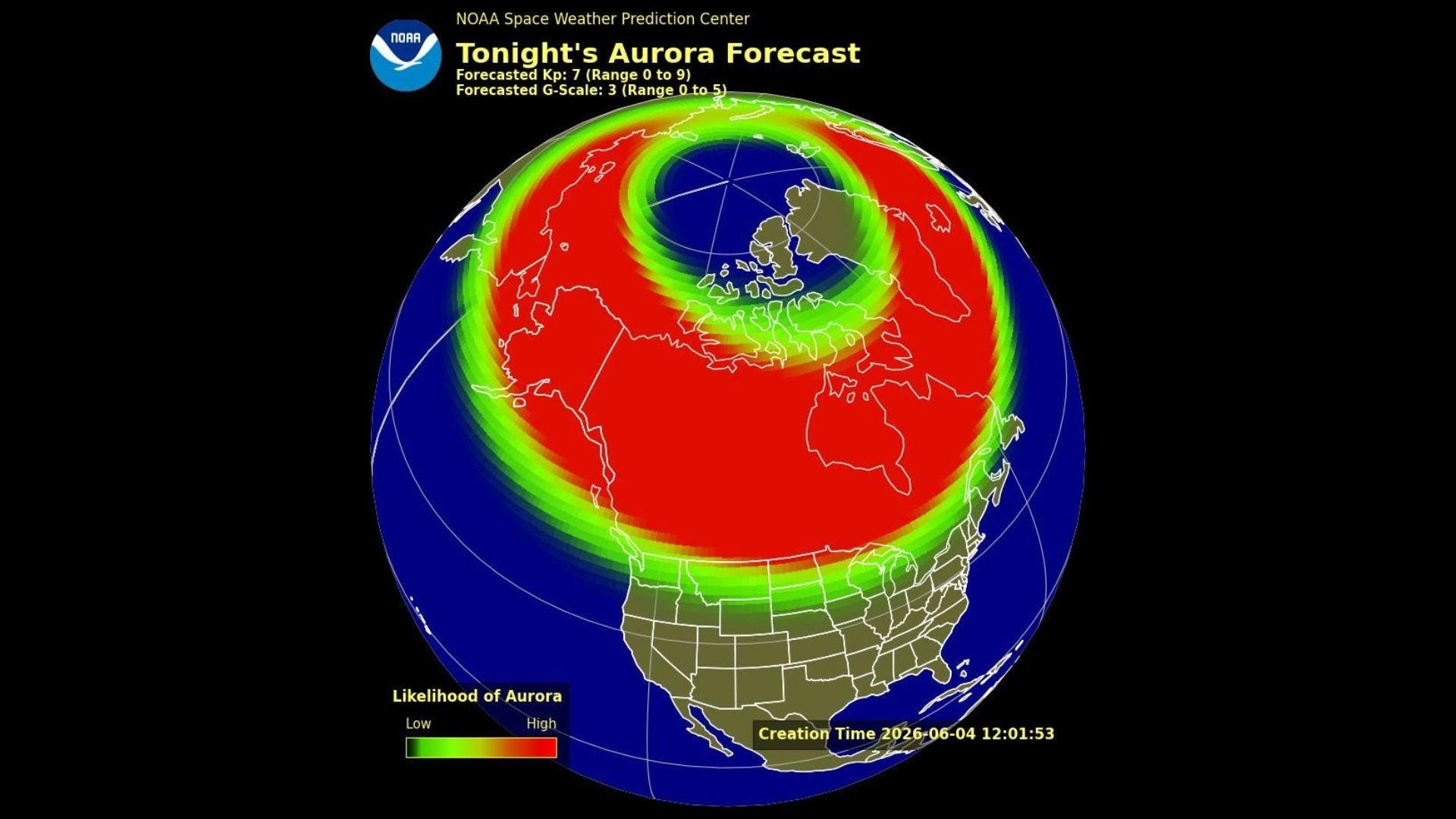
A rare celestial spectacle is unfolding tonight as NOAA’s Space Weather Prediction Center upgrades its forecast to a G3 (Strong) geomagnetic storm, with isolated risks of G4 (Severe) conditions—the first such alert of its kind for the U.S. in over a year. The northern lights, typically confined to Arctic skies, could dazzle viewers across 23 states as multiple solar eruptions merge into a “cannibal CME,” intensifying the storm’s impact on Earth’s magnetic field.
Why Tonight’s Aurora Could Be the Brightest in Years
This isn’t just another aurora alert. The NOAA’s Space Weather Prediction Center has escalated warnings after detecting three separate coronal mass ejections (CMEs) launched from the sun on June 3–4. What makes this event unique is the potential for a “cannibal CME”—where faster-moving eruptions overtake slower ones, merging into a single, more powerful blast. As forecasters put it: “Scientists are tracking the arrival of multiple CMEs that are expected to reach Earth in quick succession and some may merge before arrival in what is known as a ‘cannibal CME.'” This phenomenon could push the geomagnetic storm into G4 (Severe) territory during its peak overnight, according to NOAA’s latest forecast discussion.
The timing couldn’t be better—or worse. For skywatchers, the storm’s arrival coincides with the waning gibbous moon, which will rise after midnight and cast enough light to dim the faintest auroras. But for those willing to brave the glow, the payoff could be spectacular. A G3 storm typically extends the northern lights as far south as Illinois and Oregon, while G4 conditions might push them even further—though NOAA emphasizes that 23 states (including Vermont, New York, and New Hampshire) are in the prime viewing zone. The best window? Between 8 p.m. and 11 p.m. ET Thursday, with elevated activity persisting through Friday morning.
The Science Behind the Storm: How Solar Eruptions Create Auroras
Auroras aren’t just pretty lights—they’re a direct result of the sun’s volatile behavior. When solar flares erupt, they hurl billions of tons of magnetized plasma (CMEs) toward Earth. These charged particles collide with our planet’s magnetic field, funneled toward the poles where they excite atmospheric gases—oxygen glows green, nitrogen flickers purple. The stronger the storm, the farther south the aurora spreads.
This week’s storm is the product of three distinct solar eruptions, including an X-class flare—the most powerful type—detected on June 3. The NOAA Space Weather Prediction Center confirmed that the CMEs were launched by an active sunspot region, with two M-class flares (moderate) preceding the X-class event. The rapid succession of eruptions increases the odds of a “cannibal CME,” where the faster CMEs catch up to and absorb slower ones, amplifying the storm’s intensity.
Here’s the kicker: G3 storms can disrupt power grids, scramble satellite navigation, and even trigger false alarms in protection systems. While the risks are low for most people, operators of high-voltage power lines and spacecraft may need to take precautions. The Space Weather Prediction Center warns that low-Earth-orbit satellites could experience increased drag, requiring orientation corrections. For the average aurora chaser, though, the biggest risk is missing the show—so plan accordingly.
Where to Go for the Best Viewing (And What to Avoid)
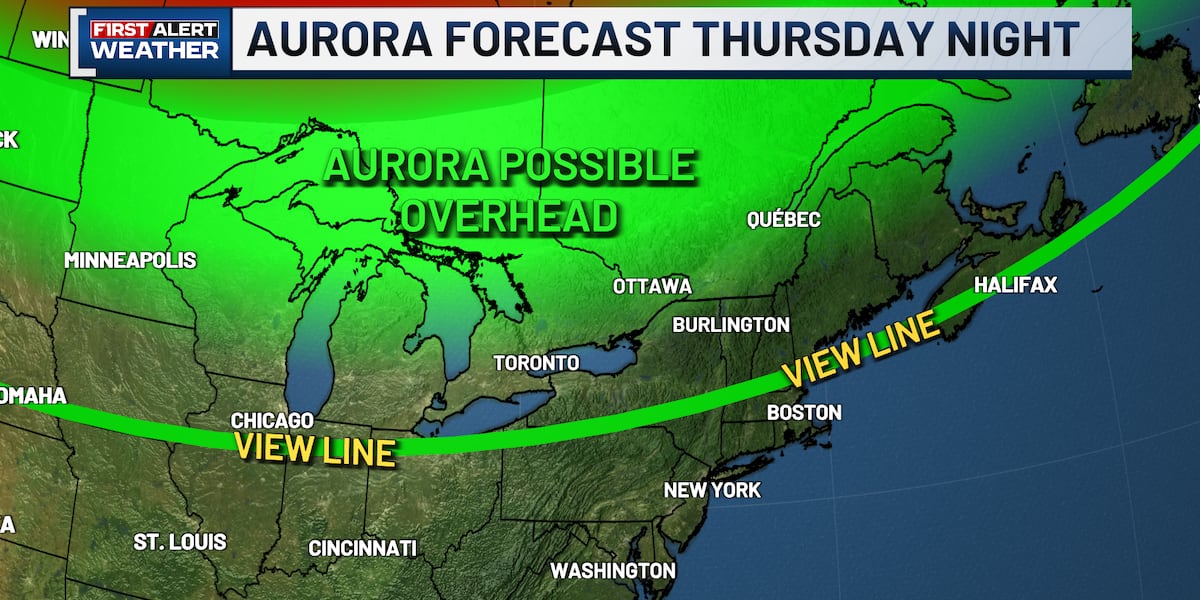
Location matters. The farther north you are, the better your chances—but even mid-latitude states like New York, Michigan, and Minnesota could see visible auroras if conditions peak. The WCAX forecast for Vermont, New York, and New Hampshire predicts the aurora could dominate the sky, not just hover on the horizon. For urban dwellers, the advice is simple: Get out of the city. Light pollution is the aurora’s worst enemy.
- Best spots: Rural areas, state parks, or anywhere with a clear northern horizon. Vermont’s Green Mountains, upstate New York’s Adirondacks, and the Upper Peninsula of Michigan are prime candidates.
- Pro tip: Let your eyes adjust for 20 minutes before gazing upward. Avoid phone screens—they’ll ruin your night vision.
- Tech hack: Point your smartphone camera at the sky. Modern sensors often capture auroras more vividly than the naked eye.
- Avoid: Cloud cover, city lights, and the moon’s glare (which peaks after midnight). Check NOAA’s aurora viewline tool for real-time updates.
Patience is key. Auroras are as unpredictable as thunderstorms—you might wait hours only to see them flicker for minutes. But if this storm lives up to forecasts, it could be one of the most accessible aurora displays in years. The last time the northern lights were visible across 15 U.S. states was in January 2026, when a similar G3 event lit up skies from the Midwest to the Northeast. This time, the stakes are higher.
What Happens Next? The Storm’s Aftermath and Long-Term Implications
The sun’s activity is cyclical, and we’re currently in Solar Cycle 25, a period of heightened solar storms. While this week’s event is impressive, it’s not unprecedented—just rare for mid-year. The bigger question is whether this marks the start of a more active phase for auroras in the U.S.

For now, the focus is on Thursday night’s display. But if the “cannibal CME” scenario plays out, we could see G4 conditions, which would push the aurora even farther south—potentially into Indiana, Missouri, or even the southern Plains. The FOX Forecast Center notes that the storm’s timing overlaps with severe weather in some regions, so aurora chasers should also keep an eye on local alerts.
Long-term, this event serves as a reminder of our planet’s vulnerability to space weather. While today’s auroras are a spectacle, stronger storms could disrupt power grids, GPS, and communications. The last G4 storm in 2024 caused minor blackouts in Canada and disrupted radio signals across the U.S. As solar activity ramps up toward the cycle’s peak in 2025, events like this will become more common—and more critical to monitor.
For tonight, though, the message is simple: Go outside. Look north. And hope for clear skies. Whether you’re a seasoned aurora hunter or a first-timer, this could be a night to remember.
