Heightened Safety Protocols for Crew-12
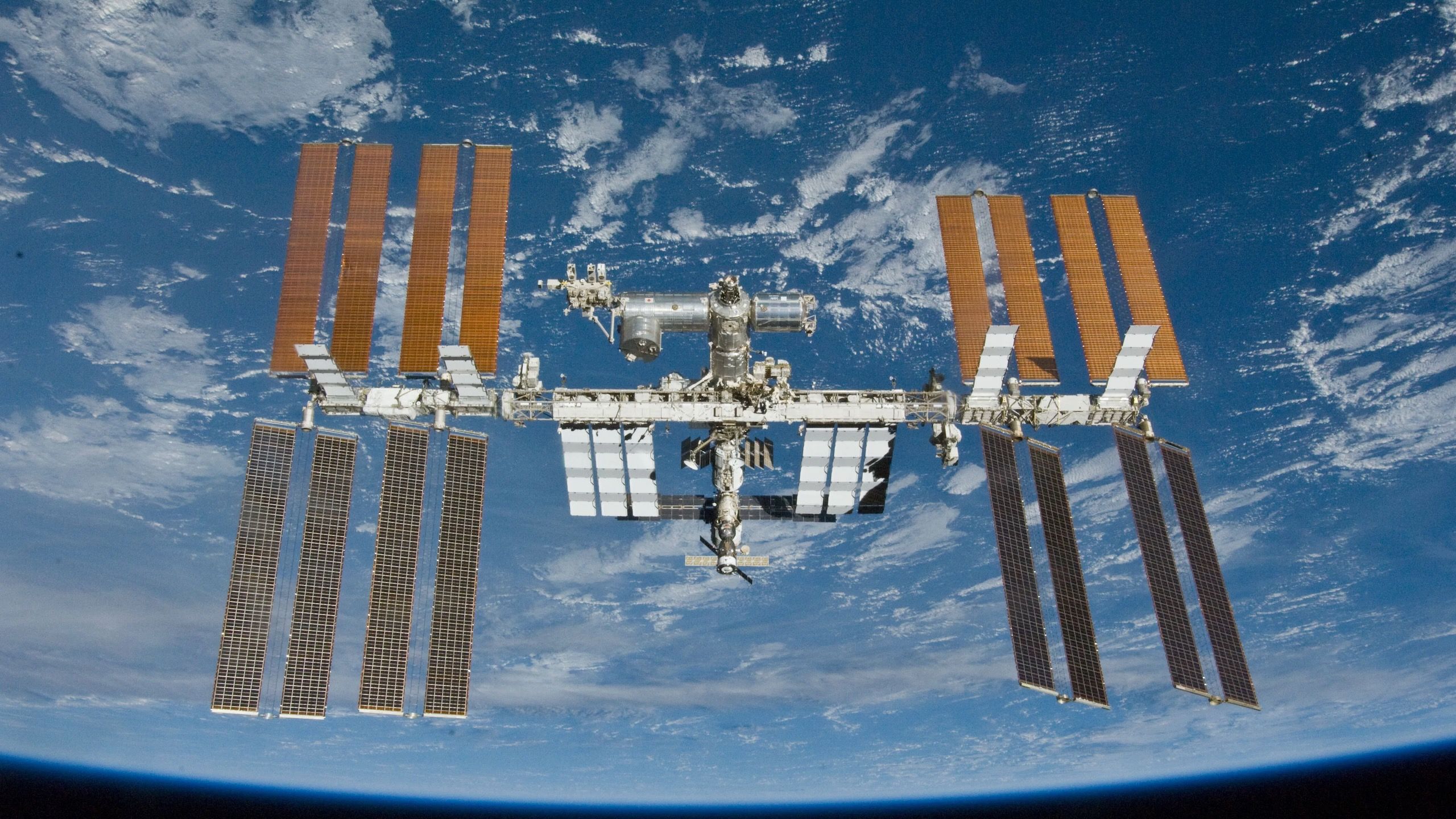
The air leak, which has been monitored since September 2019, is located in the PrK transfer tunnel—a vestibule connecting the Zvezda service module to the rest of the orbiting laboratory. While the leak has persisted for years, recent developments prompted a shift in NASA’s safety posture. According to SpaceNews, the leak had increased in intensity, leading Roscosmos to initiate a more intensive repair attempt on Friday morning.
NASA’s response was immediate and precautionary. The agency directed four members of the SpaceX Crew-12 mission—Jessica Meir, Jack Hathaway, Sophie Adenot, and Andrey Fedyaev—along with NASA astronaut Chris Williams, to move into the Dragon capsule “Freedom.”
“Out of an abundance of caution, NASA has directed all four of the agency’s SpaceX Crew-12 members and NASA astronaut Chris Williams to assume an elevated safety posture in the Dragon spacecraft while the repair is underway,” Bethany Stevens, NASA spokesperson, via X.
Methodology of Orbital Vestibule Maintenance
The maintenance of the PrK tunnel has been a long-standing challenge for the station’s crew. For years, the two space agencies have relied on what Space.com describes as “operational mitigation measures and periodic partial-repair efforts.” These methods have historically included the use of epoxy, Kapton tape, and various patching compounds to seal cracks as they are identified.
On Friday, the repair process involved cosmonauts Sergey Kud-Sverchkov and Sergei Mikaev. During the inspection of the vestibule, the cosmonauts identified two potential leak sites. They successfully applied sealant to one of the locations, while preparations to address the second site on the conical section of the tunnel were paused. Roscosmos reported that the air pressure aboard the station remained stable throughout the event, noting that the current situation poses no threat to the crew.
Structural Integrity Concerns of Legacy Modules
The incident highlights the inherent risks of managing a complex that has been in low-Earth orbit for over 25 years. Construction of the station began in 1998, with continuous habitation starting in November 2000. Zvezda, launched in July 2000, is among the oldest components still in use.
Disagreements regarding the root cause of the leaks have persisted between NASA and Roscosmos. As noted by USA Today, the leak had been reduced but not entirely eliminated in previous years. Earlier this year, Joel Montalbano, NASA’s acting associate administrator for space operations, provided a cautiously optimistic assessment to the House Science Committee.
“The current position right now is there are no leaks,” Montalbano said, adding, “They’ve put some sealant over it and we’re not leaking.”
Despite these assurances, members of NASA’s ISS Advisory Council expressed concern during an April 29 meeting that the two space agencies had not reached a consensus on why the cracks continue to form.
The technical complexity of the Zvezda module remains a central point of discussion for safety panels. The PrK tunnel acts as a critical junction, and the recurring nature of the cracks has necessitated ongoing oversight from the ISS Advisory Council. Records from the April 29 meeting indicate that while the sealant applications have been effective in the short term, the underlying structural integrity of the aging vestibule is subject to rigorous debate among international experts. The council noted that without a definitive root-cause analysis—which remains elusive between the two primary space agencies—the station’s long-term operational viability requires constant monitoring of pressure differentials.
Resumption of Station Research Activities

The shelter order was brief. By 10:57 a.m. EDT, NASA confirmed that the cosmonauts had paused their structural repairs to gather more data and measurements, signaling that the immediate pressure to finalize a fix had subsided. Consequently, the crew in the Dragon capsule was cleared to return to the station.
As the International Space Station moves toward its planned retirement—currently slated for 2030, with some discussions suggesting an extension to 2032—the focus remains on managing the degradation of these legacy modules. For now, the crew continues their scheduled research as mission controllers in Houston and Moscow analyze the data from Friday’s inspection to determine the next steps for a more permanent repair.
The transition back to normal operations occurred after flight controllers verified that cabin atmospheric levels were within nominal ranges. The SpaceX Dragon “Freedom” remains docked to the station, serving as a primary safety asset should future fluctuations require the crew to return to a secure, isolated environment. Mission control centers continue to coordinate daily, balancing the necessity of structural maintenance with the station’s ongoing scientific research schedule, which remains the primary objective for the current expedition crew. Data gathered by Kud-Sverchkov and Mikaev during their Friday inspection is currently being transmitted to engineering teams, who are tasked with evaluating the durability of the applied sealants against the thermal stresses inherent in the orbital environment.
