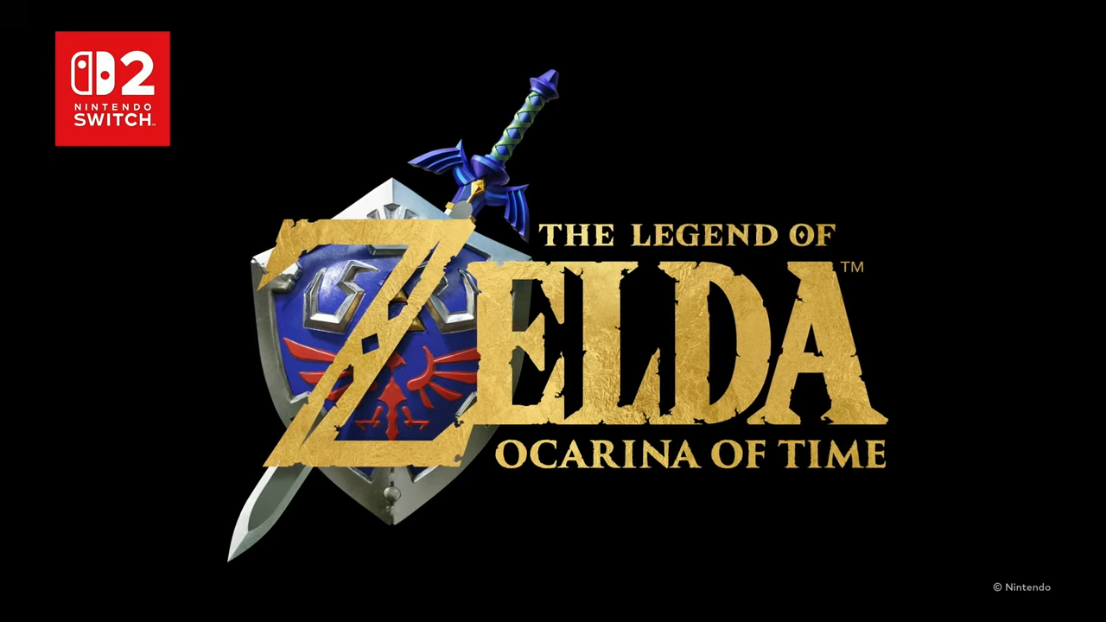
Nintendo confirmed a full remake of the 1998 classic The Legend of Zelda: Ocarina of Time is launching for the Nintendo Switch 2 later this year. The company’s official North American product page describes the upcoming title as featuring “stunning visuals, updated designs, and timeless gameplay,” according to reporting from Nintendo Everything.
Details Behind the Switch 2 Remake
The announcement arrived at the conclusion of a recent Nintendo Direct presentation, though the developer initially provided minimal detail beyond a brief teaser trailer. The lack of granular information left fans speculating about the scope of the project until a description surfaced on Nintendo’s own website. The text confirms that the title is being rebuilt specifically for the Switch 2 hardware.

While industry observers expected graphical improvements, the explicit mention of “updated designs” suggests a more comprehensive overhaul than a standard high-definition remaster. This language implies that Nintendo is likely modifying core elements of the game’s presentation beyond simple texture resolution. As IGN notes, this project arrives during the 40th anniversary of the overall Zelda franchise, positioning it as a centerpiece for the company’s current release strategy.
The technical transition from the original Nintendo 64 architecture to the modern Switch 2 platform represents a significant leap in potential fidelity. The original 1998 release utilized the N64’s limited polygon count and Z-buffer hardware to create its 3D world, while the 2011 3DS version, developed by Grezzo, focused on stereoscopic 3D integration and refined character models. By rebuilding the game for the Switch 2, Nintendo is leveraging current-generation rendering techniques that allow for high-dynamic-range lighting and significantly higher frame rate targets, which were not possible on the original hardware.
For more on this story, see Nintendo Direct 2026: Big Reveals Expected on June 9 as Switch 2 Hype Grows.
Historical Context and Design Expectations
Ocarina of Time remains one of the most critically acclaimed titles in gaming history, holding a perfect 10 out of 10 score from IGN’s original 1998 review. The game’s legacy is built on its transition of the series into 3D space, which established mechanical templates for third-person action-adventure games that persist in modern development. Features like Z-targeting, which allowed players to lock onto enemies in a 3D environment, became a foundational mechanic for the action-adventure genre.
Because the title has already seen a previous remake on the Nintendo 3DS in 2011, questions regarding the necessity of a new version are common. Analysts point to the upcoming Switch 2 remake of Star Fox 64 as a potential blueprint for what players might expect:
- Fully re-recorded audio, including voice work, music, and sound effects.
- An overhauled art style that moves beyond the original 1998 aesthetic.
- Integration of new gameplay modes or features not present in the original Nintendo 64 release.
The development of such remakes typically involves a balancing act between maintaining the original “feel”—the precise timing of Link’s sword swings or the traversal speed of Epona—and upgrading the game to meet contemporary expectations for visual polish and accessibility. Historically, Nintendo’s internal teams and partners have favored maintaining the core logic of the original code while wrapping it in entirely new assets, a process that ensures the “timeless” quality mentioned in their marketing materials remains intact.
The Strategic Rationale for a 2026 Release
The decision to bring the title to the Switch 2 suggests a strategic effort to anchor the new console’s library with established, high-value intellectual property. By leveraging a game that is often cited as the “Greatest Video Game of All Time,” Nintendo is targeting both veteran players and a new generation of users. This strategy mirrors the company’s historical approach of utilizing flagship titles to drive console adoption during the initial lifecycle phase of new hardware.

This follows our earlier report, Nintendo Stock Drops Nearly 5% After Disappointing June 2026 Showcase.
“The N64 classic reborn as a full remake for Nintendo Switch 2. Experience Ocarina of Time with stunning visuals, updated designs, and timeless gameplay.”
Nintendo, via Nintendo Everything
The timeline for the release remains set for late 2026. While the company has kept details sparse, the combination of the game’s reputation and the technological leap provided by the Switch 2 hardware suggests a significant departure from the 2011 3DS iteration. The industry will be watching to see how Nintendo balances the preservation of the original’s “timeless gameplay” with the demands of modern hardware performance and player expectations. As a title that historically defined a console generation, its success or failure in this new form will likely serve as a key indicator for how Nintendo handles its extensive back catalog in the coming years.
Find more reporting in our Technology section.
