
The Alternative for Germany (AfD) party adopted a “radical” manifesto in April 2026, positioning itself as a potential governing force in the eastern state of Saxony-Anhalt, where it could secure an outright majority in September’s regional elections. This would mark the first time a far-right party holds power in a German state since World War II, according to BBC reporting.
AfD’s Rise and Ideological Shift
Evolution of the 2026 Party Platform
Founded in 2013 by figures including Alexander Gauland and Bernd Lucke, the AfD initially positioned itself as a Eurosceptic alternative to Chancellor Angela Merkel’s center-right Christian Democratic Union (CDU). Over time, it shifted further right, adopting policies opposing immigration, Islam, and EU integration, as documented by Wikipedia and Encyclopedia Britannica. By 2026, the party had become the second-largest in the Bundestag and a dominant force in eastern Germany, where it won over one-third of the vote in some regions, according to DW.
The AfD’s 2026 manifesto, described as “pro-ethnic German government,” emphasized national sovereignty, stricter immigration controls, and a rejection of “multiculturalism,” according to the BBC. Party leader Ulrich Siegmund, a TikTok influencer and candidate in Saxony-Anhalt, framed the document as a call to “take back our country,” citing public concerns about safety and cultural identity.
Internal party communications and regional convention transcripts indicate that the 2026 platform represents a departure from the party’s earlier focus on fiscal policy. Instead, the manifesto prioritizes what the party describes as the “preservation of the German cultural core.” This shift has been accompanied by a strategic pivot toward digital outreach, with candidates like Siegmund utilizing social media platforms to bypass traditional media gatekeepers. Analysts note that this strategy has been particularly effective in regions where the party has sought to capitalize on local economic grievances and regional demographic changes.
Legal Challenges and Political Isolation
Surveillance and the Firewall Strategy
Despite its electoral gains, the AfD faces legal and political hurdles. In February 2026, a German court upheld a decision not to classify the party as an “extremist group,” though intelligence agencies like the BfV have warned of its threat to democratic norms. The party’s leaders have been linked to far-right movements, including Pegida and the Identitarian movement, and some factions have been accused of historical revisionism and xenophobic rhetoric, per Wikipedia.
The role of the BfV (Federal Office for the Protection of the Constitution) has become a central point of contention. While the agency has placed certain state-level chapters of the AfD under surveillance, the party has successfully challenged these designations in regional courts. These legal battles have created a complex environment where the party operates under state scrutiny while simultaneously holding seats in legislative bodies. The judiciary’s refusal to categorize the party as a whole as extremist has become a frequent talking point for party leaders, who argue that the surveillance is politically motivated and intended to stifle legitimate opposition.
Mainstream parties continue to reject coalition talks with the AfD, maintaining a post-World War II “firewall” against cooperation with parties deemed extremist. However, the AfD’s influence is expanding beyond eastern Germany, with growing support in western states, as noted by UnHerd. This “firewall” strategy, historically maintained by the CDU, SPD, FDP, and the Greens, is currently being tested by the party’s rising poll numbers. Local government officials in various municipalities have expressed concern that the party’s refusal to engage in traditional consensus-building could paralyze local legislative processes if the AfD were to hold a plurality of seats.
Regional Power and National Implications
Constitutional Debates and European Stance
Saxony-Anhalt’s upcoming elections have drawn national attention. If the AfD wins, it would set a precedent for far-right governance in Germany, raising concerns about the party’s impact on democracy. DW highlighted the AfD’s increasing openness to extremist symbolism, including references to National Socialism, though the party denies such associations.
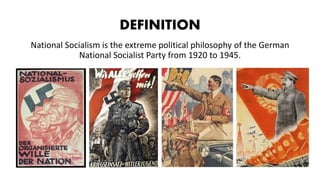
The potential for an AfD-led state government has prompted discussions among legal scholars regarding the extent of state-level autonomy under the German Basic Law. Constitutional experts have debated whether a regional government led by the AfD could legally implement policies that conflict with federal mandates on immigration and social welfare. The party’s platform also includes opposition to “government spending on refugees” and policies favoring “negative immigration,” as outlined by Britannica. These stances align with broader European far-right trends but remain controversial in Germany, where the AfD’s rise has sparked debates about the erosion of post-war democratic consensus.
Furthermore, the party’s rhetoric regarding the European Union has sharpened in the lead-up to the 2026 elections. While early iterations of the party platform focused on reforming the Eurozone, the current manifesto advocates for a “Europe of Nations,” which would significantly restrict the powers of the European Commission. This stance has drawn criticism from European partners, who warn that such policies could undermine the stability of the trans-Atlantic alliance and the internal market of the EU.
What Comes Next?
September Election and Voter Polarization
The AfD’s success in Saxony-Anhalt could embolden its national strategy, but its ability to translate regional gains into federal power remains uncertain. Legal challenges, public opposition, and the resistance of mainstream parties will likely shape its trajectory. For now, the party’s 2026 manifesto and electoral momentum underscore a significant shift in Germany’s political landscape, with implications for European politics as a whole.
As the September election date approaches, the focus is shifting toward voter turnout metrics and the effectiveness of counter-mobilization efforts by civil society groups. Recent reports indicate an increase in demonstrations both in favor of and in opposition to the AfD, reflecting a deeply polarized electorate. The outcome in Saxony-Anhalt is expected to serve as a bellwether for the party’s viability in subsequent state elections, potentially forcing a reevaluation of political strategies across the German spectrum.
