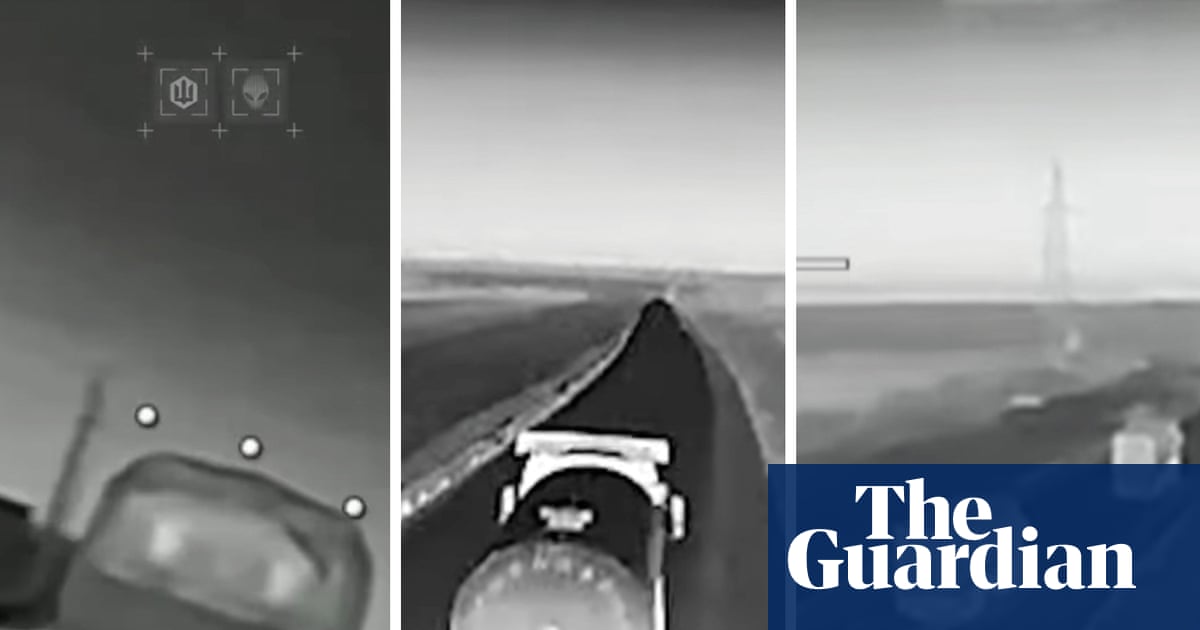
Ukrainian forces have launched an intensified drone campaign against the R-280 highway, a critical Russian logistics route linking Rostov-on-Don to occupied territories in southern Ukraine. As of June 11, 2026, military officials report a 71% drop in cargo traffic along the corridor, as Kyiv targets supply lines to pressure Russian forces in the south.
The Logistics Lockdown on the R-280
Known to Russian forces as the “Novorossiya” route, the R-280 has become a focal point of Ukraine’s “middle strike campaign.” According to The Guardian, the road serves as the primary land corridor for supplying Russian troops, effectively bypassing the vulnerable Kerch Bridge. Ukrainian units have labeled the stretch “the highway of death” due to the high frequency of drone strikes hunting military convoys.

The impact on Russian logistics is significant. Robert Brovdi, commander of Ukraine’s Unmanned Systems Forces, stated this week that military cargo traffic along the route has plummeted by 71% over the last fortnight. The campaign focuses on targets between 20km and 200km behind the front lines, with President Volodymyr Zelenskyy noting in early May that strikes at these distances had quadrupled since February.
The strategic importance of the R-280 stems from its role as a logistical backbone. Since the early stages of the full-scale invasion, Russia has relied heavily on road networks to transport fuel, ammunition, and heavy equipment to the southern front. The R-280, which runs along the Sea of Azov, provides a more resilient alternative to the Kerch Bridge, which has been the target of multiple high-profile strikes since 2022. By shifting focus to this highway, Ukraine is attempting to disrupt the “land bridge” that Moscow established to connect the Russian mainland with the Crimean Peninsula.
Bridge Infrastructure Under Fire
The escalation reached a flashpoint this week with targeted strikes on bridge infrastructure connecting occupied Kherson to Crimea. Vladimir Saldo, the Russia-appointed governor of the occupied Kherson region, confirmed damage to four key structures, including bridges near Preobrazhenka and Myrne, the Perekop-Armiansk road bridge, and a span near Stavky, as reported by Meduza.
The Chonhar Bridge, a vital artery for the region, has also been subjected to repeated strikes, leading to suspended traffic. These actions are part of a broader strategy to create a “logistics lockdown,” a term used by Ukraine’s defense minister, Mykhailo Fedorov, to describe the effort to make Russian forces feel unsafe even far from the immediate front.
In the context of the ongoing conflict, the destruction or degradation of bridge infrastructure serves a dual purpose: it physically prevents the movement of heavy armor and forces Russian logistics units to take longer, more exposed detours. Historically, such tactics have been used by both sides to constrain the movement of reserves during large-scale operations. For the Russian military administration, the inability to guarantee the safety of these transit points forces a reliance on secondary, often unpaved, rural routes that are slower and less capable of handling heavy logistics traffic.
Technological Shifts and Strategic Constraints
The effectiveness of these strikes is largely attributed to advancements in drone technology, specifically the integration of AI-assisted systems. DW reports that Ukrainian forces are utilizing drones from the manufacturer Wild Hornets, which feature AI to identify and track truck traffic.
The integration of artificial intelligence into tactical UAVs represents a major shift in the attrition-based warfare seen since 2022. By automating the identification of targets, Ukrainian operators can reduce the time required to lock onto a moving vehicle, thereby limiting the window of opportunity for Russian electronic warfare systems to jam the signal. This technical evolution has allowed Ukrainian forces to conduct precision strikes in the “gray zone” behind the front lines, an area previously considered safer for Russian supply convoys.

Despite these gains, analysts urge caution regarding the long-term impact on the conflict’s trajectory. Mykola Bielieskov, an adviser at the Ukrainian National Institute for Strategic Studies, noted that while Russian vulnerability is increasing, the situation does not yet constitute a decisive turning point.
“During the bloody and protracted war from 2022 to 2026, the creation of a land corridor to Crimea was seen as Moscow’s greatest potential achievement,” Ihor Lutsenko, a soldier in the Ukrainian army and co-founder of the Air Intelligence Support Center, via DW.
Military historian Mykhailo Zhyrokhov suggests that Russia will likely respond by deploying mobile fire groups and physical defenses, such as anti-drone nets. However, Zhyrokhov argues that forcing Moscow to divert resources to secure these routes is, in itself, a strategic victory for Kyiv. “Every defensive measure requires resources, and this is an additional burden for the Russians,” he told DW.
The Road Ahead: Exploiting the Window of Opportunity
Ukrainian operators emphasize that their current success relies heavily on the element of surprise and a temporary gap in Russian air defense coverage along the corridor. Commanders have indicated that this window must be exploited fully before the enemy establishes more robust countermeasures. The regional implications are substantial, as the stability of the southern front is inextricably linked to the flow of supplies through the occupied territories.
As the conflict enters this phase, the ability of Ukrainian drone units to maintain pressure on the R-280 will likely dictate whether Russia can effectively maintain its land bridge to Crimea. With civilians largely barred from the route since late May, the corridor is now almost exclusively a military zone, leaving the outcome of the “middle strike campaign” as a defining factor for southern logistics through the remainder of 2026. The diplomatic stakes remain high, as the efficacy of these supply interdictions influences international perceptions of Ukraine’s ability to sustain long-term defensive operations in the south.
Find more reporting in our World section.
