
At least 12 people were killed and several others wounded during a shooting involving multiple attackers in Johannesburg on Wednesday, June 10, 2026. South African Police Service (SAPS) officials confirmed the incident occurred in the Soweto area, marking one of the most significant outbreaks of violent crime in the city this year.
Law Enforcement Response and Investigation
Police units were dispatched to the scene in Soweto shortly after reports of gunfire emerged on Wednesday morning. According to provincial police spokesperson Colonel Dimakatso Nevhuhulwi, the suspects were armed with high-caliber automatic weapons and fled the scene in multiple vehicles before authorities could establish a perimeter.
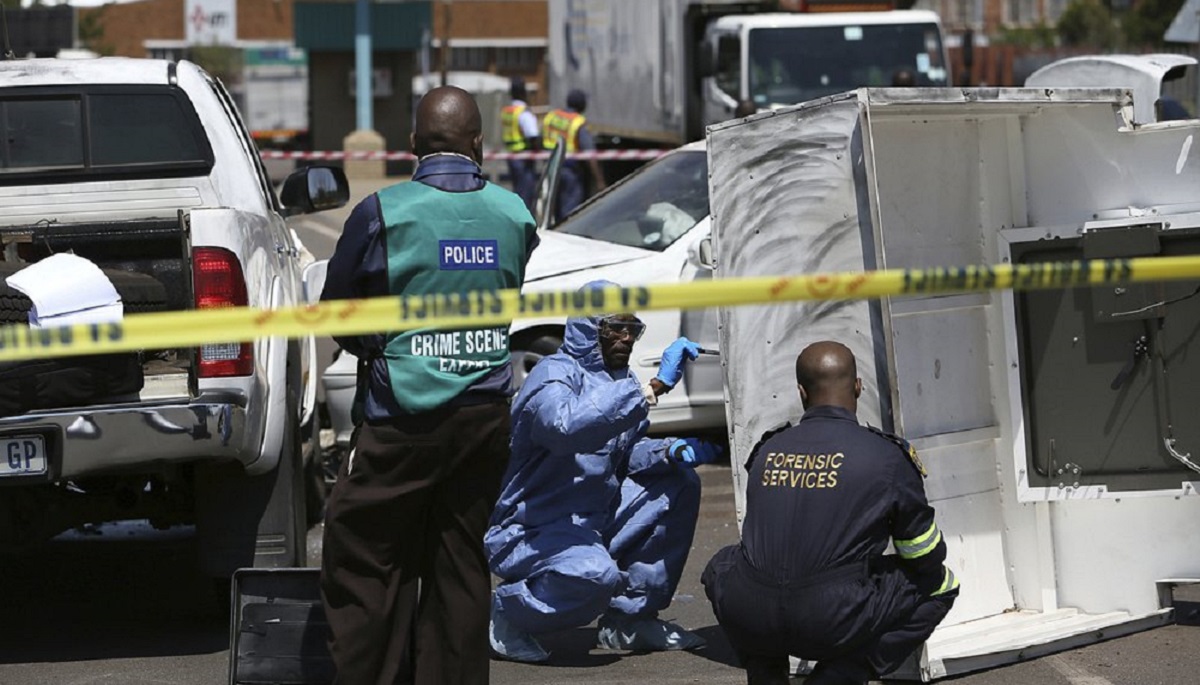
The operational response involved the deployment of the SAPS Tactical Response Team (TRT), a specialized unit typically reserved for high-risk situations involving organized crime or heavily armed suspects. While the South African Police Service has not yet identified the suspects, investigators are currently reviewing security camera footage from the surrounding neighborhood. No arrests have been made as of Wednesday afternoon. Forensic teams remain on-site to collect ballistic evidence, which officials hope will help determine if the weapons used are linked to other recent violent crimes in the Gauteng province.
The investigation is being conducted under the oversight of the Gauteng provincial commissioner’s office. Officials have indicated that the crime scene spans several blocks, necessitating a large-scale forensic operation to document trajectories and recover spent casings. The SAPS has confirmed that the ballistics recovered will be processed through the Integrated Ballistic Identification System (IBIS), a national database used by the South African police to link firearms to multiple crime scenes across the country.
Security Context in Gauteng
The shooting follows a series of violent incidents in Johannesburg that have sparked public debate regarding the efficacy of local crime-prevention strategies. According to data released by the South African Institute of Race Relations in early 2026, violent crime rates in the metropolitan area have seen a steady increase over the previous 18 months, driven largely by organized criminal syndicates.
Gauteng, as the economic hub of South Africa, frequently experiences a concentration of high-profile violent crime. The province has historically been a focal point for the South African Police Service’s “Operation Shanela,” a high-density policing initiative intended to combat illegal firearms and organized syndicates. However, the scale of this particular incident has renewed scrutiny regarding the effectiveness of these saturation patrols in the face of increasingly sophisticated criminal groups.
Local community leaders have expressed frustration over the perceived lack of police presence in high-risk areas. In a statement to local media, a representative for the Soweto Community Policing Forum described the current security environment as increasingly volatile.
“The brazen nature of this attack suggests a level of organization that our local stations are currently ill-equipped to counter without specialized support from national units.”
Soweto Community Policing Forum representative
The Community Policing Forum (CPF) system in South Africa is designed to serve as a bridge between the police and the citizenry, but CPF members have frequently reported being outgunned by criminal elements. The broader debate centers on whether the SAPS requires further devolution of power to local stations or if the centralized command structure is necessary to manage the influx of illegal firearms circulating through the country’s borders.
Next Steps for Authorities
The South African Police Service has deployed additional tactical response teams to the area to maintain order and conduct door-to-door inquiries. The Minister of Police is expected to provide a formal briefing on the status of the investigation on Thursday, June 11. This briefing is anticipated to address concerns regarding the intelligence-gathering capabilities of local law enforcement and whether the incident was a targeted assassination or a random act of violence.
Authorities have urged residents to remain vigilant and avoid the area where the incident occurred while the crime scene is processed. The government has also initiated a witness protection program for individuals who may have observed the departure of the attackers, citing the potential for retaliation from criminal networks operating in the region. The Witness Protection Act of 1998, which governs such programs in South Africa, allows for the temporary relocation and security of witnesses in high-stakes criminal investigations, though critics often cite the limited capacity of the program as a hurdle to successful prosecutions.
The investigation remains ongoing, and further details regarding the identities of the victims are expected to be released following formal notification of next of kin. Diplomatic and regional observers are monitoring the situation, as the rise in violent crime in South Africa often influences regional security policy within the Southern African Development Community (SADC). The ability of the SAPS to secure convictions in cases involving automatic weapons remains a significant benchmark for measuring the success of the state’s anti-crime mandate.
Find more reporting in our World section.
