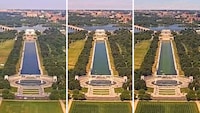
The Lincoln Memorial Reflecting Pool in Washington, D.C., turned a murky green just days after a $14.2 million renovation—despite President Donald Trump’s pledge to restore it to a crisp “American flag blue” for the nation’s 250th anniversary celebrations. Satellite data shows algae levels are higher than any recorded June in the past five years, according to a Washington Post analysis, while officials blame residual algae from dormant supply lines and seasonal heat. The cleanup effort, now labeled a “regional and national priority,” involves 12-hour shifts and hydrogen peroxide treatments—but the pool remains a political flashpoint ahead of July 4.
Why the pool turned green despite $14.2 million in renovations
Trump’s administration spent $14.2 million on a no-bid contract to resurface the pool’s bottom and reseal its seams, aiming to create a “stunning” backdrop for the July 4 festivities. But within 24 hours of refilling the pool on June 4, algae began spreading rapidly, turning the water green—a stark contrast to Trump’s earlier boast about its “clean, beautiful water.”
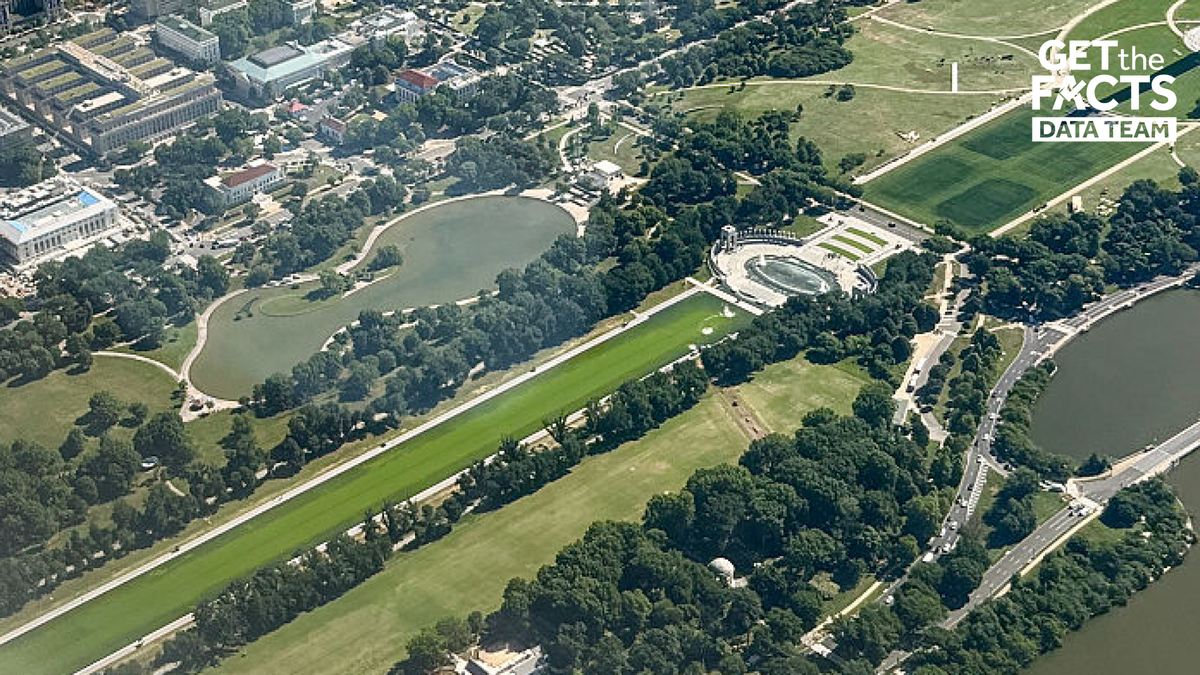
Interior Department spokesperson Kate Martin told WLWT the algae is “residual” from supply lines that sat dormant for eight weeks during construction, a normal part of restarting operations. Yet the Post’s satellite data shows current algae levels are the highest recorded in June over the past five years—and among the worst in any month in the last two years. Experts note that June’s heat wave and stagnant water conditions create ideal conditions for algae growth, a problem that has plagued the pool since its 1922 construction.
Critics question whether the darker paint chosen for the renovation—meant to mimic the “American flag blue”—may be raising water temperatures and worsening algae growth. A National Parks Conservation Association official suggested these concerns should have been addressed during a review process that was skipped, according to The Daily Beast. The Trump administration, however, dismisses the criticism, framing the cleanup as a triumph over past neglect under Obama and Biden.
The cleanup operation: 12-hour shifts and hydrogen peroxide
The Interior Department has escalated the cleanup to a “regional and national priority,” with crews working 12-hour shifts to scrub the pool and pump out algae. Workers were seen pouring hydrogen peroxide into the pool on June 17, though parts remained green as of Wednesday. The department is also deploying “nanobubble ozone technology,” which officials claim kills algae, pathogens like E. coli, and contaminants that have plagued the pool since 1922—including during a 2012 Obama-era renovation that cost over $30 million and also resulted in massive algae outbreaks.

An email obtained by The Independent urged National Park Service staff to support “critical pre-July 4th operational needs,” framing the effort as a contrast to past administrations. “Unlike the Obama and Biden administrations that shamefully chose to let our national treasures descend into filth and disrepair,” a spokesperson said, “the Trump administration is marshaling in the necessary resources to ensure the capital city of the most powerful country in the world is absolutely stunning.”
Yet the rapid algae regrowth has drawn skepticism. A resident of Alexandria, Virginia, told The Daily Beast the pool is “a mess” and “never seen this green before,” calling it a “waste of our tax dollars.” The contrast between Trump’s promise of a pristine pool and the current algae bloom has become a symbol of broader frustrations with the administration’s handling of public projects.
For more on this story, see Lincoln Memorial Reflecting Pool algae bloom sparks scrutiny after $14.2M renovation.
What happens next: July 4 deadline and political fallout
The Interior Department insists the pool will be ready for July 4, despite the ongoing challenges. A spokesperson told The Independent that the nanobubble technology will maintain the pool’s clarity, though the current algae levels suggest the process may take longer than anticipated. Meanwhile, the White House is also addressing damage to the South Lawn from a recent UFC fight, with ScottsMiracle-Gro committing $1 million to restore the grass.
The Reflecting Pool’s condition has become a microcosm of broader debates over infrastructure spending, political messaging, and the administration’s priorities. While Trump’s team frames the cleanup as a victory over past neglect, critics argue the algae crisis reflects deeper issues with oversight and sustainability in public projects. With July 4 just weeks away, the question remains: Will the pool be “absolutely stunning,” as promised, or will it remain a green eyesore for the nation’s birthday?
Historical context: Algae and the Reflecting Pool’s troubled past
The Lincoln Memorial Reflecting Pool has long struggled with algae due to its shallow, slow-moving water and exposure to sunlight. The problem resurfaced after a $30 million Obama-era renovation in 2012, which also led to massive algae clumps. The Trump administration’s $14.2 million project was supposed to solve the issue once and for all—but the rapid algae regrowth suggests the underlying conditions remain unresolved.

Algae thrive in warm, stagnant water with abundant sunlight, conditions that are especially prevalent in June. A heat wave in early June likely accelerated the problem, as noted by the Post. While the Trump administration blames residual algae from dormant supply lines, experts argue that seasonal factors and potential issues with the new paint color may also be contributing to the problem.
What makes this situation particularly ironic is that Trump himself has repeatedly criticized past administrations for allowing public spaces to deteriorate. Yet the Reflecting Pool’s current state—just days after a multimillion-dollar renovation—has become a symbol of the challenges in delivering on political promises, especially when it comes to infrastructure and aesthetics.
Public reaction: From frustration to political weaponry
The algae crisis has sparked a mix of reactions. Some residents, like the Alexandria, Virginia, resident quoted by The Daily Beast, see it as a waste of taxpayer money. Others view it as another example of the Trump administration’s tendency to prioritize optics over substance. The pool’s condition has also been used as a political talking point, with opponents framing it as evidence of mismanagement.
Meanwhile, the Trump administration has doubled down, framing the cleanup as a necessary effort to restore national pride. “It is beyond comprehension why anyone would be upset that President Trump is making D.C. Safe and Beautiful Again,” a spokesperson told The Independent. The rhetoric underscores how the Reflecting Pool’s condition has become entangled in broader political narratives about leadership, accountability, and the state of public spaces in America.
As crews continue their around-the-clock efforts, the Reflecting Pool’s fate hangs in the balance. Whether it will be ready for July 4—or if the algae will persist—remains uncertain. What is clear, however, is that the pool’s current state has become more than just a logistical challenge: it’s a symbol of the tensions between political promises and real-world execution.
Find more reporting in our News section.
