
The Great Oxidation Event, which began roughly 2.4 billion years ago when oxygen first accumulated in Earth’s atmosphere, was not just a turning point for life—it was a planetary catastrophe. The surge of free oxygen, driven by cyanobacteria, wiped out most existing species in what geologists now call the most lethal pollution event in Earth’s history. Yet new research suggests the story of Earth’s oxygenation is far more complex—and far stranger—than previously understood, with asteroid impacts and tectonic shifts playing unexpected roles in shaping the planet’s habitability.
How Asteroid Craters May Have Been Earth’s First Oxygen Oases
An ancient crater in South Korea, the only confirmed asteroid impact site on the Korean Peninsula, has yielded evidence that upends long-held assumptions about how Earth’s atmosphere became oxygen-rich. Researchers from the Korea Institute of Geoscience and Mineral Resources (KIGAM) discovered stromatolites—layered rock formations built by microbial communities—within the Hapcheon crater. These structures, typically associated with early cyanobacteria, suggest that asteroid impacts may have created localized “oxygen oases” where microbes thrived long before the Great Oxidation Event (GOE) reshaped the planet.


According to a study published in Communications Earth & Environment, the stromatolites in Hapcheon formed in a hydrothermal lake created by the asteroid’s impact. The heat from the collision melted surrounding rock, creating a warm, mineral-rich environment that sustained microbial life for extended periods. The discovery is significant because it implies that such impact-driven habitats may have been critical refuges for oxygen-producing microbes during Earth’s early history, when atmospheric oxygen levels were still negligible.
Dr. Jaesoo Lim, lead author of the study, stated: “This is the first comprehensive evidence suggesting that stromatolites could form in hydrothermal lakes created by asteroid impacts. Such environments may have provided favorable conditions for early microbial ecosystems.” The findings, published in Communications Earth & Environment, align with broader research indicating that asteroid impacts—often linked to mass extinctions—may have also played a constructive role in fostering life.
“This is the first comprehensive evidence suggesting that stromatolites could form in hydrothermal lakes created by asteroid impacts.”
—Dr.
The 400-Million-Year Mystery: Why Did Oxygen Take So Long to Accumulate?
Cyanobacteria evolved the ability to perform oxygenic photosynthesis as early as 3.5 billion years ago—yet free oxygen didn’t begin accumulating in the atmosphere until roughly 2.4 billion years ago. A 2025 study led by Dilan M. Ratnayake of Okayama University proposes that the delay was driven by ocean chemistry. High concentrations of dissolved nickel and urea favored methane-producing archaea over cyanobacteria, suppressing oxygen production for hundreds of millions of years. Only as volcanic activity declined and ocean chemistry shifted did cyanobacteria gain the upper hand, triggering the GOE.
A separate 2021 paper in Nature Communications frames the GOE as an ecological tipping point, where the planet’s ability to absorb oxygen (via reactions with iron, volcanic gases, and rocks) was overwhelmed by cyanobacterial output. The key insight? The GOE wasn’t just a biological event—it was a geochemical one, where Earth’s internal processes (like subduction and mantle convection) set the stage for oxygen to escape into the atmosphere.
Plate Tectonics: The Hidden Driver of Earth’s Oxygen Revolution
While microbes and asteroid impacts grab headlines, a 2026 study in PNAS argues that plate tectonics—specifically the efficiency of “cold subduction”—was the true architect of Earth’s oxygen-rich atmosphere. The research suggests that as Earth cooled over billions of years, subduction zones (where tectonic plates dive into the mantle) became more efficient at burying carbon and sulfur deep underground. This process reduced the planet’s ability to absorb oxygen, allowing it to accumulate in the air.
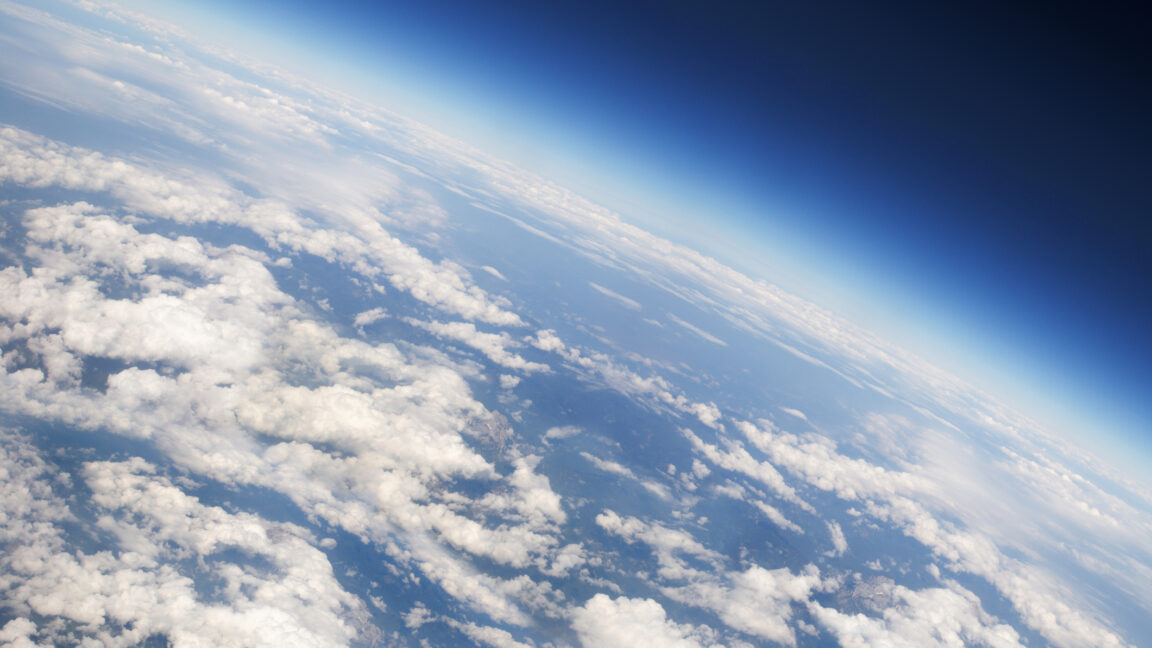
The study highlights the formation and breakup of supercontinents like Columbia, Gondwana, and Pangaea as critical phases. The breakup of Columbia, for example, coincided with the first signs of low-temperature subduction, which helped transport organic carbon into the mantle. By the time Pangaea formed, the “Ring of Fire” around the Pacific Ocean became a massive zone of subduction, further tilting Earth’s oxygen balance toward the atmosphere.
“These processes all operated on top of the baseline defined by the net flux of carbon (and sulfur) between Earth’s interior and exterior, which we argue was controlled by the evolving efficiency of cold subduction on a cooling Earth.”
—PNAS, 2026
What This Means for the Search for Life Beyond Earth
The Hapcheon crater study doesn’t just rewrite Earth’s history—it offers a blueprint for where to look for signs of life on other planets. If asteroid impacts created oxygen-rich microhabitats on early Earth, similar craters on Mars could preserve biosignatures from ancient microbial life. The study’s authors note that early Mars may have had water-filled impact craters analogous to those on Earth, making them prime targets for future exploration.

Moreover, the discovery challenges the notion that oxygenation was a gradual, uniform process. Instead, it suggests a patchwork of localized environments—hydrothermal lakes, impact craters, and shallow marine sediments—where life experimented with oxygen metabolism long before it became dominant. This raises intriguing questions: Could similar “oxygen oases” exist today in extreme environments on Earth, or even on other planets?
The Next Frontier: Revisiting Earth’s Oldest Crater Lakes
With the Hapcheon crater study as a proof of concept, researchers are now turning their attention to other ancient impact sites on Earth. The KIGAM team’s geochemical analysis of the Hapcheon stromatolites—revealing signatures of both extraterrestrial material and hydrothermal alteration—offers a roadmap for identifying overlooked biosignatures in other craters. The implications extend beyond Earth: NASA and ESA are already eyeing Martian craters as potential sites for rover missions, and this research could shape their search strategies.
Yet questions remain. How widespread were these impact-driven microbial habitats? Could they have survived multiple extinction events? And if asteroid impacts played such a pivotal role in Earth’s oxygenation, what does that say about the resilience of life in the face of cosmic catastrophes?
The answers may lie buried in Earth’s oldest rocks—and in the craters of other worlds.
