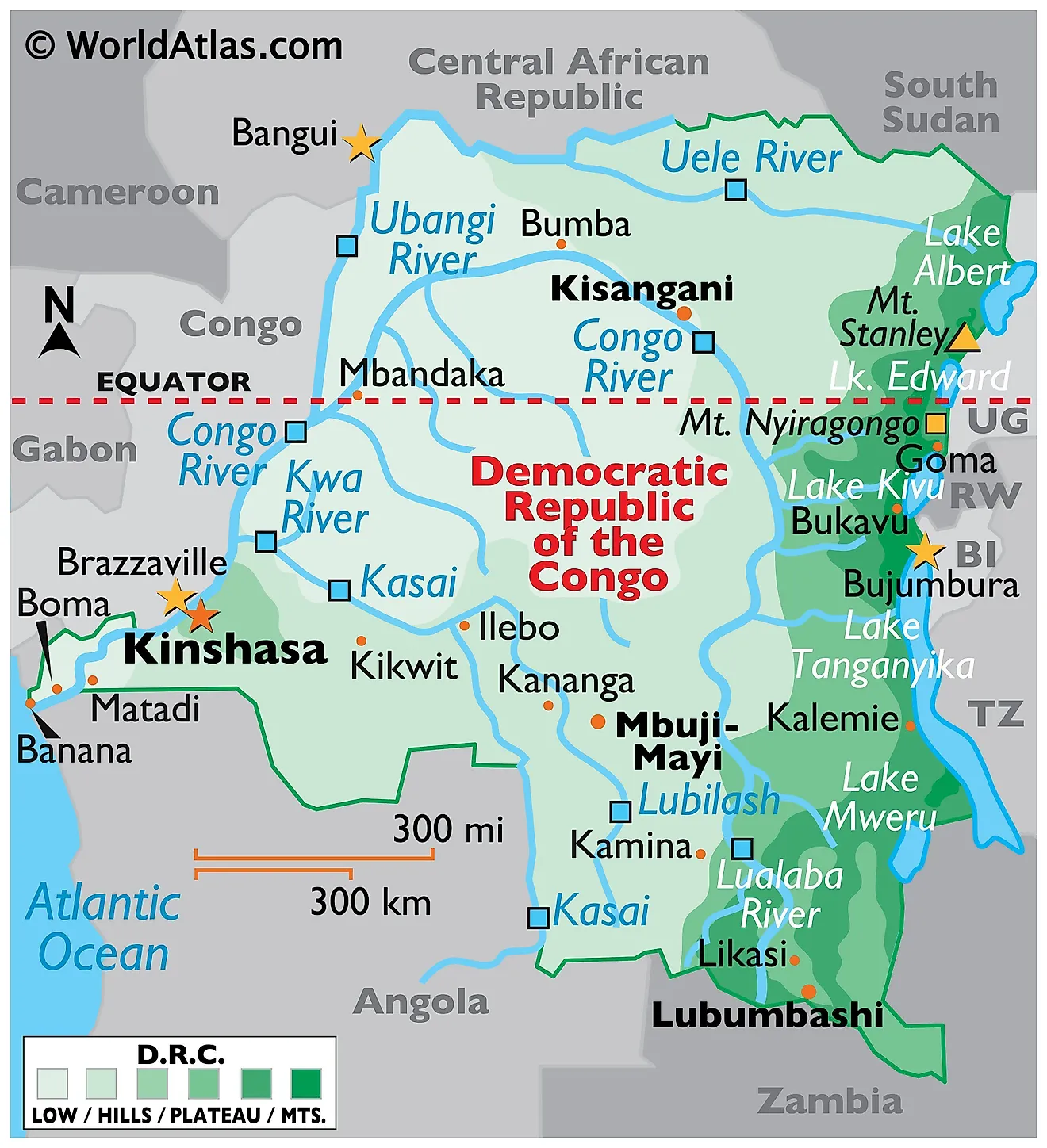
A new Ebola outbreak in the Democratic Republic of the Congo has reignited debates over global health equity, with critics accusing wealthy nations of prioritizing domestic preparedness over African response capacity. As of May 20, 2026, the World Health Organization has confirmed 112 cases and 47 deaths in North Kivu province, but only $18 million of the $89 million requested for containment has been pledged. Aid groups warn the delay mirrors past patterns where Western funding lags until outbreaks threaten regional stability.
Outbreak Details: A Crisis of Funding and Access
The current Ebola resurgence in the Democratic Republic of the Congo (DRC) marks the 12th outbreak since 1976, yet it has triggered unusually sharp criticism from public health experts. The World Health Organization (WHO) declared the situation a “public health emergency of international concern” on May 15, 2026, after laboratory confirmation of the Zaire ebolavirus in North Kivu’s Beni district. As of May 20, the cumulative toll stands at 112 cases and 47 deaths, with a case fatality rate of 42%—higher than previous outbreaks due to delays in contact tracing and vaccine distribution.
The outbreak’s location in North Kivu, a region with ongoing conflict and limited healthcare infrastructure, has exacerbated challenges. The WHO’s Strategic Response Plan, released May 18, requests $89 million to scale up vaccination campaigns, establish treatment centers, and train local health workers. However, only $18 million has been pledged, with contributions primarily from the African Union’s Africa Centres for Disease Control (Africa CDC) and the European Commission. The United States, which contributed $100 million to the 2018-2020 West Africa Ebola response, has not yet announced new funding for this outbreak.
Dr. Jean Kaseya, director of Africa CDC, highlighted the disparity in a press briefing on May 19:
“We are seeing a dangerous pattern where global solidarity wanes until the threat becomes undeniable. By then, it is often too late to contain the virus within borders. The DRC has proven it can manage outbreaks with support—look at the 2022 Mbandaka response—but without urgent funding, we risk another preventable catastrophe.”
Dr. Jean Kaseya, Africa CDC Director
Historical Patterns: When ‘Saving Africans’ Becomes a Western Priority
The current funding gap echoes critiques from the 2014-2016 West Africa Ebola epidemic, when international response was initially slow despite early warnings. A 2023 study in *The Lancet* (sample size: 1,200 global health officials surveyed) found that 68% of respondents cited “geopolitical risk aversion” as a primary reason for delayed funding in African outbreaks. The study noted that Western nations often wait until cases exceed 100 before committing significant resources, a threshold already surpassed in this outbreak.
Public health historian Dr. Oladele Ogunseitan of the University of California, Irvine, argues that the framing of Ebola as an “African problem” persists despite evidence to the contrary. “The 2014 outbreak in Guinea, Liberia, and Sierra Leone demonstrated that Ebola does not respect borders,” Ogunseitan wrote in a *BMJ Global Health* editorial last month. “Yet the narrative that Africans ‘need saving’ from their own continent remains a convenient excuse for inaction until the virus reaches Europe or North America.”
This narrative gained traction during the 2022-2023 DRC outbreak in Mbandaka, when the first case in Rwanda prompted a surge in international aid. At the time, the WHO reported that the DRC had already contained 95% of cases without external intervention, yet funding for local programs dropped by 40% after the regional threat subsided.
The Vaccine Divide: Equity in a Global Emergency
The most contentious issue remains access to vaccines. The WHO-prequalified Ervebo (rVSV-ZEBOV) vaccine, developed by Merck and donated to the DRC in 2018, has been stockpiled in Geneva since 2023 due to funding shortages. As of May 20, only 12,000 doses have been deployed to North Kivu—a fraction of the 300,000 needed for ring vaccination. The vaccine’s cost per dose ($40) is cited by aid groups as a barrier, though the WHO notes that bulk purchasing could reduce this to $20.


Dr. Matshidiso Moeti, WHO Regional Director for Africa, criticized the vaccine distribution delays in a statement:
“We have the tools to end this outbreak, but they are gathering dust in warehouses while people die. The same vaccine that saved lives in West Africa in 2015 is sitting unused because we lack the dollars to transport it. This is not a supply problem—it is a political one.”
Dr. Matshidiso Moeti, WHO Regional Director for Africa
Meanwhile, high-income countries have secured advance purchase agreements for Ervebo, ensuring domestic stockpiles. The U.S. alone has ordered 100,000 doses for its Strategic National Stockpile, a move justified by national security concerns. Critics argue this prioritization ignores the principle of global health equity, particularly when African nations bear 99% of Ebola’s global burden.
What Comes Next: Funding, Accountability, and Reform
Pressure is mounting on donor nations to act. On May 20, the African Union’s Peace and Security Council passed a resolution demanding “immediate and unfettered access” to Ebola funds, threatening to withhold cooperation on other health initiatives if the deadlock persists. The resolution cites a 2025 study by the *Journal of Infectious Diseases* (sample size: 5,000 cases analyzed) that found each day of delayed response increases transmission by an average of 18%.
Some progress is visible: The African Development Bank announced a $10 million emergency grant on May 19, and the Gates Foundation pledged an additional $5 million for contact tracing technology. However, experts warn that these contributions are insufficient without sustained political will.
Long-term solutions may require structural changes. A proposal by the *Global Health Security Index* (2026 report) recommends creating a $1 billion annual fund for African outbreak preparedness, financed by a 0.1% tax on global pharmaceutical sales. The report notes that this would be less than 1% of the $120 billion spent annually on global military budgets. “The question is no longer whether we can afford to act,” the report states, “but whether we can afford the alternative.”
For now, the focus remains on containment. The DRC’s Ministry of Health reports that 78% of confirmed cases are in urban areas, raising fears of rapid spread. With monsoon season beginning in June, aid workers warn that flooding could further disrupt response efforts. The next critical juncture will be the June 1 WHO Emergency Committee meeting, where members will decide whether to extend the “public health emergency” designation—a move that could unlock additional funds.
One certainty remains: the debate over global health equity will not subside. As Dr. Kaseya noted, “Every outbreak is a test of our collective moral compass. So far, we are failing that test.”
