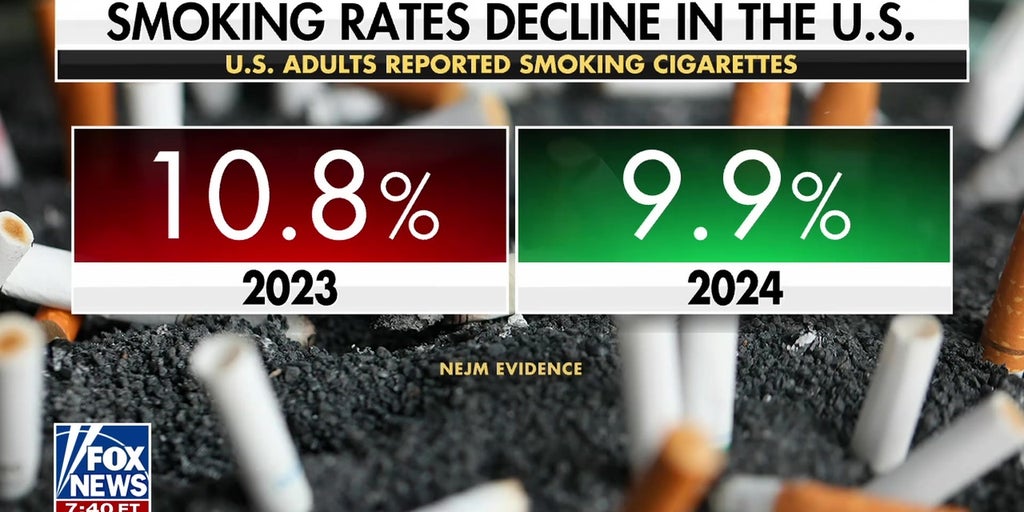
A Historic Decline in Tobacco Use
The decline in cigarette smoking represents a significant milestone in American public health. According to the National Health Interview Survey—a nationally representative, annual household survey of the noninstitutionalized, civilian U.S. population—cigarette smoking among adults has consistently declined over the past several decades. Reports released in March 2026 confirmed that the rate reached 9.9% in 2024, a shift that public health analysts characterize as the lowest level ever recorded.
This data, which serves as the primary instrument for tracking tobacco use trends in the U.S., reflects a broader movement away from combustible tobacco products. While cigarettes remain the most commonly used type of tobacco product, the overall prevalence of tobacco use remains a critical focus for federal agencies.
Surveillance and Demographic Trends
Data analysis from the Centers for Disease Control and Prevention (CDC) underscores that tobacco use is not uniform across the population. While the national average has reached a record low, certain groups continue to report higher prevalence rates. According to CDC data, adults aged 45–64 years currently exhibit the highest prevalence of cigarette smoking.
Other groups identified as having high smoking prevalence include:
* Non-Hispanic American Indian or Alaska Native adults.
* Individuals living with disabilities.
* People reporting severe generalized anxiety disorder.
* People reporting severe depression.
The CDC also tracks the use of menthol-flavored cigarettes, which are more common among specific demographics, including Non-Hispanic Black adults. Federal health officials note that the use of menthol tobacco products contributes to increased initiation rates and exacerbates disparities in tobacco-related health outcomes.
The Role of Alternative Products
As cigarette smoking rates have fallen, federal surveillance has expanded to monitor the rise of alternative tobacco products. E-cigarettes, which are now the second most commonly used type of tobacco product in the United States, saw an increase in adult usage between 2019 and 2022.
Public health experts emphasize that nicotine exposure—whether through cigarettes or other products—poses significant risks, particularly for younger populations. According to the CDC, nicotine exposure can harm the developing brain and increase the risk for dependence. The agency maintains that youth and young adult use of any tobacco product contributes to future use, creating a cycle that health interventions aim to disrupt. Among all age groups, adults aged 18–24 years currently report the highest prevalence of e-cigarette use.
Federal Oversight and Agency Reorganization
The landscape of public health surveillance is currently undergoing structural changes. As of May 2026, the Centers for Disease Control and Prevention continues its mission to protect public health through the control and prevention of disease, injury, and disability. Headquartered in Atlanta, Georgia, the agency remains a federal organization under the Department of Health and Human Services (HHS).
The agency’s role in tracking tobacco trends is part of a wider mandate that includes infectious disease control, environmental health, and occupational safety. Recent reports indicate that the CDC is slated for a reorientation toward infectious disease programs as part of a broader 2025 HHS reorganization. This shift is expected to include the integration of the Administration for Strategic Preparedness and Response, while other divisions, such as the National Institute for Occupational Safety and Health, are planned to move into a newly formed Administration for a Healthy America.
Despite these organizational transitions, the CDC’s commitment to providing data on preventable health threats remains a core function. Tobacco use continues to be classified by the agency as the leading cause of preventable disease and death in the United States. In 2022, approximately 49.2 million U.S. adults—or nearly 1 in 5—reported the current use of some form of tobacco product.
Continued surveillance of these populations is considered essential for identifying groups that may benefit from targeted interventions. By monitoring how different demographics use various tobacco products, federal agencies aim to develop more effective strategies to prevent initiation and decrease usage rates further. For individuals seeking information on tobacco cessation or health risks, public health authorities recommend consulting a healthcare provider for personalized guidance and support.
