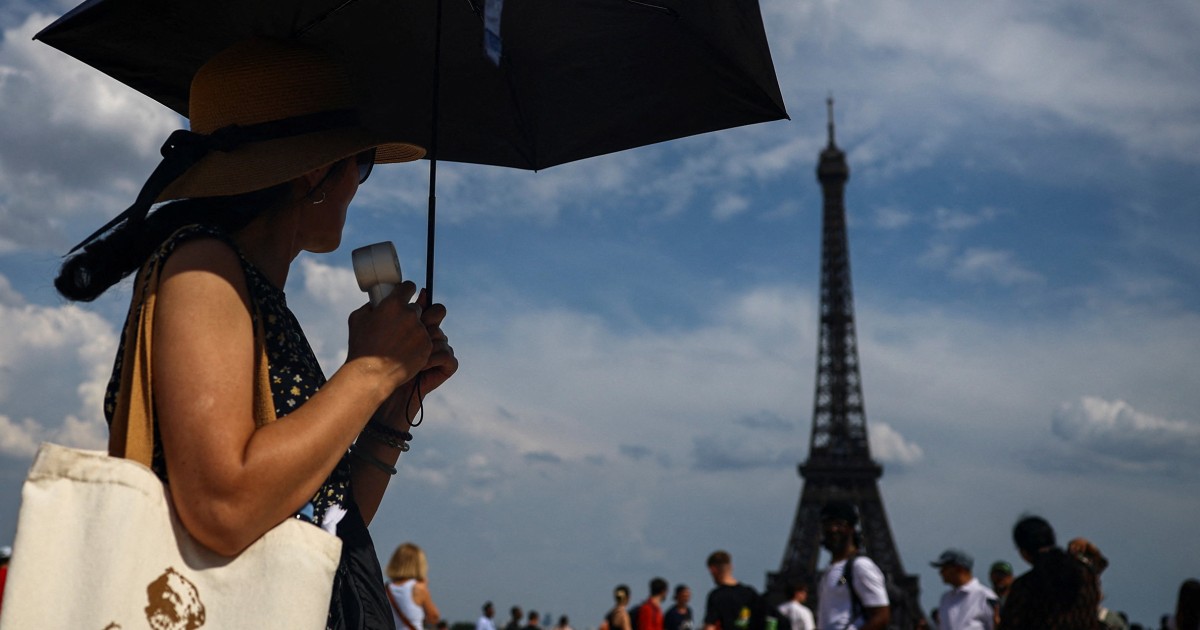
France set a national heat record on Wednesday, June 24, 2026, as temperatures soared to 44.3°C (111.7°F) in the southwest, while a power outage left tens of thousands without electricity and major tourist sites closed to prevent overheating. Authorities warned of further record-breaking heat, with Europe’s second major heat dome of the year intensifying risks across the continent.
How France Broke Its Heat Record — And Why It Matters
Météo France reported that the national thermal indicator—a daily average across 30 weather stations—hit 29.8°C, the highest ever recorded. The heat wave, which has already killed at least 48 people in France since Monday, including two children who died from exposure in a locked car, underscores the growing threat of extreme weather.
According to NBC News, the temperatures surpassed the previous record of 44.1°C set in 2003, a year that saw an estimated 80,000 excess deaths across Europe. This year’s heat wave is part of a broader pattern: Europe is warming faster than any other continent, at twice the global average since the 1980s, per the European Union’s Copernicus Climate Change Service.
The heat has forced closures of iconic landmarks. The Eiffel Tower shut down for a second day, while the Louvre is closing two hours early through Saturday, citing “heat buildup” intensified by visitor numbers. “Although parts of its historic building are naturally resilient, the museum remains vulnerable and is not sufficiently adapted to climate change,” officials said.
Tourists like Dom Caruso, 45, described conditions as “unbearably hot,” noting that even indoor spaces like hotels offer little relief. “It’s just ridiculous, you can’t seem to escape it,” he told NBC News.
For more on this story, see Doku prioritizes newborn over World Cup: Belgium’s striker faces backlash for leaving 2026 camp.
Power Outages and the Strain on Infrastructure
A heat-related incident in western France left around 68,000 homes without electricity, with restoration expected no earlier than Thursday. The outage, linked to a transformer failure in Ergué-Gabéric, has prioritized healthcare facilities and nursing homes, which are being supplied with generators. According to CNBC, France’s nuclear output was also reduced by 4.1 gigawatts due to high temperatures limiting access to cooling water.

The power crisis comes as schools and transportation systems across Europe face disruptions. The U.K. closed over 1,000 schools, while similar red alerts were issued in Spain, Italy, Germany, and Switzerland. In France, temperatures in Bordeaux reached 42.1°C, further straining an already fragile grid.
Météo France’s warning that “further record-breaking temperatures are expected” suggests this is not a one-off event. The heat dome, which has already caused at least 40 drowning deaths in unsupervised swimming areas, is part of a pattern of extreme weather that scientists link to climate change.
Tourism in Crisis: Iconic Sites Close as Heat Becomes Unbearable
The Eiffel Tower’s closure on Tuesday and Wednesday—followed by the Louvre’s early shutdown—reflects a broader trend: Europe’s tourism industry is buckling under the heat. Visitors without tickets were explicitly told to postpone plans, while those with reservations received automated updates. “Visitors without tickets are asked to postpone their visit,” the Eiffel Tower’s website stated.
The Louvre’s decision to close early highlights the structural vulnerabilities of historic buildings. “Heat buildup is greatest toward the end of the day and is further intensified by high visitor numbers,” officials explained. The museum’s resilience is being tested as temperatures remain dangerously high.
Tourists like the Caruso family, who flew from Detroit to experience Paris, are adapting on the fly. “We’re experiencing an episode of exceptional intensity,” French Prime Minister Sébastien Lecornu said Tuesday. The heat wave has forced a reckoning: in a city known for its charm, the inability to escape the heat is reshaping travel plans.
What Comes Next: More Heat, More Disruptions
Météo France’s forecast of “further record-breaking temperatures” suggests this heat wave is far from over. The agency warned that some temperatures could surpass all previous records, regardless of the time of year. This aligns with broader scientific warnings that Europe’s climate is shifting faster than global averages.
This follows our earlier report, US Strikes Iranian Radar Sites Amid Drone Crisis.
For now, the focus remains on immediate relief: restoring power, cooling vulnerable populations, and managing the fallout from closed attractions. But the long-term question looms: how will Europe adapt to a future where such heat waves become the norm?
The answer may lie in infrastructure upgrades, public health preparedness, and a fundamental rethinking of how cities and tourist sites operate under extreme conditions. For now, the message is clear: Europe’s heat record has been broken, and the consequences are just beginning to unfold.
Sources: <a href="https://www.nbcnews.
<!– /wp:paragraph As the continent grapples with these rising temperatures, authorities must now prioritize long-term sustainability measures to protect both residents and visitors against the increasing frequency of these dangerous weather events.Find more reporting in our World section.
