
A new ceasefire between Israel and Hezbollah remains fragile in Lebanon as residents of the ancient city of Tyre face extensive infrastructure destruction and ongoing uncertainty. Despite the agreement, residents continue to report Israeli military activity, while diplomatic talks involving the U.S. and Iran move slowly toward addressing the broader regional conflict.
Destruction and Displacement in Tyre
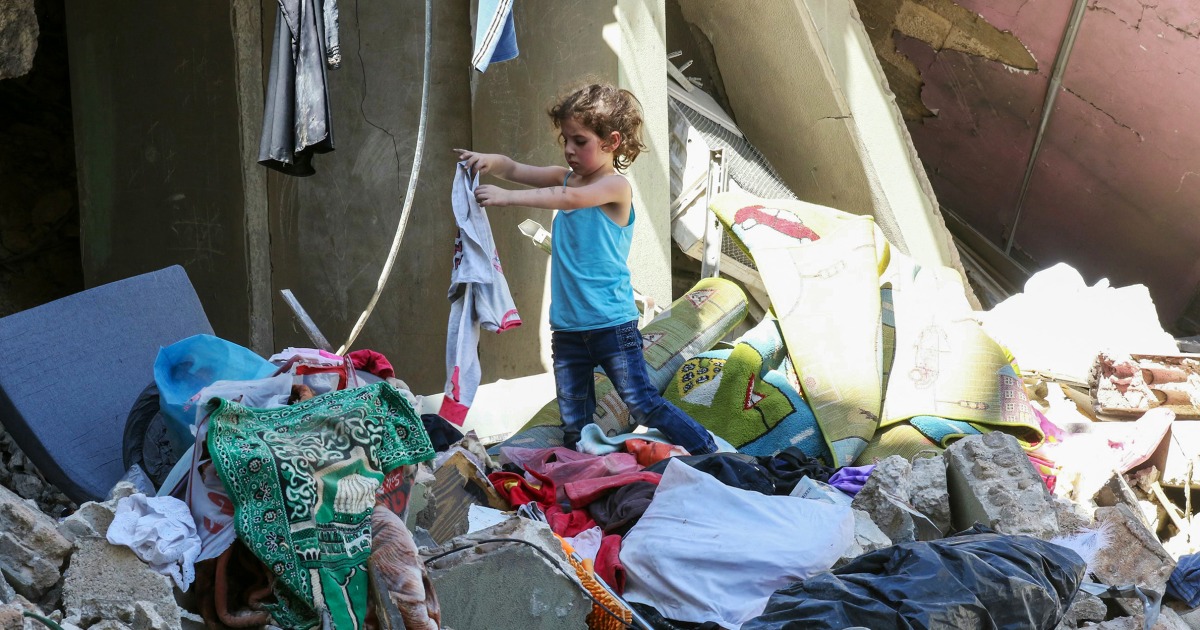
In Tyre, one of Lebanon’s largest coastal cities, the landscape is scarred by weeks of intense bombardment. According to AP News, the city, which typically thrives on tourism and its status as a UNESCO World Heritage site, currently resembles a ghost town. Residential neighborhoods are filled with rubble, and iconic Roman ruins—including columns and ancient stone roads—have sustained significant damage from nearby strikes.

The human toll is equally stark. Displaced families are living in tents in parking lots that once served beachgoers, and local businesses have largely shuttered. Ali Bazzi, a 31-year-old resident whose home in the nearby town of Toura was destroyed, remains in Tyre living on a boat, skeptical of the current truce. As reported by NPR, Bazzi and others continue to hear the hum of drones overhead, fueling fears that the ceasefire is more theoretical than practical.
“Every day they tell us there’s a truce or ceasefire. Where is this truce? We can’t see it.”
Ali Bazzi, resident of Tyre
Diplomatic Strains and Military Realities
While the ceasefire attempts to hold, military actions have continued to test the agreement. NBC News reports that the Israeli military conducted over 150 strikes in Lebanon within a 24-hour window, citing the deaths of four Israeli soldiers as a breach of the deal. Prime Minister Benjamin Netanyahu has explicitly stated that Israel will maintain a security zone in southern Lebanon for as long as necessary to protect its northern borders.
The diplomatic friction extends to Tehran. Ebrahim Rezaei, a spokesperson for Iran’s national security commission, warned that Iran would not remain bound by the U.S.-brokered agreement if Israel continues its campaign against what he described as the “resistant people of southern Lebanon.” This tension has complicated broader negotiations, with Iran’s military stating it remains ready to act if they perceive a breach of commitments by Israel.
The role of international mediators remains central to the implementation of the ceasefire. Under the terms typically associated with United Nations Security Council resolutions concerning the Lebanon-Israel border, such as Resolution 1701, the presence of armed groups other than the Lebanese state and UNIFIL (the United Nations Interim Force in Lebanon) south of the Litani River is prohibited. The current conflict has highlighted the ongoing difficulty in enforcing these boundaries, as both Israel and Hezbollah maintain conflicting interpretations of their rights to self-defense and military positioning within the border zone.
Heritage Under Threat
The physical destruction in Tyre has drawn concern from preservationists, as the city’s 5,000-year-old history is caught in the crossfire. Adnan Istanbuli, an employee at the Lebanese Directorate General of Antiquities, noted the gravity of the situation as officials await an inspection of the damaged UNESCO sites.
“The city of Tyre is 5,000 years old, and what happened to it is huge.”
Adnan Istanbuli, Lebanese Directorate General of Antiquities
The status of Tyre as a UNESCO World Heritage site grants it a measure of international protection under the 1954 Hague Convention for the Protection of Cultural Property in the Event of Armed Conflict. However, the practical application of this protection is often limited when infrastructure used by combatants is situated in close proximity to historical sites. The Lebanese government has previously sought international pressure to prevent further strikes near these zones, citing the irreversible nature of damage to archaeological treasures that date back to Phoenician, Roman, and Crusader eras.
Beyond the antiquities, environmental concerns are rising. The shoreline in Mansouri, a critical wildlife preserve for sea turtles, sits just south of the city and has been impacted by the regional instability. For the residents who remain, the wait for a permanent resolution is defined by the sound of jets and the sight of blackened, concrete-dusted trees.
Economic and Maritime Implications
The conflict has also had ripple effects on global trade through the Persian Gulf. A 14-point memorandum of understanding between the U.S. and Iran aims to reopen the Strait of Hormuz to alleviate pressure on oil and gas markets. According to the Persian Gulf Strait Authority, transit fees are being waived during the 60-day negotiation period to encourage traffic, though recent data shows only a trickle of ships moving through the waterway.
The Strait of Hormuz is a critical global chokepoint, through which approximately one-fifth of the world’s oil consumption passes daily. The involvement of regional powers in the current diplomatic talks reflects the high stakes for global energy security. Any prolonged closure or instability in this maritime lane historically drives up insurance premiums for shipping companies and complicates the logistics of global energy supply chains, forcing international markets to adapt to the volatility of the Levant and the Persian Gulf simultaneously.
As of late June 2026, the situation remains fluid. While diplomatic channels in Switzerland aim to stabilize the country, the reality on the ground in southern Lebanon suggests that the path to a lasting peace is heavily dependent on the adherence of both Israeli and Hezbollah forces to commitments that have, thus far, been repeatedly challenged.
Find more reporting in our World section.
