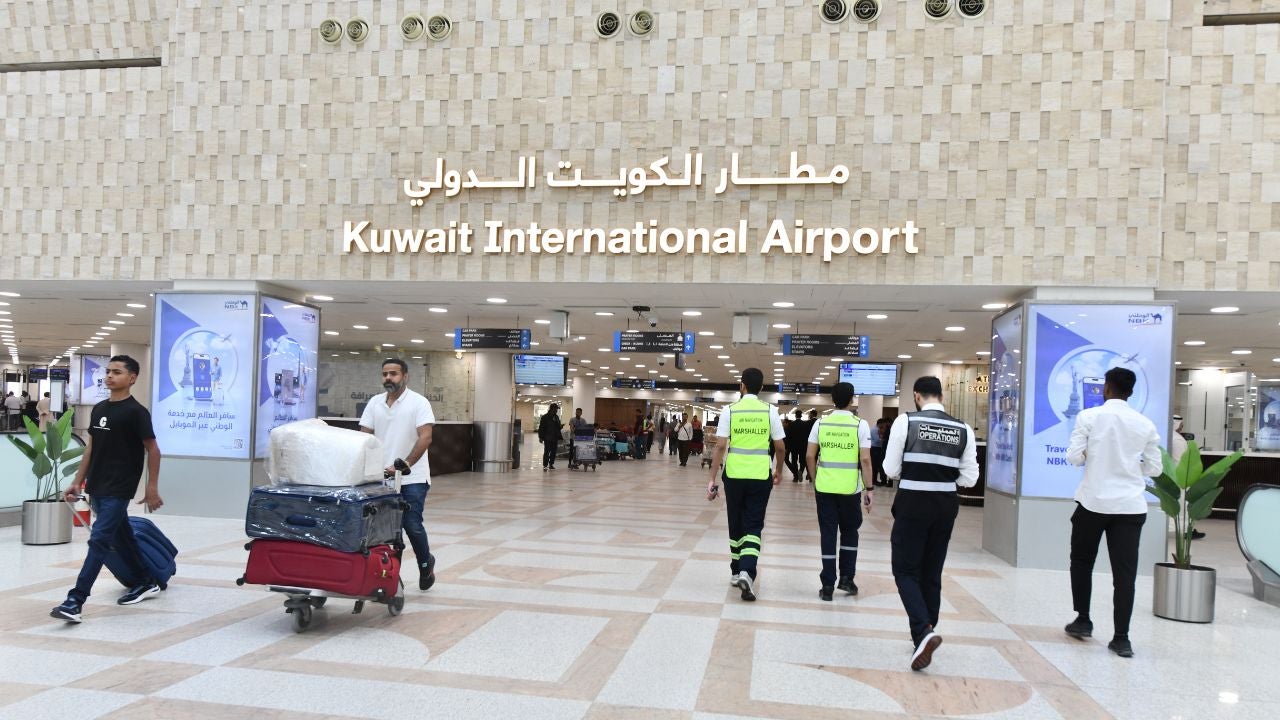
The Middle East’s fragile ceasefire is unraveling as Iran’s latest strike on Kuwait’s airport — killing one and wounding dozens — exposes the limits of U.S. diplomacy in the region. With Lebanese-Israeli talks stalling and Hezbollah defying a U.S.-brokered truce, Washington’s leverage over its allies is eroding even as President Trump insists negotiations with Iran remain “ongoing.”
Kuwait Airport Attack: One Dead, Dozens Injured in Iran’s Deadliest Strike Yet
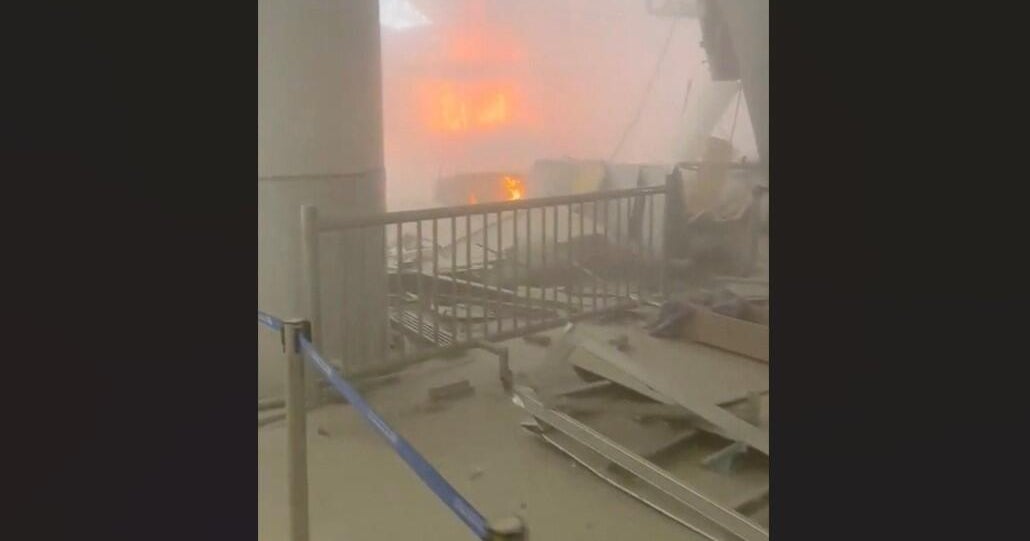
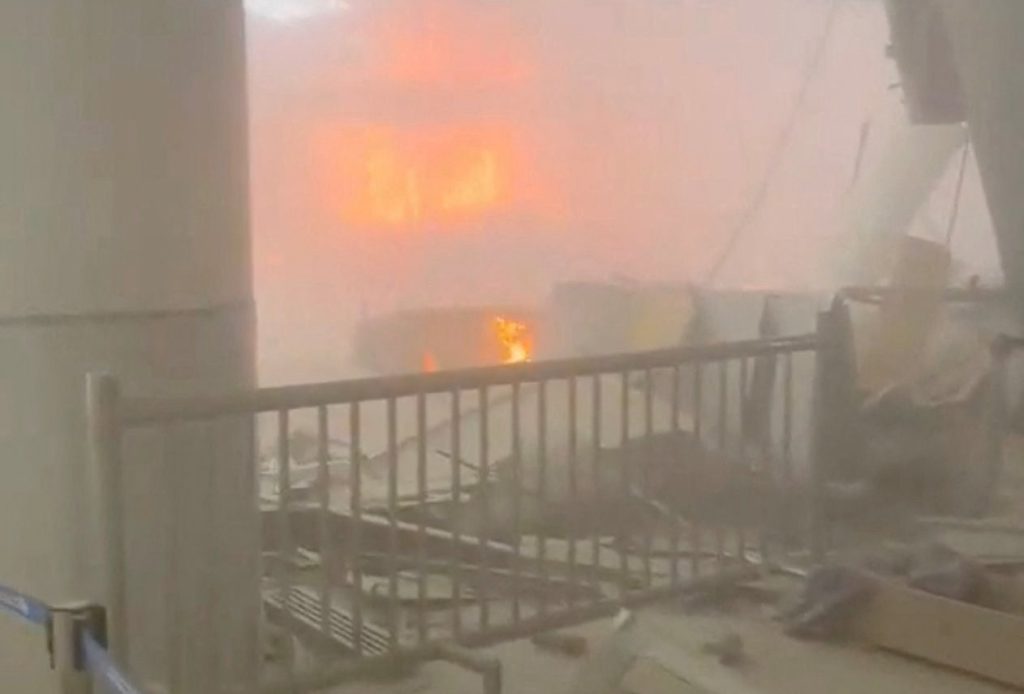
Iran’s direct assault on Kuwait International Airport Wednesday — the first major strike on a civilian facility since the U.S.-led war began in February — marks a dangerous escalation in the conflict. A passenger terminal was heavily damaged by drones, killing an Indian national and injuring 63 others, according to Kuwait’s Defense Ministry, which reported downing “a number of hostile drones” and over a dozen missiles. The attack forced the airport to briefly shut down, disrupting travel in a Gulf region already strained by months of proxy warfare.
The strike came hours after U.S. forces intercepted Iranian missiles targeting Bahrain, where the U.S. Navy’s 5th Fleet is based. The Pentagon confirmed that two Iranian missiles “fell apart en route to Kuwait,” while U.S. and Bahraini forces “downed multiple drones” aimed at American personnel. The dual attacks underscore Iran’s ability to project power across the Gulf despite U.S. countermeasures, including a blockade of Iranian ports and control of the Strait of Hormuz — a chokepoint for global oil shipments.
Kuwait’s Foreign Ministry responded by expelling two Iranian diplomats, a rare but escalatory move that signals Gulf states are no longer tolerating indirect attacks on their soil. “We will neither accept nor tolerate these attacks,” a ministry spokesperson stated, framing the expulsions as a firm warning to Tehran. The move aligns with Saudi Arabia’s recent decision to cut ties with Iran’s diplomatic missions, though Kuwait has historically avoided direct confrontation with its northern neighbor.
Saudi Arabia’s Foreign Minister, Prince Faisal bin Farhan Al Saud, condemned the attack in a statement released Wednesday, calling it “a flagrant violation of international law and regional stability.” The Saudi statement added that Riyadh would “coordinate with its Gulf partners to respond collectively to any further aggression,” a reference to potential military or diplomatic measures through the Gulf Cooperation Council (GCC). Meanwhile, the UAE’s Ministry of Foreign Affairs issued a similarly stern response, urging “all parties to exercise maximum restraint and avoid actions that could escalate tensions.”
Iran’s Islamic Revolutionary Guard Corps (IRGC) did not immediately claim responsibility for the attack, but a senior IRGC official, Brigadier General Ramezan Sharif, told state media that the strike was a “measured response” to U.S. actions in the region. “The U.S. and its regional allies must understand that our red lines will not be crossed with impunity,” Sharif stated. The IRGC’s restraint in claiming responsibility contrasts with past attacks, where Tehran’s proxies or state-linked media have taken credit for strikes on U.S. forces in Iraq and Syria.
Kuwait’s Crown Prince, Sheikh Mishal Al-Ahmad Al-Jaber Al-Sabah, convened an emergency meeting of the country’s National Security Council within hours of the attack. According to a statement from the Kuwaiti royal court, the council “reaffirmed the state’s commitment to defending its sovereignty and territorial integrity” and directed the military to “enhance air defense capabilities in coordination with allied forces.” The meeting followed a similar emergency session in Saudi Arabia, where King Salman bin Abdulaziz Al Saud ordered a review of the kingdom’s defense posture in response to the escalation.
U.S. Central Command (CENTCOM) confirmed that American forces in the region had intercepted “multiple ballistic missiles and unmanned aerial systems” targeting Kuwait and Bahrain. In a statement, CENTCOM spokesperson Colonel Robert Manning noted that the intercepts were conducted using “Patriot, THAAD, and other integrated air and missile defense systems,” highlighting the layered defense strategy in place. However, the fact that the Kuwait airport strike still caused casualties and damage raised questions about the effectiveness of these systems, particularly as Iran continues to deploy more sophisticated drones and missiles.
The International Civil Aviation Organization (ICAO) issued a safety notice Wednesday warning airlines to avoid Kuwaiti airspace “due to ongoing military operations,” a rare step that underscores the severity of the disruption. The ICAO statement cited “unpredictable and potentially hazardous conditions” in the region, prompting major carriers like Emirates, Qatar Airways, and Kuwait Airways to reroute flights. The disruption comes at a critical time for Kuwait, which relies on its airport for both commercial and humanitarian operations, including the transport of medical supplies and personnel.
In a closed-door meeting Wednesday, the GCC’s Supreme Council, chaired by Saudi Arabia, discussed the Kuwait attack and potential collective responses. While no official statement has been released, diplomatic sources in Abu Dhabi told Reuters that Gulf states are considering “unprecedented measures,” including the deployment of additional U.S. missile defense systems and the possibility of joint military exercises to deter further Iranian aggression. The sources emphasized that the GCC would not rule out “direct retaliation” if Iran escalates, though they stressed a preference for coordinated action through the U.S.
Hezbollah’s Ceasefire Violations Threaten Lebanon Talks — And U.S. Diplomacy
While Iran’s strike on Kuwait dominated headlines, the real flashpoint remains Lebanon, where Hezbollah’s repeated violations of a U.S.-brokered ceasefire are testing Washington’s ability to manage its allies. Secretary of State Marco Rubio revealed Wednesday that Lebanese authorities had approached the U.S. with an offer: if Israel halted strikes in Beirut, Hezbollah would pause its rocket attacks on northern Israel. The deal held for hours — until Hezbollah launched two waves of rockets, scuttling the fragile truce.
“As I speak to you now, for the second consecutive day, and for the first time in many, many years, the leaders of the legitimate government of Lebanon and leaders from the government of Israel for the second day in a row…”
— Marco Rubio, via Fox News
Rubio’s remarks came during a briefing with reporters, where he also revealed that the U.S. had proposed a “three-phase de-escalation plan” to Lebanese officials, including an immediate halt to Hezbollah’s rocket fire, followed by Israeli restraint, and culminating in a broader political settlement. However, Hezbollah’s Secretary-General, Hassan Nasrallah, dismissed the U.S. proposal in a televised address Wednesday night, calling it “a ploy to weaken Lebanese resistance.” Nasrallah added that Hezbollah would continue its operations “until Israel withdraws from all occupied territories,” a position that directly contradicts Israel’s stated red lines.
Lebanon’s caretaker Prime Minister, Najib Mikati, who has been engaged in indirect talks with Israel through U.S. mediators, issued a statement Thursday calling for “an immediate ceasefire” and urging Hezbollah to “exercise restraint.” Mikati’s office confirmed that he had spoken with Rubio earlier in the day, but the prime minister’s calls for restraint were met with skepticism by Hezbollah’s political allies in Lebanon’s parliament. A senior member of the Free Patriotic Movement (FPM), a Hezbollah-aligned bloc, told Al Jazeera that Mikati’s statement was “a betrayal of Lebanon’s sovereignty” and that the government should not interfere in Hezbollah’s military decisions.
Israel’s military, meanwhile, reported that Hezbollah had launched at least 47 rockets toward northern Israel Wednesday night, forcing the evacuation of civilians from border towns near the Litani River. The Israeli Defense Forces (IDF) responded with airstrikes targeting Hezbollah’s rocket launch sites in southern Lebanon, including a precision strike on a command-and-control center near the town of Marjayoun. An IDF spokesperson stated that the strikes were “proportionate and aimed at degrading Hezbollah’s operational capabilities,” but the escalation raised concerns among U.S. officials that Israel was moving beyond the “red lines” agreed upon in the failed ceasefire talks.
In a rare public rebuke, U.S. National Security Advisor John Bolton issued a statement Thursday expressing “grave concern” over Israel’s strikes in Lebanon. Bolton’s statement, released through the National Security Council, noted that “unilateral actions by any party risk derailing the fragile diplomatic process” and called for “immediate restraint.” The statement marked a sharp contrast with Bolton’s previous support for Israel’s military campaign in Gaza, signaling a shift in the administration’s approach as the Lebanon crisis deepens.
Israel’s Prime Minister Benjamin Netanyahu dismissed recent U.S. criticism of his Lebanon strategy as “typical of even the best of families,” referring to President Trump’s reported remark that he had called Netanyahu “crazy” during a tense phone call. Netanyahu’s response — delivered in an interview with CBS News — framed the dispute as a minor tactical disagreement, not a rift.
“Sometimes, as in the best of families, we have these tactical disagreements. We always find a way to work them out. We can disagree in the morning, and we have a common action by the afternoon.”
— Benjamin Netanyahu, via CBS News
However, behind the scenes, U.S. officials have expressed growing frustration with Netanyahu’s approach. According to a senior State Department official who spoke on condition of anonymity, Trump had privately told Netanyahu that Israel’s strikes in Lebanon were “provoking Hezbollah into actions that make a political solution impossible.” The official added that the administration was considering “secondary sanctions” on Israeli defense contractors involved in the Lebanon campaign, though no formal decision has been made.
The Lebanese-Israeli talks in Washington, set for Wednesday, now carry even greater weight, as mediators scramble to prevent further escalation. The talks were originally scheduled to include Lebanese officials, Israeli representatives, and U.S. envoys, but sources close to the negotiations told the Wall Street Journal that Hezbollah’s latest rocket attacks have made Israel reluctant to engage in substantive discussions. An Israeli delegation, led by National Security Advisor Meir Ben-Shabbat, has reportedly instructed mediators to focus on “de-escalation measures” rather than broader political solutions.
Meanwhile, Hezbollah’s political allies in Lebanon have intensified pressure on Mikati’s government to reject any ceasefire terms that do not include Israel’s withdrawal from the Shebaa Farms region, a disputed territory claimed by Lebanon. A resolution introduced Thursday in Lebanon’s parliament by Hezbollah’s allies called for the government to “reject any ceasefire that does not guarantee Lebanon’s full rights over its territories.” The resolution passed with overwhelming support, further complicating Mikati’s efforts to negotiate with Israel.
Trump’s “Diplomatic Pressure” Faces Reality Checks
Trump’s optimism about resolving the Iran conflict through negotiations contrasts sharply with the on-the-ground chaos. While the president insists talks are “ongoing,” regional officials suggest Iran is using the Kuwait attack as leverage to demand a separate ceasefire in Lebanon before returning to the table. A PBS report cited a regional official stating that Iran wants Lebanon’s conflict resolved first — a position that would force the U.S. to choose between its Gulf allies and its Israeli partner.
The Kuwait airport strike also exposed a critical vulnerability: the U.S. military’s ability to defend its partners is being tested. While the Pentagon confirmed intercepting missiles and drones, the attack still caused casualties and infrastructure damage. This raises questions about whether the U.S. can sustain a long-term blockade of Iranian ports and the Strait of Hormuz without provoking further retaliation. Global fuel prices, already elevated by the conflict, could spike further if Iran escalates.
Trump’s approach — relying on “tough negotiations” rather than military force — reflects a shift from his previous administration’s “maximum pressure” strategy. But with Iran’s proxies (Hezbollah, Houthis, Iraqi militias) continuing to strike U.S. interests, the question remains: how much pressure is enough? The Kuwait attack suggests Iran’s calculus is simple: the more the U.S. pushes, the more it will strike back — not directly, but through its network of allies.
Iran’s Supreme Leader, Ayatollah Ali Khamenei, addressed the escalation in a speech Thursday, warning that “the U.S. and its regional puppets must understand that our resistance is not a game.” Khamenei’s remarks came as Iranian lawmakers debated a bill that would expand the IRGC’s authority to conduct “offensive operations” against U.S. forces in the region. The bill, introduced by hardline lawmaker Mohammad Hejazi, would allow the IRGC to “target American bases and personnel” without prior approval from the Iranian government, a move that could further destabilize the region.
In response, the U.S. Treasury Department announced Thursday that it had imposed sanctions on three IRGC-affiliated entities linked to the Kuwait airport attack. The sanctions, imposed under Executive Order 13846, target the IRGC’s Quds Force, which is responsible for overseas operations, as well as two Iranian companies accused of supplying drones used in the strike. Treasury Secretary Steven Mnuchin stated that the sanctions were “a direct response to Iran’s aggression” and warned that further actions would be taken if Iran escalates.
However, the sanctions have drawn criticism from Gulf states, who argue that they do little to deter Iran’s proxy attacks. A senior official in the UAE’s Ministry of Foreign Affairs told Reuters that “sanctions alone cannot stop Iran’s regional adventurism,” and called for a “unified military and diplomatic response” from the international community. The official added that the UAE was exploring “alternative security guarantees” with Russia and China, a move that could weaken Gulf states’ reliance on U.S. protection.
Meanwhile, the European Union’s High Representative for Foreign Affairs, Josep Borrell, issued a statement Thursday urging “all parties to de-escalate tensions” and calling for a return to diplomatic negotiations. Borrell’s statement marked the EU’s first public response to the Kuwait attack, though it stopped short of condemning Iran directly. A senior EU diplomat told The Financial Times that the bloc was “divided” on how to respond, with some member states advocating for stronger action against Iran, while others feared escalating the conflict.
In a closed-door meeting Thursday, the UN Security Council discussed the Kuwait attack, with Russia and China blocking a draft resolution that would have condemned Iran’s actions. A diplomatic source familiar with the meeting told the New York Times that Russia and China argued that the resolution was “one-sided” and failed to address Israel’s strikes in Lebanon. The source added that Russia had proposed an alternative resolution calling for “restraint from all parties,” but the U.S. and its allies rejected it as insufficient.
Trump’s administration has also faced internal divisions over how to respond to the escalation. According to a report in The Washington Post, some senior officials, including CIA Director Gina Haspel, have urged the president to “prepare for a broader regional war,” arguing that Iran’s proxies are becoming emboldened by the lack of a unified U.S. response. Haspel reportedly warned that if the Kuwait attack is not met with a “decisive countermeasure,” Iran could launch further strikes on U.S. forces in Iraq and Syria.
In contrast, Secretary of Defense Mark Esper has advocated for a more measured approach, emphasizing the need to “avoid actions that could trigger an unintended escalation.” Esper’s position aligns with Trump’s preference for negotiations, but it has frustrated hawks in the administration who believe a stronger military response is necessary. A senior Pentagon official told The Wall Street Journal that Esper’s stance has led to “internal friction” within the National Security Council, where some officials are pushing for a “limited strike” on Iranian proxy forces in Syria.
What Comes Next: Three Scenarios for the Next 30 Days
The next critical juncture will be the Lebanese-Israeli talks in Washington. If they fail, the risk of a wider regional war increases.
- Limited De-escalation: A fragile ceasefire holds in Lebanon, but Hezbollah continues low-level attacks. Iran avoids direct strikes on U.S. forces but escalates proxy attacks in Yemen and Iraq.
- Regional War: Israel expands strikes into southern Lebanon, triggering Hezbollah’s full-scale retaliation. Gulf states retaliate against Iranian targets, drawing Iran into direct conflict with the U.S.
- Diplomatic Breakthrough: The U.S. secures a temporary truce in Lebanon and Iran agrees to limited nuclear concessions in exchange for sanctions relief. Unlikely, but possible if Trump’s negotiations gain momentum.
The most immediate concern is Iran’s response to the Kuwait attack. If Tehran sees the strike as insufficient retaliation for U.S. actions, it may target American forces in Iraq or Syria next. Meanwhile, the U.S. faces a dilemma: does it escalate military pressure on Iran, risking a broader war, or double down on diplomacy while its allies bear the brunt of the conflict?
In Iraq, where U.S. forces have been targeted by Iranian-backed militias, the situation is particularly volatile. The Iraqi government, led by Prime Minister Mustafa al-Kadhimi, has issued a statement calling for “maximum restraint” from all parties, but Iranian-backed groups such as Kata’ib Hezbollah have vowed to continue attacks on U.S. bases. A senior Iraqi security official told Al-Monitor that the government was “walking a tightrope,” balancing pressure from Iran and the U.S. to avoid being drawn into the conflict.
In Yemen, the Houthi movement, another Iranian proxy, has also escalated its attacks on Saudi Arabia and the UAE. The Houthis launched a wave of drone and missile strikes on Saudi oil facilities Wednesday, forcing the kingdom to temporarily shut down production at key sites. Saudi Energy Minister Prince Abdulaziz bin Salman stated that the attacks were “a clear violation of international law” and warned that Riyadh would respond “with all necessary measures.” The UAE’s Ministry of Defense confirmed that Houthi drones had also targeted Abu Dhabi’s international airport, though no casualties were reported.
In Syria, where U.S. forces have been engaged in a separate conflict with Iranian-backed groups, the situation is equally tense. The Syrian Democratic Forces (SDF), backed by the U.S., have reported increased activity by Iranian militias in eastern Syria, particularly near the Iraqi border. A spokesman for the SDF told Reuters that Iranian forces were “massing near Deir ez-Zor” and that the group was preparing for potential clashes. The U.S. military has deployed additional troops to the region, though officials have not confirmed whether they are in response to the Kuwait attack.
China’s role in the escalation has also come under scrutiny. Beijing has maintained a neutral stance, calling for “dialogue and restraint,” but Chinese state media has increasingly framed the conflict as a “U.S.-led provocation.” A commentary in the Global Times, a newspaper affiliated with the Chinese Communist Party, accused the U.S. of “escalating tensions for its own geopolitical interests.” The commentary added that China would “continue to engage with all parties” to de-escalate the crisis, but it stopped short of condemning Iran’s actions.
Russia, meanwhile, has taken a more overtly pro-Iran stance. Russian Foreign Minister Sergey Lavrov stated Thursday that the Kuwait attack was “a direct consequence of U.S. aggression in the region” and called for an immediate ceasefire. Lavrov’s remarks came as Russian military advisors in Syria have reportedly increased their coordination with Iranian forces, raising concerns among U.S. officials that Moscow could be facilitating Iranian attacks on American positions.
The Bigger Picture: Why This Matters Beyond the Middle East
The Kuwait airport attack is more than a single incident — it’s a symptom of a failing U.S. strategy in the Middle East. The Biden administration’s approach of containing Iran through sanctions and proxy wars has left the region more volatile than ever. Trump’s return to office has brought a shift toward direct negotiations, but his administration’s ability to deliver results remains unproven.
For Gulf states like Kuwait, the attack is a wake-up call: the war is no longer confined to battlefields but is spilling into civilian spaces. The airport strike could accelerate Gulf states’ push for a more robust U.S. military presence — or, conversely, drive them toward closer ties with Russia and China if they perceive Washington as unreliable.
Ultimately, the coming weeks will determine whether the U.S. can maintain its alliances while negotiating with Iran. If the ceasefire in Lebanon collapses, the risk of a wider regional war — one that could draw in Saudi Arabia, Turkey, and even Europe — will rise sharply. The Kuwait airport strike was a warning shot. The question is whether anyone in Washington is listening.
The broader implications of the escalation were highlighted Thursday by the International Energy Agency (IEA), which warned that global oil markets could face “severe disruptions” if the conflict spreads to the Strait of Hormuz. The IEA’s executive director, Fatih Birol, stated that “any further escalation in the Gulf could push oil prices to unprecedented levels,” potentially triggering a global economic crisis. The warning came as oil prices surged to their highest levels since 2019, with Brent crude exceeding $70 per barrel.
In a separate development, the World Health Organization (WHO) issued a statement Thursday expressing concern over the humanitarian impact of the conflict on Lebanon, where hospitals and medical facilities are already overwhelmed by the economic crisis. The WHO’s regional director for the Eastern Mediterranean, Ahmed Al-Mandhari, warned that “the escalation in Lebanon risks collapsing an already fragile healthcare system,” particularly in areas near the Israeli-Lebanese border. The statement called for “immediate humanitarian corridors” to ensure the safe passage of medical supplies and personnel.
Diplomatic efforts to de-escalate the crisis have also extended to the United Nations, where Secretary-General António Guterres convened an emergency meeting of the Security Council Thursday. Guterres urged all parties to “exercise maximum restraint” and called for a return to negotiations. However, the meeting ended without a unified statement, as Russia and China again blocked a U.S.-drafted resolution condemning Iran. A UN diplomat told Reuters that the lack of consensus “reflects the deep divisions” within the Security Council and warned that the crisis could “spiral out of control” without immediate action.
In a final sign of the escalation’s reach, the European Union’s foreign policy chief, Josep Borrell, announced Thursday that the EU would deploy a naval task force to the Gulf to “deter further aggression.” The task force, to be led by France and Italy, will include warships equipped with missile defense systems and is expected to be operational within 30 days. Borrell stated that the deployment was “a clear message to Iran that the EU will not tolerate threats to international peace and security.” However, the move has drawn criticism from some EU member states, who argue that it could provoke Iran into further escalation.
The Kuwait airport attack and the unraveling ceasefire in Lebanon have exposed the fragility of the Middle East’s security architecture. With U.S. diplomacy under strain, regional allies divided, and Iran’s proxies growing bolder, the risk of a broader conflict looms larger than ever. The question now is whether the international community can act in time to prevent catastrophe.
