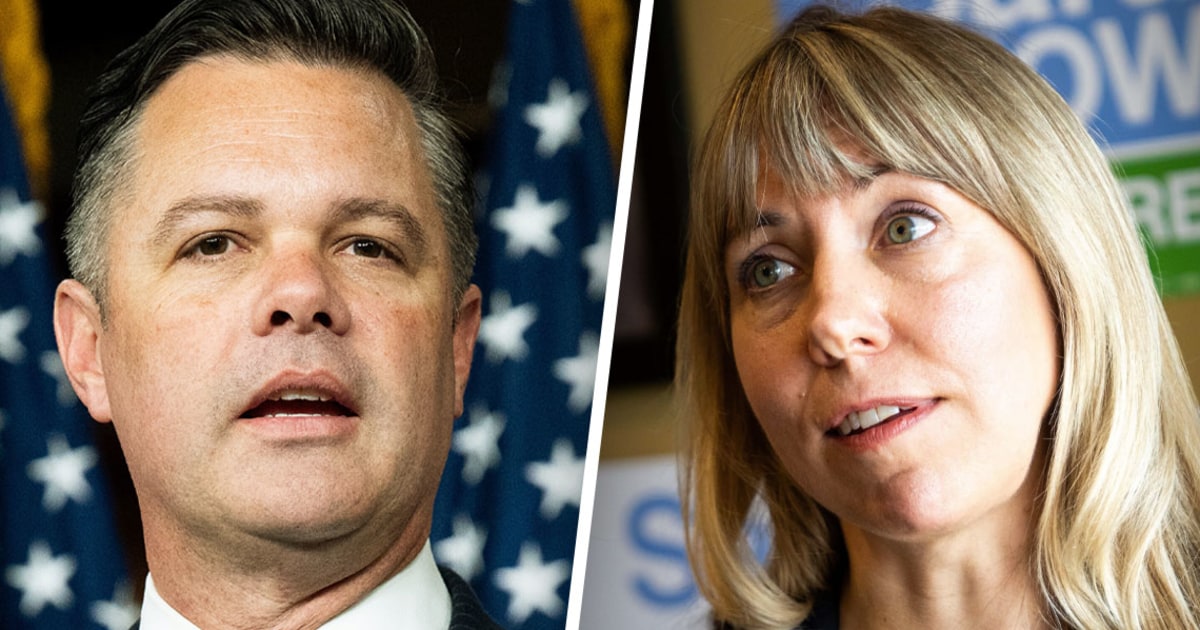
Iowa voters cast ballots in a series of high-stakes congressional and state primaries on Tuesday, June 2, 2026, solidifying general election matchups that will help determine control of the U.S. House. Incumbents and challengers secured nominations across the state’s four congressional districts, setting the stage for a competitive fall campaign cycle.
The Repeat Rematch: Miller-Meeks and Bohannan
The political landscape in Iowa’s 1st Congressional District remains locked in a familiar struggle. Republican incumbent Rep. Mariannette Miller-Meeks and Democratic nominee Christina Bohannan have secured their party’s nominations, ensuring a third consecutive general election confrontation between the two candidates. According to NBC News, the 2024 election between the pair was decided by only a few hundred votes, highlighting the intensity of the district’s swing-state status.
The primary results were decisive. In the GOP primary, Miller-Meeks defeated challenger David Pautsch with 72% of the vote, while Bohannan secured her spot on the Democratic ticket with 81.4% of the vote against Travis Terrell, as reported by KWQC. The financial divide between the candidates and their respective primary challengers was stark; Miller-Meeks and Bohannan have effectively cornered the available campaign capital. While the frontrunners have secured millions—$4.2 million for the incumbent and $4.3 million for the Democratic nominee—their primary opponents entered the race with significantly fewer resources, with Pautsch holding $9,900 and Terrell holding $5,000.
Policy Platforms and Legislative Records
As the candidates pivot to the general election, their platforms reflect divergent views on national and state-level policy. Bohannan, a law professor at the University of Iowa, has emphasized a platform focused on reducing economic burdens for constituents. KCCI reported that her priorities include ending specific tariff policies, lowering prescription drug costs, and implementing bans on hedge funds and private investors purchasing Iowa property. She has also pledged to support the extension of Affordable Care Act tax credits and the reversal of Medicaid cuts enacted through the 2025 “One, Big Beautiful Bill” act.

“One, Big Beautiful Bill.”
Mariannette Miller-Meeks, U.S. Representative
Miller-Meeks, an ophthalmologist and former director of the Iowa Department of Public Health, is framing her re-election campaign around her legislative record and support for policies established during the Trump administration. She has consistently promoted the “One, Big Beautiful Bill” as a central component of her economic and healthcare policy. Her legislative work has targeted Pharmacy Benefit Manager oversight and the expansion of association health plans as primary methods to address rising healthcare costs for Iowans.
Statewide Results and Secondary Races
Beyond the 1st District, the primary election reshaped the ballot for statewide and regional offices. In the race for governor, the Republican primary remained in a dead heat until late Tuesday night. Zach Lahn was ultimately declared the winner over Randy Feenstra, with both candidates hovering around 37% of the vote before the Associated Press called the race just before midnight. Lahn is now set to face Democratic nominee Rob Sand in the general election.
In the 2nd District, Lindsay James emerged as the Democratic nominee, defeating Kathy Dolter and Clint Twedt-Ball. James, a current state representative and Presbyterian pastor, brings a background in nonprofit leadership, including her time as director of the Loras College Peace Institute. Meanwhile, the 3rd District saw a less suspenseful path to the general election, as Democratic state Sen. Sarah Trone Garriott and GOP Rep. Zach Nunn faced no opposition in their respective primaries.
Implications for the Congressional Majority
The Iowa results underscore a broader national trend where party-line battlegrounds are becoming increasingly entrenched. With the 2nd District also potentially in play following the decision by Republican Rep. Ashley Hinson to vacate her seat for a Senate run, Iowa’s congressional delegation remains a critical focal point for national party strategists. The primary outcomes confirm that voters are continuing to lean into established party favorites, leaving little room for insurgent candidates to break through the financial and institutional barriers of the major parties.

As the calendar moves toward the fall elections, the focus for both the Miller-Meeks and Bohannan campaigns will shift toward mobilizing voters in a district that has proven to be one of the most closely contested in the country. With nearly all campaign funds consolidated among the frontrunners, the upcoming months will likely see an aggressive push to define these policy differences for an electorate that has already seen this matchup twice in the last four years.
