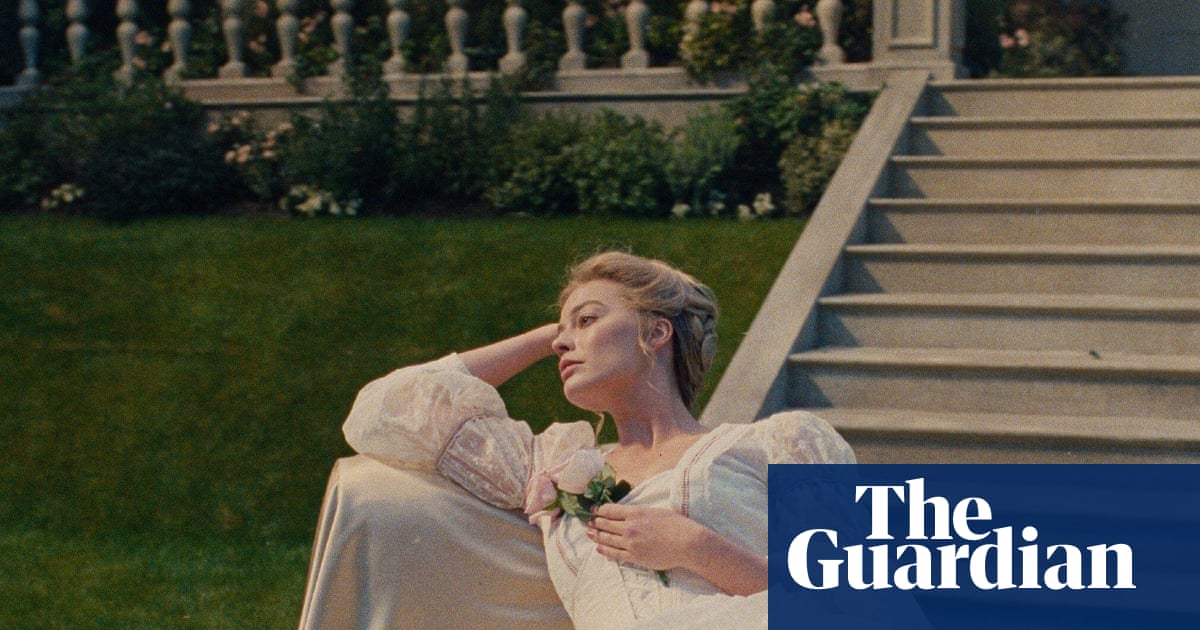
Director Emerald Fennell revealed this week that a scene featuring Margot Robbie’s character with unshaven underarms was cut from her 2026 adaptation of Wuthering Heights. Fennell, who directed the film, expressed regret over the decision, noting that the inclusion of body hair would have provided a more historically accurate portrayal of the period.
A Decision Driven by Historical Realism

The adaptation of Emily Brontë’s 1847 novel, which arrived in theaters this past February, has sparked conversation for its departure from traditional period-piece aesthetics. For Fennell, the choice to depict the protagonist, Cathy, with body hair was a deliberate attempt to challenge the sanitized standards often found in historical dramas. As reported by Yahoo, the director frequently found herself questioning the lack of natural grooming in other adaptations, such as those based on Jane Austen’s works.
“They’re all kind of hairless like eels. I’m like: ‘What’s going on? It’s completely mad.’” Fennell stated regarding the common aesthetic of period dramas.
Fennell noted that while hair removal methods existed for the nobility, the application of modern, clean-shaven beauty standards to 19th-century settings felt inconsistent with the reality of the era. According to The Guardian, the director emphasized that it was “so important to me” to show Cathy’s body hair as historically accurate, though the specific scene showing Robbie’s character with “extremely hairy armpits” ultimately did not make it into the final edit of the film. Fennell lamented the exclusion, noting that she was confused by the modern expectation of clean-shaven women in historical contexts, asking, “Where are the razors that these women are using?”
Creative Choices and the Infamous Fish Scene
While the armpit hair scene was discarded, the film remains noted for other provocative directorial choices. Fennell, speaking to an audience at the Hay Festival in Wales, addressed the film’s unique production design and specific moments that have drawn viewer attention. Among these is a scene where Cathy touches a dead fish, a moment Fennell described as an expression of the character’s stifled state.
As Yahoo Entertainment highlighted, the director explained that she wanted to capture the feeling of being “trapped” and “extremely sexually frustrated.” The production used a variety of fish, including real and fake versions, to achieve the desired effect. Regarding her broader philosophy on filmmaking, Fennell expressed a desire to embrace discomfort, stating that she wants to lean into “being embarrassing, being cringe” rather than settling for the “deadening ambivalence” she perceives in current culture.
A Departure from the Source Material

Fennell’s Wuthering Heights, starring Margot Robbie and Jacob Elordi, has been characterized by its willingness to deviate from the source text. The director has previously described her work as a “sister, not a twin” of the 1847 novel, acknowledging that she could not make a direct adaptation of such a “dense and complicated” book.
As detailed by Cinemablend, the film’s deviations—including the race of Heathcliff and the inclusion of contemporary production choices like the “skin room”—have been met with a mixture of reactions. Fennell has defended these shifts by explaining that her version represents the story she “remembered reading” as a teenager, where she wanted to explore narrative paths that never existed in the original text.
The film’s production and release have been marked by significant industry attention. Beyond the central performances of Robbie and Elordi, the supporting cast includes Hong Chau and Shazad Latif. The project represents a high-profile turn for the director, whose creative process involves significant focus on the visual language of the screen.
As the film continues to be discussed following its February release, the director is stepping back from the spotlight to focus on personal projects, including reading and puzzles, before eventually returning to what she teased as a “profoundly evil” new cinematic venture. The decision to remove the armpit hair scene remains a point of reflection for Fennell, serving as a case study in the tension between historical research and the final editorial process in contemporary filmmaking. The ongoing discourse surrounding these creative decisions underscores the film’s position as a polarizing entry in the recent slate of literary adaptations.
