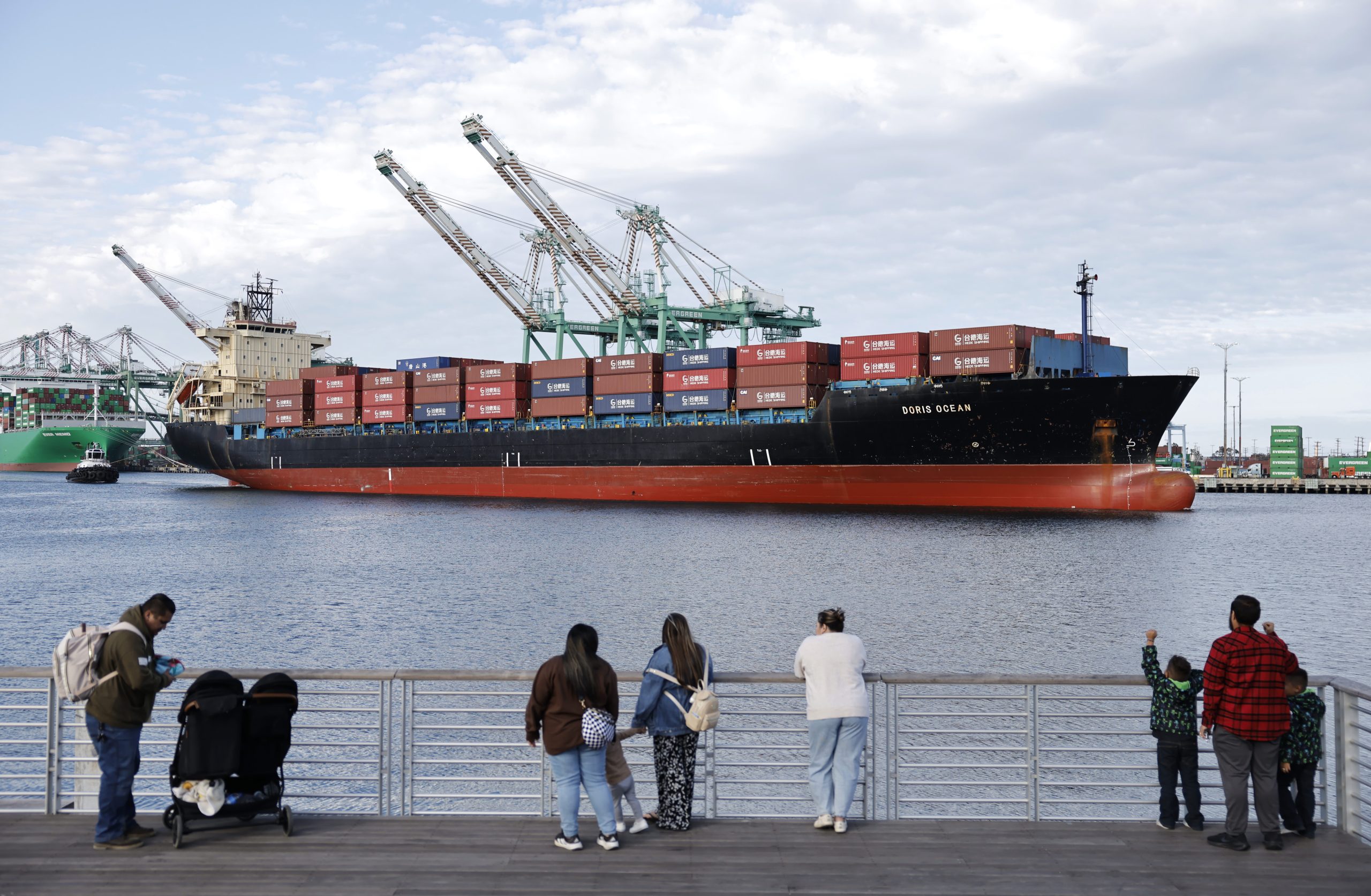
The U.S. Trade Representative’s office announced Wednesday a sweeping plan to impose new tariffs of 10% or more on imports from 60 economies—including China, the European Union, and Japan—citing their failure to ban goods produced with forced labor. The move, framed as a response to “unlevel playing fields” for American workers, marks the Trump administration’s latest escalation in trade policy, following a Supreme Court ruling that limited its earlier tariff authority.
A Global Tariff Blitz: Who’s on the Hit List and Why
The USTR’s proposal, released under Section 301 of the Trade Act of 1974, targets countries that have not effectively enforced prohibitions on forced labor imports.

- 10% tariff: Canada, Mexico, Taiwan, the United Kingdom, and other economies with partial or full bans on forced labor goods.
- 12.5% tariff: China, Japan, India, South Korea, Brazil, Switzerland, and dozens of other nations deemed non-compliant.
“The failure of our most important trading partners to address the importation of goods made with forced labor is unacceptable. This creates a dynamic where American workers are forced to compete globally on an unlevel playing field.”
Greer’s statement underscores the administration’s dual justification: economic protectionism and human rights enforcement. The USTR report explicitly defines forced labor as “work or service exacted from a person under the menace of any penalty for its nonperformance,” citing a 2021 estimate by the UN’s International Labor Organization that 27.6 million people were trapped in such conditions. Products flagged as high-risk include rice from Myanmar, tobacco from Malawi, beef from Brazil, and cotton/polysilicon from China.
Section 301 as a Workaround: How the Trump Administration Sidesteps the Supreme Court
The timing of this move is no accident. Earlier this year, the U.S. Supreme Court struck down most of President Trump’s “Liberation Day” tariffs, leaving a 10% global baseline in place. The administration has since pivoted to Section 301, which authorizes tariffs to counter “unfair” trade practices—broadly interpreted here to include forced labor violations. This legal maneuver allows Trump to bypass the court’s restrictions while maintaining aggressive trade policies.

Public comments on the proposal are due by July 6, with hearings set for July 7. The tariffs won’t take effect immediately, but the signal is clear: the U.S. is weaponizing trade policy against perceived labor abuses, regardless of diplomatic fallout.
The Domino Effect: How Trading Partners Are Reacting
Europe, already reeling from Trump’s earlier tariff threats, is bracing for further strain. Just two weeks ago, the EU approved a tariff deal with the U.S. capping duties on most EU exports at 15%—a compromise reached after intense internal debates. The new forced-labor tariffs could derail that fragile agreement, especially if the U.S. insists on higher rates for European goods linked to supply chains with potential labor violations.
Canada and Mexico, bound by the USMCA (United States-Mexico-Canada Agreement), may face pressure to tighten enforcement of their forced labor clauses. The USTR’s report notes that while these partners have made “initial steps,” they must “do more” to prevent trade from “perversely encouraging” forced labor. The risk? A trade war spiral where retaliatory tariffs multiply, hitting industries from agriculture to automotive.
China, the primary target, is in a particularly vulnerable position. The USTR’s 12.5% tariff—higher than the EU’s cap—could escalate tensions just as Trump returned from a summit with Xi Jinping where the two leaders agreed to establish a U.S.-China Board of Trade to reduce tariffs in non-sensitive sectors. The board’s success now hinges on whether Beijing can demonstrate progress on forced labor—something it has historically resisted under international scrutiny.
The Forced Labor Loophole: Why This Tariff Strategy Is Controversial
The USTR’s framing—tying tariffs to forced labor—is legally dubious in some quarters. Critics argue that Section 301 was designed to address trade practices, not human rights violations, which fall under separate U.S. agencies like the Department of Labor. By conflating the two, the administration risks undermining international labor standards by turning them into a trade weapon.
Moreover, the proposal’s textile mechanism—allowing reduced rates for apparel imports from certain economies—suggests a carve-out for political allies. This raises questions about consistency: If the U.S. is serious about forced labor, why exempt some partners while penalizing others?
Greer addressed this indirectly, acknowledging that “some trading partners have taken initial steps” but insisting “each must do more.” The message is clear: compliance is negotiable, but the tariffs are not. For businesses operating in global supply chains, the uncertainty is paralyzing. A 12.5% surcharge on Chinese polysilicon, for example, could cripple solar manufacturers already squeezed by inflation.
What Comes Next: The 30-Day Countdown to Chaos
- July 6: Deadline for public comments on the tariff proposal.
- July 7: Public hearings begin, where industries and governments will lobby for exemptions or higher penalties.
- Ongoing: Retaliatory moves from the EU, China, and others—likely in sectors like agriculture, tech, and automotive.
The biggest wild card? The U.S.-China Board of Trade. If that initiative stalls—due to forced labor disputes or broader geopolitical friction—the tariffs could become permanent, locking in a new era of decoupling. For now, the USTR’s gambit has succeeded in rattling markets and allies alike. But whether it achieves its stated goals—protecting American workers and curbing forced labor—remains an open question.
The one certainty? This is not the last trade salvo. With the Supreme Court’s ruling still fresh and midterm elections looming, Trump has made clear: tariffs are here to stay, and the next target could be anyone on the USTR’s watchlist.
