
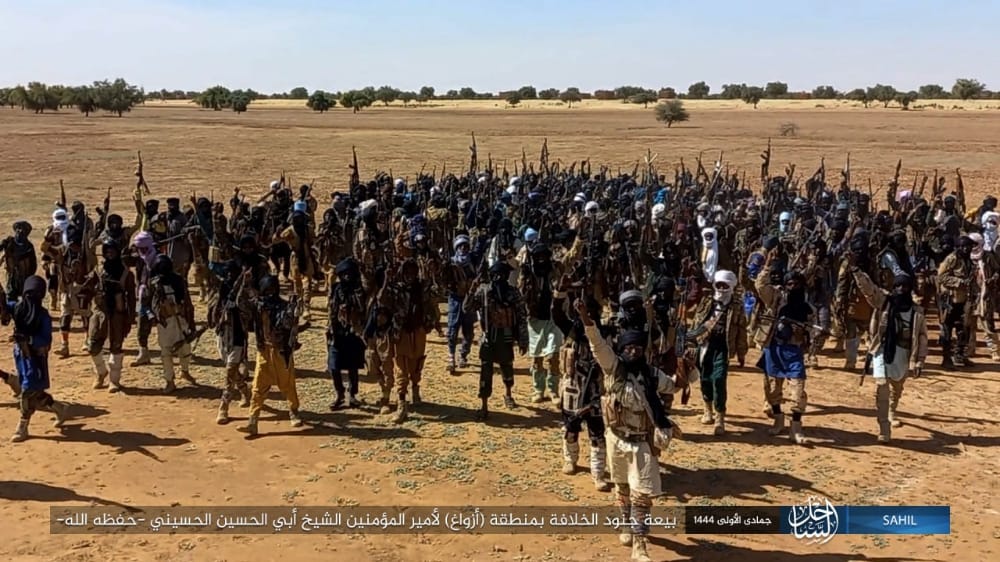
Jamaat Nusrat al-Islam wal-Muslimin (JNIM) and the Islamic State in Sahel Province (ISSP) are engaged in an intensifying fratricidal conflict across the Sahel, with both groups escalating attacks against state security forces in Mali, Niger, and Burkina Faso despite their ongoing internal war, according to reporting by The Jamestown Foundation.
The Evolution of the JNIM-ISSP Fratricidal War
The violent rivalry between al-Qaeda affiliate JNIM and the Islamic State’s Sahel branch has expanded significantly since the end of what experts describe as “Sahelian exceptionalism” in 2019, as reported by The Jamestown Foundation. Initially concentrated in the Liptako-Gourma tri-border region, the conflict has now spread across Mali, Burkina Faso, and Niger. Historically, these groups maintained a degree of non-aggression, often focusing their operations on state targets. However, the breakdown of this tacit understanding has transformed the Sahel into a theater of dual-front warfare, where both organizations compete for territorial dominance, local allegiances, and control over smuggling routes.
Recent months have seen a surge in claims from both factions. On April 6, the Islamic State’s news agency, Amaq, reported that ISSP militants killed 35 JNIM fighters in Niger’s Tillaberi region and seized more than 30 weapons. Conversely, JNIM released footage in April depicting the capture and execution of an alleged Islamic State in the Greater Sahara (ISGS) member in Nigeria’s Kebbi State. These clashes demonstrate that the groups are increasingly prioritizing the elimination of their jihadist rivals alongside their broader insurgency against state forces. The intensity of these engagements suggests that neither group is willing to concede influence in the rural hinterlands, where their respective shadow administrations attempt to govern local populations.
JNIM’s Coordinated Tactical Doctrine
Beyond their internal fighting, JNIM has demonstrated a sophisticated operational rhythm in 2025 and 2026. The group’s tactical model relies on high-mobility maneuvers designed to overwhelm fixed military positions. According to an analysis from Jamestown Substack, JNIM frequently employs massed motorcycle units to conduct night raids and ambushes, which compress the decision cycles of government defenders. This approach allows them to strike rapidly and withdraw before air support or reinforcements can be deployed, a critical advantage given the vast, sparsely populated terrain of the Sahel.

These tactics were notably observed during the July 2025 assault on Dioura, where JNIM forces used motorcycles to encircle the military position and concentrate fire on multiple entry points before dispersing. This operational doctrine focuses on exploiting defensive fatigue and degrading static perimeter security. By targeting isolated garrisons rather than larger formations, JNIM maintains continuous pressure on logistics routes and auxiliary units, forcing state forces to remain on high alert for extended periods. This strategy is compounded by the use of improvised explosive devices (IEDs) along supply lines, which further restricts the movement of state military convoys and limits their ability to respond to incursions in remote districts.
Regional Security Challenges and External Alliances
The security environment in Mali has grown increasingly complex following the withdrawal of French forces, which had previously anchored the international counter-terrorism effort in the region. As noted by the Timbuktu Institute, the Malian government has sought to fill this vacuum through intensified cooperation with Russia’s Africa Corps. However, the effectiveness of this new partnership remains contested. While the government aims to consolidate power, reports indicate that the brutal methods employed by external forces have, in some instances, facilitated recruitment for local armed groups by exploiting the distress of civilian populations. The reliance on foreign private military actors has also sparked debate regarding state sovereignty and the long-term sustainability of current security strategies.
In response to these systemic threats, Mali and Burkina Faso have established a security alliance to facilitate intelligence sharing and joint operations along their shared borders. This cooperation is viewed as a strategic move to demonstrate national independence from Western influence. Nevertheless, significant logistical hurdles persist. Both nations face critical shortages in equipment, particularly in surveillance aircraft needed to monitor vast desert corridors. Without consistent aerial reconnaissance, the ability of national armies to detect large-scale militant movements remains limited, often leaving them reactive to JNIM and ISSP initiatives.
Strategic Logistics and the Port of Conakry
Bamako’s ability to sustain its military operations is currently tied to shifting supply chains. Due to diplomatic deadlocks and regional sanctions, Mali has increasingly utilized the port of Conakry in Guinea as a transit hub for military equipment, including hardware sourced from Russian partners. This logistical pivot highlights the evolving geopolitical landscape of the region, where neighboring states like Guinea provide essential lifelines for landlocked countries under pressure. The use of Conakry underscores the resilience of the Malian government in bypassing traditional transit routes that have been closed or restricted by regional economic bodies like ECOWAS.
The ultimate success of these state-led alliances depends on their ability to secure the tri-border areas. For the civilian population, the stakes are immediate: border closures and persistent insecurity continue to stifle regional trade and economic stability. Markets have faced disruption, and the movement of essential goods has become increasingly dangerous, leading to localized food insecurity. If the current military partnerships fail to produce tangible improvements in security, public disappointment may further undermine the fragile support currently enjoyed by the ruling authorities in the Sahel, potentially creating further openings for insurgent groups to present themselves as alternative providers of order.
Find more reporting in our World section.
