Pope Leo XIV returned to Rome on June 12, 2026, aboard a private jet provided by King Felipe VI of Spain after a technical failure grounded his chartered Iberia Airlines flight in Tenerife. The incident, which occurred before takeoff, marked an unusual disruption to the Pope’s weeklong apostolic journey across Spain.
Mechanical Failure and the Royal Intervention
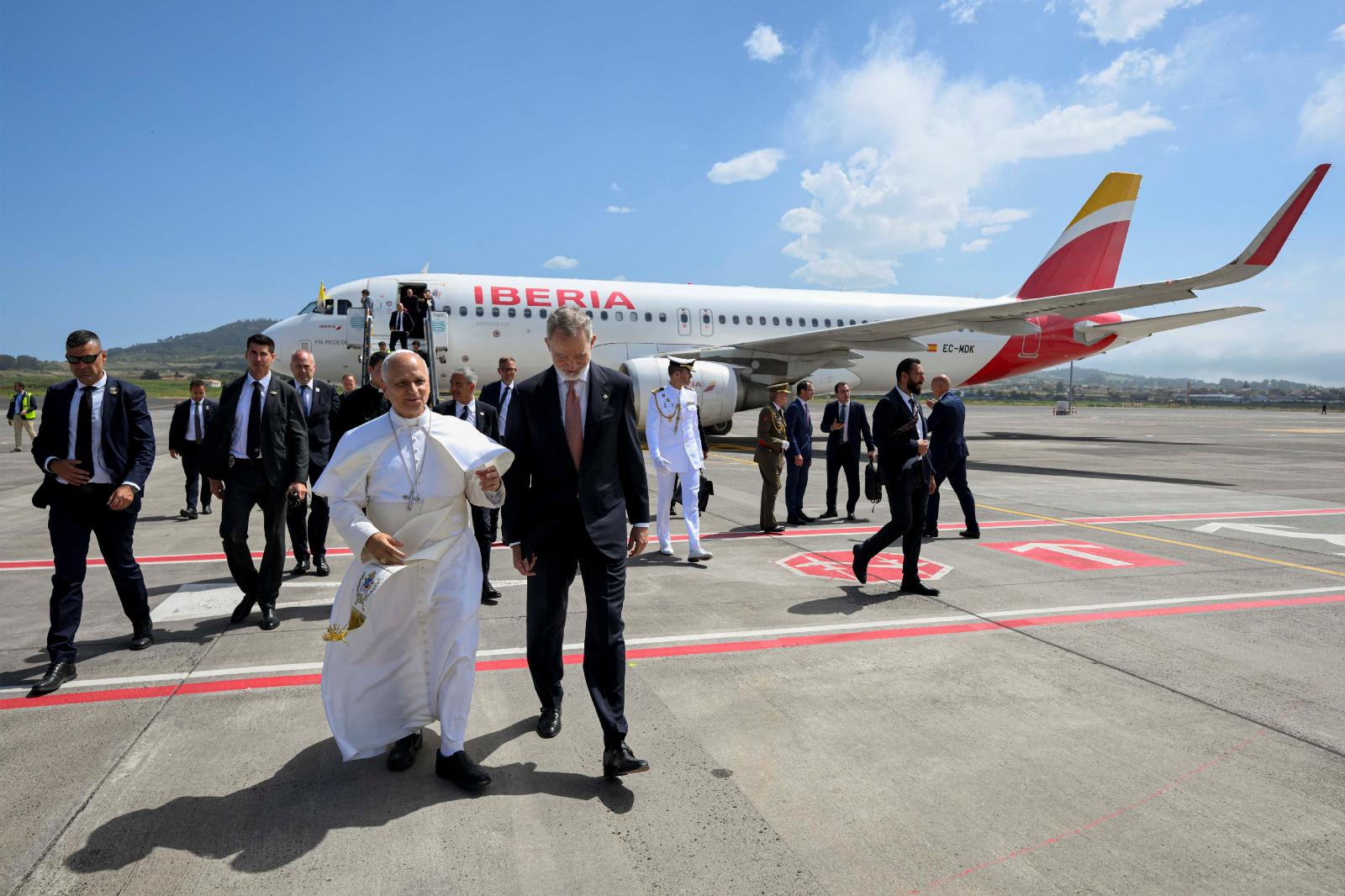
The disruption began shortly after the Pope and his delegation boarded an Iberia Airbus A320 at Tenerife North Airport, also known as Los Rodeos. According to OSV News, passengers had been seated for approximately 90 minutes when the pilot announced an “incident with one of the aircraft systems.” Maintenance crews attempted to resolve the issue by towing the plane to face into the wind, but the effort proved unsuccessful.
Photo: OSV News
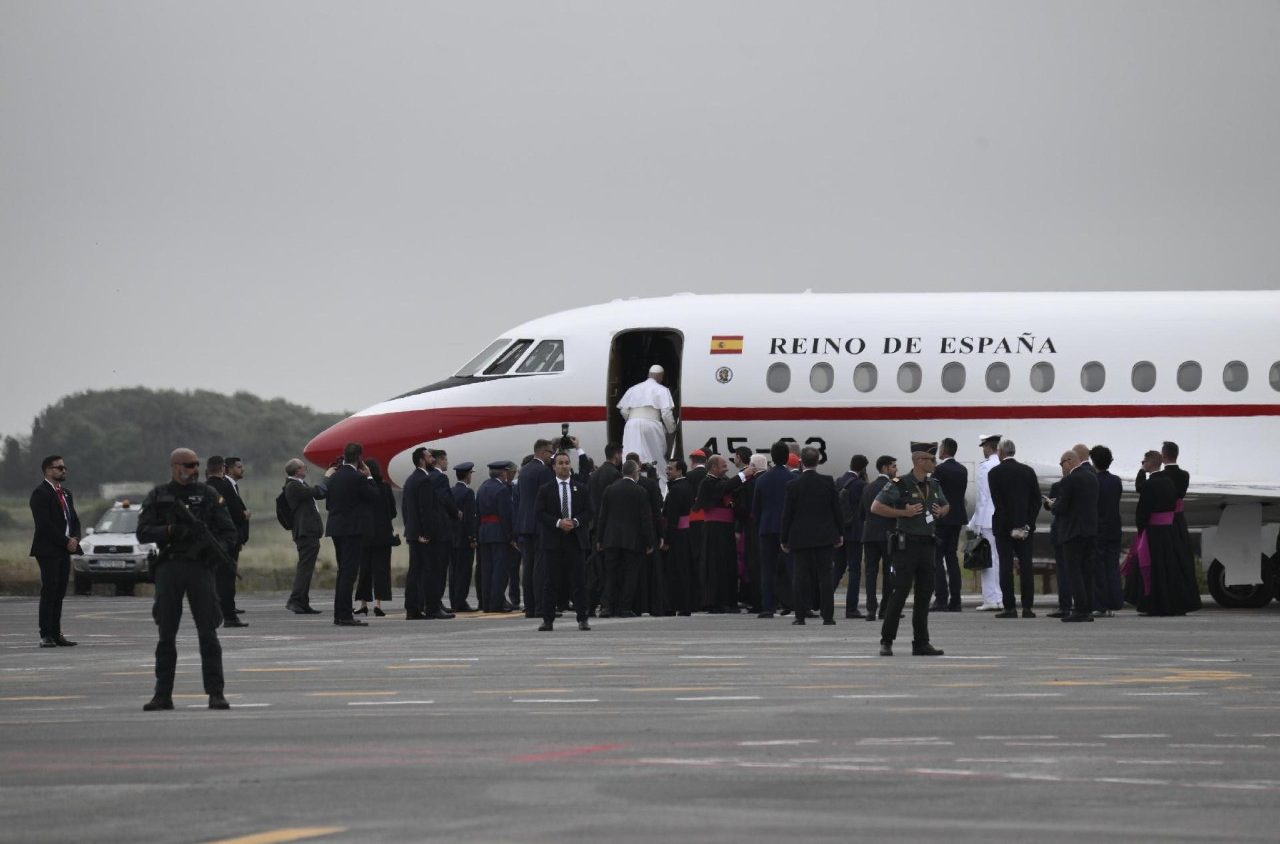
With the original charter unable to depart, King Felipe VI intervened by offering his own private Falcon jet to transport the pontiff. As reported by AP News, the King personally escorted Pope Leo XIV across the tarmac to the royal aircraft. The Vatican confirmed that the Pope departed Tenerife at approximately 6:00 p.m. local time, with an expected arrival in Rome at 11:00 p.m.
Photo: AP News
The use of the Spanish royal aircraft highlights the high level of coordination involved in papal state visits. When a pontiff travels abroad, they are technically a head of state, and the host nation typically assumes responsibility for logistical security and transportation logistics. The intervention by King Felipe VI underscores the depth of the diplomatic protocols governing the relationship between the Holy See and the Spanish Crown, which serves as a primary point of contact for the Vatican during major European apostolic journeys.
Disembarkation and Logistical Adjustments
The technical failure forced a significant shift in the Vatican’s travel plans. While the Pope proceeded on the King’s jet, the remaining members of the delegation—including cardinals, security personnel, and roughly 80 journalists—were required to disembark. Vatican News reported that these officials and the press corps waited for a separate replacement aircraft dispatched by Iberia from Madrid to complete their return journey.
The change in aircraft resulted in the cancellation of the Pope’s customary in-flight press conference. This tradition, typically held for the journalists traveling in the rear of the papal charter, was abandoned due to the constraints of the royal jet and the logistical split of the delegation. In the context of the Vatican’s media operations, these in-flight Q&A sessions are considered a primary vehicle for the Pope to address current international affairs, church doctrine, and domestic policy questions directly with the international press pool. The loss of this session meant that themes the Pope typically summarizes during the return flight—such as his reflections on the migration crisis discussed during his time in the Canary Islands—were not formally addressed in the traditional format.
Historical Precedents for Papal Travel Disruptions
While papal travel is highly orchestrated, mechanical and weather-related delays are not unheard of. Veteran Vatican correspondent Valentina Alazraki, who has covered more than 166 papal foreign trips since 1979, noted that such incidents recall the pontificate of St. John Paul II. Alazraki recounted a 1986 incident to OSV News:
Pope Leo XIV Returns to Rome on Spanish Royal Jet After Aircraft Technical Issue | AK1G
“I remember that in 1986, on our way back from India to Rome, it was snowing. We flew over the city several times … but we couldn’t land, so the pilot flew to Naples. Together with the pope, we took the train and arrived in Rome.” — Valentina Alazraki, veteran Vatican correspondent
Photo: Vatican News
In another instance during 1988, St. John Paul II faced an unplanned landing in South Africa while en route to Lesotho due to severe weather. That event carried political weight, as the Pope had intentionally excluded South Africa from his itinerary at the time to protest apartheid. In the current 2026 incident, the delay occurred at the conclusion of a weeklong visit that included stops in Madrid, Barcelona, and the Canary Islands, where the Pope had focused on migration issues and the inauguration of a new tower at the Sagrada Familia basilica.
The complexity of these journeys is managed by the “Vatican Flight Office,” a specialized unit that coordinates with national carriers—often ITA Airways or local national airlines—to ensure security and protocol standards are met. Aviation experts note that A320-series aircraft are the standard for these trips due to their ability to operate from mid-sized airports like Tenerife North, but mechanical grounding remains a risk that forces the Vatican to rely on local sovereign assets when contingency plans, such as secondary backup planes, are not immediately available on the tarmac.
Diplomatic Ties and Departure
The relationship between the Vatican and the Spanish monarchy remained visible until the final moments of the visit. King Felipe VI remained on the tarmac at the Tenerife airport to observe the departure of his private jet, accompanied by local authorities and Vatican representatives.
For the Vatican, the assistance provided by the Spanish Crown offered a swift resolution to what was described by Vatican News as an “unprecedented” conclusion to an apostolic journey. While the Pope arrived in Rome as scheduled on the royal plane, the full delegation’s return was delayed by several hours, highlighting the complex logistical chain required to manage international papal travel. The event serves as a reminder of the intersection between ecclesiastical mission and the logistical realities of modern statecraft, where the personal intervention of a head of state can be the determining factor in maintaining the schedule of a global religious leader.
Rafael Moreno directs international correspondents from London to Singapore. A multilingual journalist born in Madrid, he spent 12 years covering diplomacy and conflict for Global Affairs Review. His background in political science strengthens Globally Pulse’s depth in world reporting.