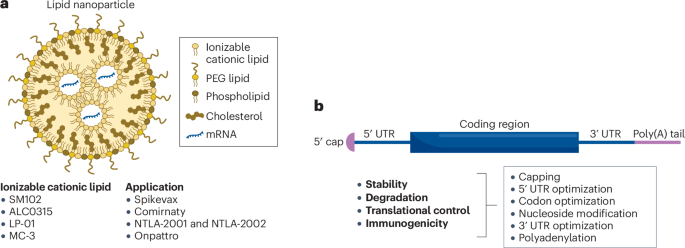
In June 2026, the field of mRNA therapeutics reached a pivotal moment as researchers highlighted breakthroughs in self-adjuvanted vaccines and multi-disease targeting, building on foundational studies from 2013 to 2025. These advancements, detailed in recent analyses from Nature and Nature Reviews Drug Discovery, underscore a shift from single-pathogen solutions to broad, adaptable RNA-based treatments.
The Evolution of mRNA Technology: From SARS-CoV-2 to Multi-Pathogen Vaccines
The trajectory of mRNA technology began with the 2013 study by Kallen et al., which introduced self-adjuvanted RNActive® vaccines, laying groundwork for later innovations. By 2021, the success of mRNA-1273 against SARS-CoV-2 demonstrated the platform’s potential, leading to rapid development of vaccines for respiratory syncytial virus (RSV), influenza, and cytomegalovirus. Recent trials, such as the 2024 phase 1/2 study of mRNA-1010 for influenza, show improved immunogenicity and safety profiles, with results published in *Nature Communications* and *The New England Journal of Medicine*.
One key milestone was the 2023 trial of an mRNA-based RSV vaccine, which achieved 85% efficacy in older adults, according to *The New England Journal of Medicine*. This success spurred further research into multivalent vaccines, such as the 2022 study by Arevalo et al. on a universal influenza vaccine, which targeted all known subtypes. These efforts, detailed in *Science*, reflect a move toward “mRNA therapeutics 2.0,” as described in *Nature Reviews Drug Discovery*.
Challenges in RNA-Centered Therapeutics: Stability, Delivery, and Scalability
Despite progress, researchers warn of persistent challenges. A 2025 analysis in *Nature Biotechnology* highlighted issues with RNA stability and lipid nanoparticle (LNP) delivery systems, which remain costly to scale. “The 2025 study by Guo et al. underscores the need for more robust formulations,” noted a *Nature* editorial. Additionally, the 2026 paper by Huang et al. in *Cell Research* pointed to immune system variability, which could affect long-term efficacy in diverse populations.
Manufacturing hurdles also persist. A 2024 report in *Nature Biotechnology* revealed that producing mRNA vaccines at global scale requires “significant infrastructure investment,” a barrier for low-income regions. Meanwhile, the 2026 study by Feng et al. in *Nature Biotechnology* proposed CRISPR-based editing to enhance RNA stability, though clinical trials are still in early phases.
What’s Next? The Road to Universal mRNA Therapeutics
Looking ahead, researchers emphasize the need for “personalized mRNA therapies” tailored to individual genetic profiles, a concept explored in the 2024 *Nature Reviews Drug Discovery* article by Parhiz et al. The 2026 *Nature* study by Liu et al. also suggests that combining mRNA with other biologics, such as monoclonal antibodies, could expand treatment options for chronic diseases.

Regulatory frameworks are also evolving. As of June 2026, the FDA has fast-tracked several mRNA-based therapies, including a 2025 candidate for human cytomegalovirus (HCMV). However, experts caution that “long-term safety data is still limited,” according to a *Nature* commentary. The coming years will test whether mRNA technology can transition from pandemic response tools to mainstream medical solutions.
For a deeper dive into the studies referenced, explore the original analyses in Nature Reviews Drug Discovery and Nature.
