
On June 5, 2026, NASA directed five of seven International Space Station (ISS) crew members to a “safe haven” inside the SpaceX Crew Dragon spacecraft amid concerns over air leaks in the Russian Zvezda module. The move followed Roscosmos’ detection of two potential leaks, with one sealed and the second under repair. The situation, though tense, did not endanger the crew, as pressure levels remained stable.
The Leak and Immediate Response
The incident centered on the Zvezda service module’s transfer tunnel, known as PrK, which has experienced cracks and leaks since 2019. On June 5, Roscosmos identified two air leak locations, with the first sealed using a two-component sealing compound. The second, located on a conical section of the compartment, required further assessment. NASA, citing “an abundance of caution,” ordered Crew-12 members and NASA astronaut Chris Williams to shelter in the Crew Dragon while repairs proceeded.

“Out of an abundance of caution, NASA has directed all four of the agency’s SpaceX Crew-12 members and NASA astronaut Chris Williams to assume an elevated safety posture in the Dragon spacecraft while the repair is under way,” stated NASA spokesperson Bethany Stevens, via Yahoo.
Repair Efforts and Paused Operations
Roscosmos initially planned to cut a bracket to access a suspected leak site, a method NASA deemed risky. The space agency intervened, prompting Roscosmos to pause structural repairs for additional measurements. By late Friday, NASA confirmed the crew could return to normal operations, as the situation remained “stable and maintained at the calculated level,” according to a NASA statement.
“Roscosmos has paused Friday’s structural repair efforts inside the Zvezda service module transfer tunnel… as more measurements and data are assessed,” a NASA spokeswoman said on X, per CBS News. The decision to halt repairs reflected collaboration between NASA and Roscosmos, who have debated leak mitigation strategies for months.
Historical Context and Ongoing Challenges
The PrK compartment, a critical part of the ISS, has faced periodic leaks since its 2019 inception. While Roscosmos has applied temporary and permanent sealants, pinpointing the root cause has proven elusive. The latest escalation saw the leak rate climb from one to two pounds of air per day, a shift described as “relatively minor in recent months” but “worsening” by a senior NASA official, per The Guardian.
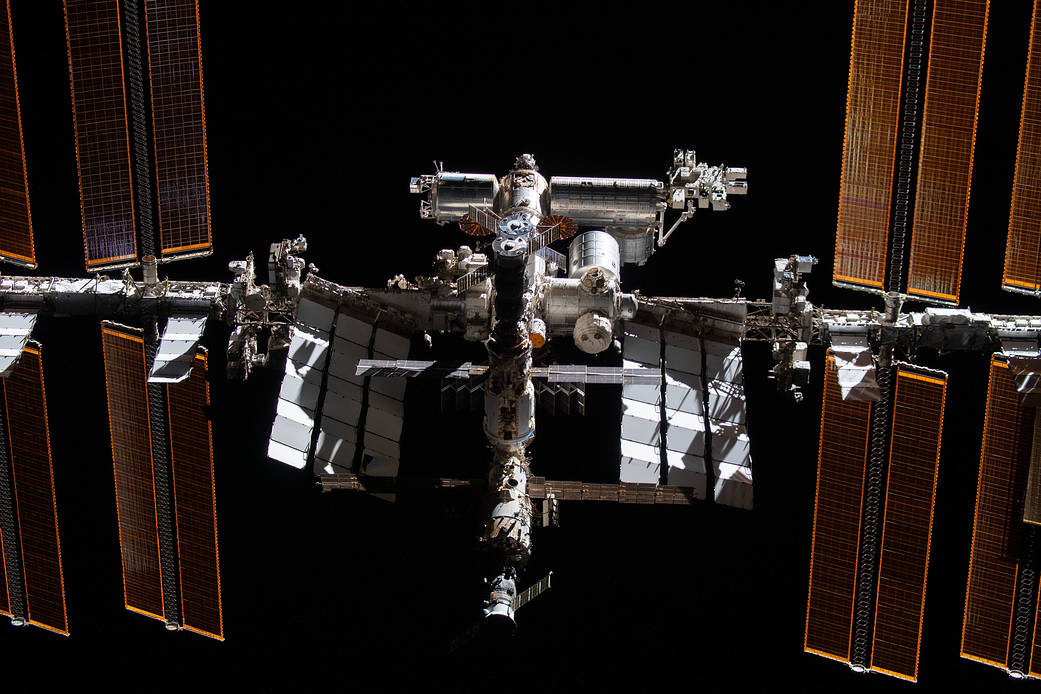
“The cracks have always been a concern that NASA watches very closely,” Stevens added. “NASA and Roscosmos have been working to determine the root cause of the cracks, and Roscosmos manages the issue through operational mitigation measures and periodic partial-repair efforts.”
Crew Safety and Long-Term Implications
Despite the emergency procedures, the ISS has never required a full evacuation in its 27-year history. The crew, including astronauts from NASA, the European Space Agency, and Roscosmos, resumed normal duties after the pause. The incident underscores the delicate balance of international collaboration on the station, which has hosted continuous human occupancy since 2000.
“NASA and Roscosmos have worked together to identify the root cause while Roscosmos has been applying leak mitigation measures,” NASA stated, emphasizing ongoing efforts to resolve the issue. The agency also highlighted its commitment to “a collaborative approach to address the leaks,” as reported by The Guardian.
The event serves as a reminder of the challenges of maintaining complex systems in orbit. With the ISS nearing its third decade of operation, such incidents highlight the need for continuous innovation in space infrastructure. As NASA and Roscosmos continue their investigations, the focus remains on ensuring the safety of the crew and the longevity of the station.
