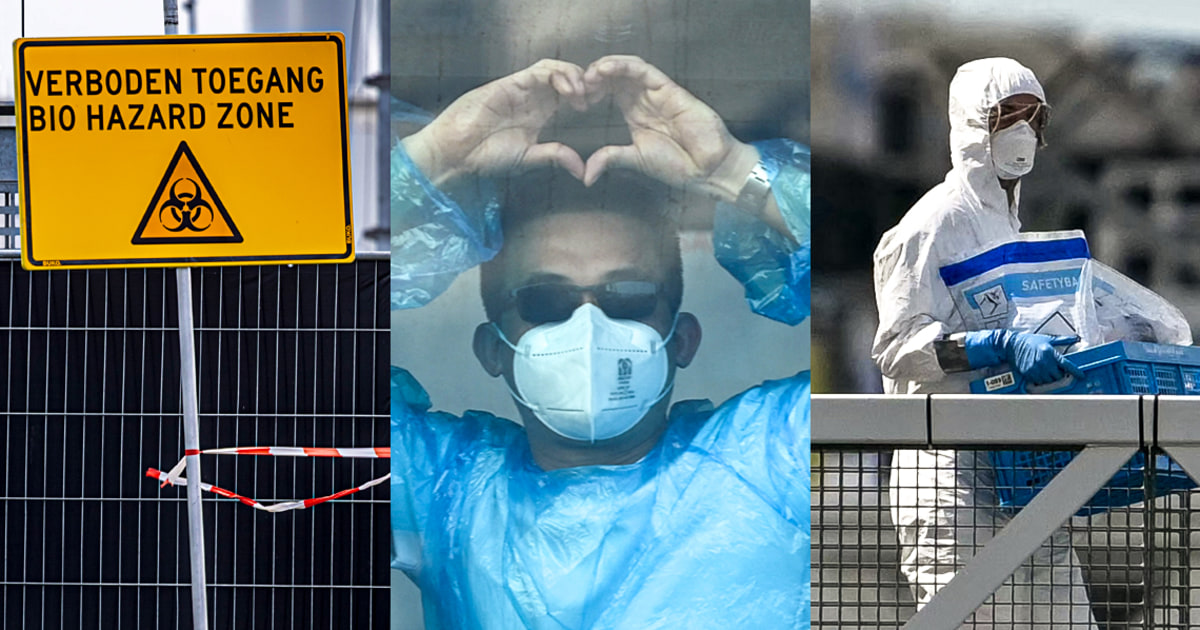
Eight Americans held in Nebraska for six weeks after exposure to a deadly hantavirus outbreak were released on Monday, June 23, 2026, marking the end of a controversial quarantine that drew sharp legal and ethical criticism. The move came as health officials confirmed none of the quarantined individuals contracted the virus, while legal experts condemned the extended isolation as “unconstitutional” and “arbitrary.”
Why the Quarantine Was Extended—and What That Means for Public Health
The quarantine of the eight Americans—part of a group of 18 evacuated from the Dutch-flagged cruise ship MV Hondius in early May—was extended beyond the 42-day window recommended by the Centers for Disease Control and Prevention (CDC). According to the U.S. Department of Health and Human Services (HHS), the decision was made by Secretary Robert F. Kennedy Jr., who overruled CDC guidance that suggested self-quarantine at home would suffice. The agency cited “public good” as justification, but health law experts called the move a dangerous precedent, with Lawrence Gostin, a professor at Georgetown University Law Center, labeling it “cavalierly detaining somebody for no good reason.” The Guardian reported that critics argued the quarantine was both unnecessary and legally questionable, setting a precedent for future public health emergencies.
The CDC’s recommended 42-day quarantine period is based on the incubation window for the Andes strain of hantavirus—the only strain known to spread between humans. Symptoms can take up to six weeks to appear, but the CDC had advised that those exposed but asymptomatic could monitor at home. HHS’s decision to enforce a mandatory quarantine, however, drew immediate backlash. James Hodge, director of the Public Health Law and Policy Center at Arizona State University, told The Guardian that such measures risk “using unconstitutional, ill-advised, unproven techniques to control infectious diseases.” The quarantine’s length—42 days for some, longer for others—also mirrored the incubation period, but without clear evidence that the extended isolation prevented transmission.
The Human Cost: Passengers Speak Out After Six Weeks in Isolation
For the quarantined Americans, the experience was physically and psychologically taxing. Angela Perryman, one of the eight released on Monday, described the conditions in stark terms to the Associated Press: “We were locked in our rooms until 1:55 p.m. And at two o’clock, ‘OK, well, everybody walk out and go home.’” Perryman, who insisted on leaving immediately for her Florida home, accused HHS of holding her against her will, calling the quarantine a “political stunt” orchestrated by Kennedy. Her account aligns with broader criticism that the isolation was disproportionate to the actual risk.
Photo: Australian Broadcasting Corporation
Meanwhile, in Australia, six passengers—four Australians, one permanent resident, and one New Zealander—completed a similar 42-day quarantine in Perth after being evacuated from the same cruise ship. Unlike their American counterparts, these individuals were housed in a facility originally built for COVID-19 patients. Peter Marsh, an 82-year-old Australian passenger, spoke exclusively to the Australian Broadcasting Corporation (ABC), reflecting on his experience with surprising equanimity. “So balancing the two, the pleasure of the boat trip and the level of inconvenience from the quarantine, I’d say the boat trip wins out 100 percent,” Marsh said. “I’d definitely do it all again.” His perspective—framing the quarantine as an unfortunate but manageable interruption—contrasts sharply with Perryman’s frustration, highlighting how individual experiences of the same crisis can diverge wildly.
Marsh’s resilience was buoyed by small daily rituals, like birdwatching during supervised walks around the quarantine facility. “I find that being able to throw your mind out to looking for birds… that birding activity keeps my mind fully occupied,” he told the ABC. His focus on the positive—despite the hardship—underscores how quarantine, even when necessary, can erode mental well-being. The ABC noted that all six Australians tested negative throughout their isolation, reinforcing that the quarantine may have been more about perceived risk than actual threat.
A Deadly Cruise Ship Outbreak: What We Know Now
The MV Hondius became ground zero for one of the most severe hantavirus outbreaks in recent memory. The cruise ship, en route to Antarctica, saw three deaths and 13 confirmed cases of the Andes strain—a rare and lethal variant that can spread person-to-person. The outbreak began in April, but it wasn’t until early May that the ship docked in the Canary Islands, where dozens of passengers were evacuated. Among them were 18 Americans, who were initially taken to Nebraska for quarantine.
Quarantine ends for last of hantavirus ship passengers in Nebraska
The timeline of events reveals how quickly the situation escalated:
April 2026: Hantavirus cases emerge on the MV Hondius during its voyage to Antarctica.
Early May 2026: Ship docks in the Canary Islands; 18 Americans among 30+ passengers evacuated. Three deaths and 13 cases confirmed.
May 15, 2026: Australian passengers arrive in Perth for quarantine.
June 23, 2026: Nebraska quarantine ends for eight Americans; all test negative.
The NBC News reported that the outbreak’s severity was compounded by the Andes strain’s unique ability to transmit between humans, a feature absent in other hantavirus strains. The ship’s medical personnel and crew were also quarantined in the Netherlands, though no cases were reported among them.
The question of why the U.S. response differed from other countries—particularly Australia’s more measured approach—remains unanswered. While HHS justified the quarantine as a precaution, the lack of cases among the quarantined Americans suggests the risk may have been overstated. NBC News noted that passengers were eager to return to normal life, with one describing the quarantine as a “painful chapter of isolation and uncertainty.” The contrast between the U.S. and Australian responses raises broader questions about how governments balance public safety with individual liberties during health crises.
Legal and Ethical Questions: Was the Quarantine Justified?
The Nebraska quarantine has sparked a legal debate over the limits of public health authority. Critics argue that Kennedy’s decision to override CDC guidance and enforce mandatory isolation sets a dangerous precedent. Gostin’s warning—that such measures risk being “arbitrary, capricious, and unjust”—resonates with legal scholars who see the quarantine as an overreach. The Guardian reported that Perryman’s experience—being held against her will—could lead to legal challenges, particularly if similar measures are proposed in future outbreaks.
Photo: NBC News
The ethical dilemma is clear: Should governments prioritize perceived safety over individual freedoms, even when the risk is low? The CDC’s recommendation for self-quarantine was based on the understanding that asymptomatic individuals posed minimal threat. Yet HHS’s decision to enforce mandatory isolation suggests a shift toward more aggressive public health measures—one that could be replicated in future crises. The Guardian quoted Hodge as warning that such tactics could “undermine public trust in health authorities” if not carefully justified.
What Happens Next? Lessons for Future Outbreaks
With the quarantine over, the focus now shifts to what this episode reveals about global health preparedness—and whether similar measures will be used in future outbreaks. The NBC News highlighted that passengers are now returning to their lives, but the psychological toll of prolonged isolation remains. For those who experienced it, the quarantine was less about health and more about control—a sentiment that could shape public opinion in future emergencies.
For health officials, the Nebraska case serves as a cautionary tale. The lack of hantavirus cases among the quarantined Americans suggests that self-isolation at home may have been sufficient, calling into question the necessity of mandatory quarantine. Meanwhile, the legal and ethical concerns raised by the extended isolation could influence how future outbreaks are managed. As The Guardian noted, the quarantine’s conclusion does not close the debate—it only begins the reckoning over whether such measures were justified in the first place.
One thing is clear: the MV Hondius outbreak has exposed fractures in how different countries and agencies respond to infectious disease threats. While Australia’s approach was characterized by transparency and minimal intervention, the U.S. response was marked by controversy and legal scrutiny. As global travel continues and new pathogens emerge, the balance between public safety and individual rights will remain a contentious issue—one that this quarantine has only sharpened.
For now, the eight Americans are free to return home, but the questions—and the lessons—linger.
Dr. Nadia Rowe oversees medical, science, and wellness reporting. Holding a public-health doctorate and having contributed to Health Spectrum Review, she bridges scientific rigor with accessible communication. Her mission: make accurate health information available to everyone.