Researchers have identified 1.7-billion-year-old fossilized microbes within sedimentary rock cores stored in a Northern Territory, Australia, warehouse. These findings, published in Nature, provide the oldest-known evidence of eukaryotes—complex life forms that serve as the evolutionary ancestors to all animals, plants, and fungi, offering new insight into how life became complex.
Unlocking Evolutionary History from Industrial Drill Cores
Northern Territory
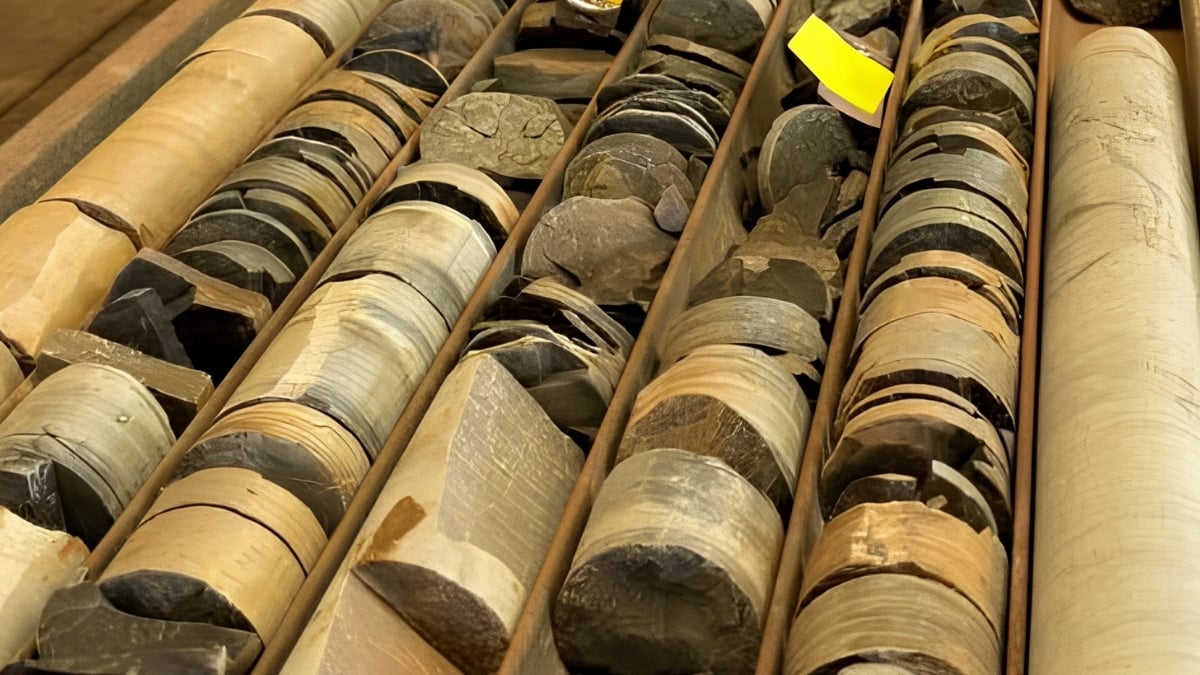
The discovery originated not in a remote archaeological dig, but within an open-air warehouse in Darwin, Australia. The facility houses cylindrical rock cores extracted decades ago by mineral exploration companies drilling deep beneath the Earth’s surface. While these companies were focused on mineral deposits, the mudstone cores they collected contained microscopic fossils from an ancient inland sea that covered much of northern Australia over 1.5 billion years ago.
According to reporting by ScienceAlert, these sedimentary rocks provide a critical window into the eukaryotic revolution. Eukaryotes, which include all animals, plants, algae, and fungi, are distinguished by cellular complexity, including a nucleus and specialized organelles. This cellular architecture stands in stark contrast to prokaryotes, such as bacteria and archaea, which maintain a simpler organization. The fossils found in the Northern Territory, dating back to 1.75 billion years ago, are currently recognized as the oldest eukaryote fossils globally.
Identifying the Transition from Simple to Complex
Oldest Eukaryote Fossils Uncovered Maxwell Lechte
The research team, led by geobiologist Dr. Maxwell Lechte from the University of Sydney, sought to understand the environmental pressures that drove the emergence of complex life. By dissolving chunks of the mudstone in acid to preserve organic material, the researchers and their co-author, Leigh Anne Riedman of the University of California, uncovered 12,000 fossilized microbes. As noted by The Age, the collection includes both primitive spheres and more elaborate specimens featuring appendages, plates, or complex surface patterns.
“Why didn’t life just stay simple? Why did we eventually evolve into more complex forms and eventually into animals and intelligent life, including us?”Dr. Maxwell Lechte, University of Sydney
These fossils represent the ancestral lineage for multicellular life, ranging from insects to humans. Dr. Lechte emphasized the significance of these specimens, noting, “These are our oldest microbial ancestors that we can look at.”
The Role of Oxygen in Early Eukaryotic Development
The Oldest Fossils Ever Found!
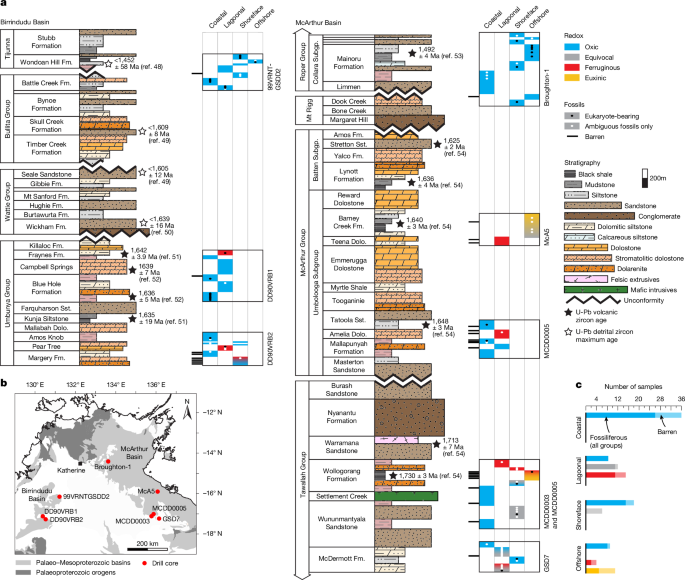
A central focus of the investigation was the role of oxygen in the evolution of complex life. While many bacteria thrive in anaerobic environments, most modern eukaryotes require oxygen for aerobic respiration, a process that provides the high energy levels necessary for complex biological functions. By analyzing the chemistry of the rocks, the researchers examined iron content to determine ancient oxygen levels, as iron reacts with oxygen in a process similar to a rusting nail.
The team discovered that eukaryotes thrived specifically in shallow, oxygenated coastal waters. In contrast, deeper waters devoid of oxygen contained only simple, single-celled bacteria. At that time, oxygen levels were significantly lower than today.
“Oxygen levels hovered at 1 per cent of current levels, and the gas dissolved only into the shallowest surfaces of the sea.”The Age
This finding challenges assumptions about the ubiquity of oxygen’s benefits for early life, as it confirms that eukaryotes were restricted to specific, oxygen-rich niches long before the rise of plants. The study suggests that the oxygenation of the ocean was a primary driver for the diversification of these early complex organisms.
Implications for Astrobiology and Future Research
cluster source: Nature
Beyond Earth’s history, the research carries implications for the search for life elsewhere in the universe. By pinpointing the specific conditions—such as shallow, oxygenated aquatic environments—that enabled cells to transition toward complexity, astrobiologists may be better equipped to determine which exoplanets are most likely to host intelligent life. The research highlights the necessity of studying the fossil record to understand the “eukaryotic revolution” and the symbiotic union of prokaryotic microbes that likely birthed the first eukaryotes.
As researchers continue to analyze these stored cores, the focus remains on understanding how these microbial pioneers successfully navigated the transition to complex life. The findings underscore the value of archived geological materials in solving fundamental mysteries about the origins of biological complexity.
Leo Andersson covers innovation, AI, and cybersecurity. A former engineer turned journalist from Stockholm, Leo has contributed to major tech outlets across Europe. His analytical style and deep understanding of technology trends define Globally Pulse’s forward-looking reporting.